Wednesday, October 27, 2010
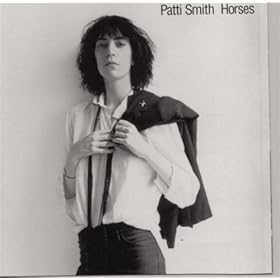
Rapid Reaction: Patti Smith - Horses
I suppose the good question is this: how did it take me so long to get to this record? And my answer is this: I sincerely don't know. It's got all the connections that would put it on my radar: John Cale produced this, it counts as proto-punk, Tom Verlaine played on the record and you can connect Van Morrison and the Smiths to this. I realize that my position pretty indefensible...there is no real excuse for not hearing this until now, but at least I've now rectified that mistake.
I've listened to it once and am currently working through it the second time as I write this, and I can honestly say it deserves all the cred it gets: it's a masterwork. It's one of those records that will blow your mind open; it blasts your brains, picks up the pieces and reforms your brain into something new. All from the first note.
Aside from the intro to "Gloria" that slinks in before it makes its presence known, the record is a ball of fury and energy, and if you're not getting blitzed by the energy in the proto-punk sound, you're getting blitzed by her lyrics, which are part beat poetry and part stream-of-consciousness not unlike the master himself, Bob Dylan. The sound has a proto-punk roar that hangs around the big guys like the Velvet Underground, and Patti Smith sounds like an extremely angry cross between Lou Reed and Iggy Pop. The passion in this record doesn't just seep out and let you "sort of" feel it: the amount of passion in this record is explosion-inducing and you feel it. And if you don't, you're not alive. Plain and simple.
I don't know how else to put it. This record is a force of nature. And it's one to behold. I'm sure a lot of others have been able to wax more poetic about it than I have, but maybe that would do the record an injustice, as it's so stripped down and bare in its proto-punk approach, that to speak more about is contrary to the spirit of the record. It's one that has to be heard to be believed.
Friday, October 15, 2010
Spirituality and Music, redux
Two entries in two days?!? I am finally starting to get back into the swing of things, apparently. Homework beckons, but my thoughts beckon more...
---------------------
You can search for my old entry (about a year old) and see that I railed quite heavily on the genre of Christian rock music for its faults. It was because quite frankly, it is still true to a great extent. I still find Christian rock to be rather pedestrian and unimaginative, but as I've recently been trying to live out the penultimate words of George Harrison ("Everything can wait, but the search for God cannot wait."), I perhaps may have judged the genre too harshly. It is worship music, and despite my perception of it, people still connect to it and through it to that higher plane, so it must therefore hold some value. And as everyone knows, music is one of the most subjective fields, so when it comes to trying to organize it and present it in a remotely academic manner there is bound to be some oversight, and I am "being the bigger man" in admitting to some of that.
But that does not mean that I am totally recanting my statement. It just means that I previously undervalued it. What made me reconsider my stance was something the legendary Mavis Staples said when interviewed on the Colbert Report. When asked about her reasons for moving from gospel to soul in the 1960s (and her thoughts about the cries of "traitor" it generated from the community), Mavis essentially said: "All music glorifies God." While I'm unsure if she is familiar with Slayer, one realizes it is essentially true. And it simply goes beyond any religious notions. Whether or not one believes in the vehicle of God or otherwise, music is inherently powerful and it showcases the unique power that humanity has, in weakness and in strength. Whether it is worship music or gleefully skewering religion (see: "Highway 61 Revisited" for a particularly delightful roasting of the Abraham story), it all essentially carries infinite power and meaning. That is what makes music, well, music.
I still think that Christian rock has quite a-ways to go if it wants to be considered as proficient in the "academic" and "quality" sense I have been trying to impart. If I may continue tooting this particular horn, it is so pre-occupied with presenting the message of Lord without realizing that the music itself is already the message! Music already glorifies the Lord, so if you simply strive make good music, you are already completing your objective! Now, this is not obvious to most people, so I understand that perhaps in needing to spread their message they are tempted to brandish a big stick, but that is what makes the music so pedestrian to me. The music becomes clumsy and unimaginative when the only thing music has is to be graceful and imaginative! I don't necessarily mean this in the technical-playing sense (thus punk would be ruled out, and we all know punk has too much heart and balls of steel for that), but in the artistic, striving-for-quality sense. As evidence, I present the best "worship" record of all time, in my opinion:
A Love Supreme is beyond a masterwork: it is a monolith of the power of music, standing tall as a man among boys. Far and away the best jazz record of all time (it would most certainly rank in my top 20, if not top 10 records of all time), it is a testament: to Coltrane's power, to Coltrane's skill, to Coltrane's faith. Coltrane made the record to demonstrate his faith and his love for his Lord. The devotional poem in the liner notes is "recited" via his saxophone in the last movement, with the final lines in that poem showing his love for God:
"Elation. Elegance. Exaltation. All from God. Thank you God. Amen."
The record is overbearing only in that it is overbearingly perfect. It does not wield its faith like a stick to beat home the point, but the faith is implemented like a fine knife used to carve the most detailed of sculptures. The search for quality in the music mirrors Coltrane's search for God, and in both Coltrane finds what he had been looking for. It doesn't matter if you aren't a believer or not in Coltrane's faith. The music contains so much of that often-sought "soul" that by the end of the record you believe: if not in his faith or his skill, you will at least believe in the power of music.
And it reinforces the point I have been trying to hit home in this entry: the power of music is the power of that higher plane. Take care of the first and the rest will follow. It is something that Christian rock would do well to heed if it wants to reinforce its connection to the Lord and actually serve as quality music. Under the "Mavis Staples assumption" (as I'll call it from here on out...assuming I ever refer back to it), any music is inherently worship music, so quality music is the highest worship music attainable. So strive for it. Music is a microcosm of life: if one stops searching for meaning and quality, then all is hopeless and futile.
-----------------------
If one needs proof that Christian rock needs to strive for quality once more, one only needs to realize that it was skewered rather successfully by South Park in the Season 7 episode "Christian Rock Hard."
---------------------
You can search for my old entry (about a year old) and see that I railed quite heavily on the genre of Christian rock music for its faults. It was because quite frankly, it is still true to a great extent. I still find Christian rock to be rather pedestrian and unimaginative, but as I've recently been trying to live out the penultimate words of George Harrison ("Everything can wait, but the search for God cannot wait."), I perhaps may have judged the genre too harshly. It is worship music, and despite my perception of it, people still connect to it and through it to that higher plane, so it must therefore hold some value. And as everyone knows, music is one of the most subjective fields, so when it comes to trying to organize it and present it in a remotely academic manner there is bound to be some oversight, and I am "being the bigger man" in admitting to some of that.
But that does not mean that I am totally recanting my statement. It just means that I previously undervalued it. What made me reconsider my stance was something the legendary Mavis Staples said when interviewed on the Colbert Report. When asked about her reasons for moving from gospel to soul in the 1960s (and her thoughts about the cries of "traitor" it generated from the community), Mavis essentially said: "All music glorifies God." While I'm unsure if she is familiar with Slayer, one realizes it is essentially true. And it simply goes beyond any religious notions. Whether or not one believes in the vehicle of God or otherwise, music is inherently powerful and it showcases the unique power that humanity has, in weakness and in strength. Whether it is worship music or gleefully skewering religion (see: "Highway 61 Revisited" for a particularly delightful roasting of the Abraham story), it all essentially carries infinite power and meaning. That is what makes music, well, music.
I still think that Christian rock has quite a-ways to go if it wants to be considered as proficient in the "academic" and "quality" sense I have been trying to impart. If I may continue tooting this particular horn, it is so pre-occupied with presenting the message of Lord without realizing that the music itself is already the message! Music already glorifies the Lord, so if you simply strive make good music, you are already completing your objective! Now, this is not obvious to most people, so I understand that perhaps in needing to spread their message they are tempted to brandish a big stick, but that is what makes the music so pedestrian to me. The music becomes clumsy and unimaginative when the only thing music has is to be graceful and imaginative! I don't necessarily mean this in the technical-playing sense (thus punk would be ruled out, and we all know punk has too much heart and balls of steel for that), but in the artistic, striving-for-quality sense. As evidence, I present the best "worship" record of all time, in my opinion:
A Love Supreme is beyond a masterwork: it is a monolith of the power of music, standing tall as a man among boys. Far and away the best jazz record of all time (it would most certainly rank in my top 20, if not top 10 records of all time), it is a testament: to Coltrane's power, to Coltrane's skill, to Coltrane's faith. Coltrane made the record to demonstrate his faith and his love for his Lord. The devotional poem in the liner notes is "recited" via his saxophone in the last movement, with the final lines in that poem showing his love for God:
"Elation. Elegance. Exaltation. All from God. Thank you God. Amen."
The record is overbearing only in that it is overbearingly perfect. It does not wield its faith like a stick to beat home the point, but the faith is implemented like a fine knife used to carve the most detailed of sculptures. The search for quality in the music mirrors Coltrane's search for God, and in both Coltrane finds what he had been looking for. It doesn't matter if you aren't a believer or not in Coltrane's faith. The music contains so much of that often-sought "soul" that by the end of the record you believe: if not in his faith or his skill, you will at least believe in the power of music.
And it reinforces the point I have been trying to hit home in this entry: the power of music is the power of that higher plane. Take care of the first and the rest will follow. It is something that Christian rock would do well to heed if it wants to reinforce its connection to the Lord and actually serve as quality music. Under the "Mavis Staples assumption" (as I'll call it from here on out...assuming I ever refer back to it), any music is inherently worship music, so quality music is the highest worship music attainable. So strive for it. Music is a microcosm of life: if one stops searching for meaning and quality, then all is hopeless and futile.
-----------------------
If one needs proof that Christian rock needs to strive for quality once more, one only needs to realize that it was skewered rather successfully by South Park in the Season 7 episode "Christian Rock Hard."
Thursday, October 14, 2010
What's (Not) Wrong With Electronica
Once again, supremely late, but once again I find myself unwilling to commit myself to sleeping (despite a severe lack of it) and so I finally now have the time to commit some of my thoughts once again...
-----------------
Yes, I've always considered older music to be infinitely better than what's out now. You get a true sense of soul from it, from Sam Cooke (i.e. Live at the Harlem Square Club 1963) to the wistful sighs of Richard Manuel and the way he, Rick Danko, and Levon Helm combine to tug at your heartstrings, there is always the sense of "soul" found in the recording. It speaks, it breathes character, exudes emotions. Those feelings are what let us connect to the music, and at least for me I find that older music fosters that in a much more meaningful way (let alone connect at all). Modern music just always seemed to lack that "soul" that would draw me to it. Until, perhaps, now.
Perhaps I had judged it incorrectly. Electronica/dance is a different beast compared to rock and roll (though it can certainly be an analogous construct): it must be evaluated on separate parameters. It's unlikely that electronica/dance will provide the payoff that, say, a Staple Singers track may provide with goosebump-causing moments, where Mavis and co. just pull off that moment of release with utmost mastery. However, electronica/dance still can contain soul, but it's not in the same way rock and roll often stakes its livelihoods in those climaxes (ahem...Sigur Rós). Electronica/dance contains "soul" once it establishes a beat: but it has to grab you from your "inner core," so to speak, and drive you to simply feel it. A true track would likely simply cause you to want, or even need, to dance.
Case in point? Daft Punk. They can be classified as French house, which is apparently separate from Detroit house, from all other sorts of electronica, but at least when it comes to mainstream/crossover appeal, no one has had more success than Daft Punk. And it's not especially difficult to see how and why.
Perhaps moreover known for being sampled by le Kanye West in his track "Stronger," it is impossible to deny that Daft Punk craft excellent tracks. From "Da Funk" to "Around the World," "Face to Face," "One More Time," and "Robot Rock," Daft Punk essentially have mastered their form of art. Their beats are uncomplicated, and perhaps therein lies the charm. They utilize basic beats but the layers above add the character to the track, allowing for someone to simply be "grabbed" and pulled into the song (and, perhaps, into dancing). Oftentimes, unlike other artists, they tend to emphasize the groove and tend to delve into "funk"-ier areas of existence, such as "Da Funk," which is essentially a clinic on how to groove like a master.
But it's really their live material where they shine. On Alive 1997, they essentially DJ for 45 straight minutes, rolling through such prime cuts like "Rollin' and Scratchin'," the oft-mentioned "Da Funk," among other tracks. The tracks are stretched, altered, and fixed up to match the length, with interludes and other bits providing perfect segues in between the more recognizable sections. Then, on Alive 2007, Daft Punk essentially provide a "Greatest Hits" DJ-mashup attack, smartly and cleverly combining tracks to provide new glances at them and give them a fresh context and meaning. "Television Rules the Nation" kicks off one track, and when combined with "Crescendolls" off of Discovery, gives both tracks strange new life as the tone of "Crescendolls" gets dramatically altered with "Television Rules the Nation" thumping under it. "Face to Face" is also a prime example of such as the disco feel in the backbeat is replaced by the "Harder Better Faster Stronger" theme, giving the song a fresh backdrop and also a subliminal meaning that gels quite nicely with the intent of "Face to Face" before it segues into "Short Circuit."
While I certainly love Discovery, Homework, and Human After All to death, it is impossible to say that Daft Punk aren't a better live machine than a studio machine. And that is saying quite a lot given that Discovery is at least a "masterwork +," Homework is a "masterwork" and Human After All is "reasonably good" (tracks off of Human After All benefit considerably on Alive 2007 with the mashups providing new context and life).
Regardless, after waxing at length about the prowess of Daft Punk, the point is this: after listening to them for awhile and finally getting into it, their records made me realize that perhaps electronica/dance could perhaps contain what I have always sought in music, that being "soul." It's not the same sort of "soul" as I had been searching for prior, and that is the likely reason why I hadn't found it; I simply wasn't looking in the right place for the "soul" of the work. Amidst all the rigidity in structure, form, and instrumentation, the "soul" was indeed possible in the energy of the work, that it infiltrates you and makes you unable of doing anything else but enjoying the work present.
I am no electronica/dance expert, but the existence of Daft Punk disproved my "technological advancement is bad for music" theory. I had figured it was a sure way to wipe the soul straight out of a work, but I was apparently wrong, as a compelling counter-argument has revealed itself. Daft Punk could perhaps be a rare exception to the rule, but an exception's existence makes the theory likely wrong. Further examination will likely have to follow. But that still doesn't mean that I prefer modern music to old-school music, it just means that I undervalued it.
PS. I have an odd question: is there EVER an inappropriate time to listen to Daft Punk? I thought so.
-----------------
Yes, I've always considered older music to be infinitely better than what's out now. You get a true sense of soul from it, from Sam Cooke (i.e. Live at the Harlem Square Club 1963) to the wistful sighs of Richard Manuel and the way he, Rick Danko, and Levon Helm combine to tug at your heartstrings, there is always the sense of "soul" found in the recording. It speaks, it breathes character, exudes emotions. Those feelings are what let us connect to the music, and at least for me I find that older music fosters that in a much more meaningful way (let alone connect at all). Modern music just always seemed to lack that "soul" that would draw me to it. Until, perhaps, now.
Perhaps I had judged it incorrectly. Electronica/dance is a different beast compared to rock and roll (though it can certainly be an analogous construct): it must be evaluated on separate parameters. It's unlikely that electronica/dance will provide the payoff that, say, a Staple Singers track may provide with goosebump-causing moments, where Mavis and co. just pull off that moment of release with utmost mastery. However, electronica/dance still can contain soul, but it's not in the same way rock and roll often stakes its livelihoods in those climaxes (ahem...Sigur Rós). Electronica/dance contains "soul" once it establishes a beat: but it has to grab you from your "inner core," so to speak, and drive you to simply feel it. A true track would likely simply cause you to want, or even need, to dance.
Case in point? Daft Punk. They can be classified as French house, which is apparently separate from Detroit house, from all other sorts of electronica, but at least when it comes to mainstream/crossover appeal, no one has had more success than Daft Punk. And it's not especially difficult to see how and why.
Perhaps moreover known for being sampled by le Kanye West in his track "Stronger," it is impossible to deny that Daft Punk craft excellent tracks. From "Da Funk" to "Around the World," "Face to Face," "One More Time," and "Robot Rock," Daft Punk essentially have mastered their form of art. Their beats are uncomplicated, and perhaps therein lies the charm. They utilize basic beats but the layers above add the character to the track, allowing for someone to simply be "grabbed" and pulled into the song (and, perhaps, into dancing). Oftentimes, unlike other artists, they tend to emphasize the groove and tend to delve into "funk"-ier areas of existence, such as "Da Funk," which is essentially a clinic on how to groove like a master.
But it's really their live material where they shine. On Alive 1997, they essentially DJ for 45 straight minutes, rolling through such prime cuts like "Rollin' and Scratchin'," the oft-mentioned "Da Funk," among other tracks. The tracks are stretched, altered, and fixed up to match the length, with interludes and other bits providing perfect segues in between the more recognizable sections. Then, on Alive 2007, Daft Punk essentially provide a "Greatest Hits" DJ-mashup attack, smartly and cleverly combining tracks to provide new glances at them and give them a fresh context and meaning. "Television Rules the Nation" kicks off one track, and when combined with "Crescendolls" off of Discovery, gives both tracks strange new life as the tone of "Crescendolls" gets dramatically altered with "Television Rules the Nation" thumping under it. "Face to Face" is also a prime example of such as the disco feel in the backbeat is replaced by the "Harder Better Faster Stronger" theme, giving the song a fresh backdrop and also a subliminal meaning that gels quite nicely with the intent of "Face to Face" before it segues into "Short Circuit."
While I certainly love Discovery, Homework, and Human After All to death, it is impossible to say that Daft Punk aren't a better live machine than a studio machine. And that is saying quite a lot given that Discovery is at least a "masterwork +," Homework is a "masterwork" and Human After All is "reasonably good" (tracks off of Human After All benefit considerably on Alive 2007 with the mashups providing new context and life).
Regardless, after waxing at length about the prowess of Daft Punk, the point is this: after listening to them for awhile and finally getting into it, their records made me realize that perhaps electronica/dance could perhaps contain what I have always sought in music, that being "soul." It's not the same sort of "soul" as I had been searching for prior, and that is the likely reason why I hadn't found it; I simply wasn't looking in the right place for the "soul" of the work. Amidst all the rigidity in structure, form, and instrumentation, the "soul" was indeed possible in the energy of the work, that it infiltrates you and makes you unable of doing anything else but enjoying the work present.
I am no electronica/dance expert, but the existence of Daft Punk disproved my "technological advancement is bad for music" theory. I had figured it was a sure way to wipe the soul straight out of a work, but I was apparently wrong, as a compelling counter-argument has revealed itself. Daft Punk could perhaps be a rare exception to the rule, but an exception's existence makes the theory likely wrong. Further examination will likely have to follow. But that still doesn't mean that I prefer modern music to old-school music, it just means that I undervalued it.
PS. I have an odd question: is there EVER an inappropriate time to listen to Daft Punk? I thought so.
Thursday, September 9, 2010
The Art of the Pastiche
Tremendous oversight, perhaps, or just post-(re-)moving, I have neglected this vehicle of thought for far too long, probably. But here I am, again, and now I am ready to hit the road again (as far as writing on here is concerned). I've actually been meaning to write this entry for awhile now (a very long while, come to think of it), so here it finally is.
----
All music is derived. Yes, it's true. No artist is completely original. Not even the Beatles. Shocking? Perhaps to some, but it's the truth. Most artists try to brand themselves as entirely unique: after all, if you're the first one there, you're at least going to get the title of "progenitor of ______ genre," if not "Godfather and King of _______ genre."
But what of the musical pastiche? Surely no one would ever consider engaging themselves in the art of the pastiche if it got one nowhere. Utterly useless. However, music is luckily one of those things where as long as it's good, it's good.
I suppose I should clarify as to what a musical pastiche is. A pastiche is basically an artistic work which borrows heavily from themes present in earlier works. So a musical pastiche is simply some work (song, obviously in the context here) that borrows heavily from other themes.
How does one make a pastiche not come across as a trite, meaningless wankery? Well, the obvious key is that it simply has to be a good song. While not very helpful in the sense of getting to the heart of a good pastiche, it's true. It has to be a good song more than anything else. However, a few identifying characteristics:
1. As a musical pastiche, you can borrow heavily from a certain style or genre, but please, never make it a complete ripoff. Not only would you get your bum sued in a second (lawyers are prone to do that these days) but you'd also be derided in critical circles as nothing but a copycat...which may or may not be true given the circumstances.
2. The song should attempt to align with the genre's characteristics as much as possible. While this sounds exactly like the first point, it actually travels a lot deeper than that. Say you're doing a music hall pastiche (will come back to this later, too...). Do you write lyrics that would befit a Joy Division song? No sir, music hall is lighthearted. Singing about how the world is a heartless place like that would do no good for your song. Do you make your song sound like music hall? Of course, or else it wouldn't be called a pastiche of music hall. It would be just some derivation of music hall, and who knows...you could be credited with a sub-genre if you do so. But that's not the point.
3. The pastiche is usually outside of the grasp of the artist's usual work, but by no means should the genre pastiched be too far out of the ordinary. This means someone, like Arcade Fire, for example, cannot dabble into rap-rock and get away with calling it a pastiche.
4. Every pastiche is essentially a tribute to the source material, and should thus do it proud in some way.
There are few rules to the art of pastiche, but it's incredibly hard to pull off without coming across as meaningful and honest. A couple that come to mind are explained below:
The Beatles is chock full of pastiches, but McCartney is probably the most willing (or perhaps guilty, depending on your attitude towards the man) when it comes to pastiches. "Ob-La-Di, Ob-La-Da" was a sendup of reggae, while "Martha My Dear" and "Honey Pie" were the sendups of music hall (see? It returns). "Honey Pie" is perhaps the best example. Stealing everything from lyrical plot to soundscape, it is unmistakably music hall. Yet, it is a whimsical tune that stands well and still sounds unmistakably like a Beatles song. While perhaps sticking out like a sore thumb on other records (other Beatles records, even), it integrates remarkably well into the record (perhaps because the album itself is essentially many different pastiches, it blends into the woodwork, being one itself).
A more modern example of effective pastiches:
James Murphy has been sticking pastiches on most of his LCD Soundsystem records. "Never As Tired As When I'm Waking Up" was a straight send-up of the Beatles in their the Beatles era, drawing heavily from tunes like "Dear Prudence" and "While My Guitar Gently Weeps." However, James Murphy as LCD Soundsystem never pastiche-d as boldly as they did on This Is Happening.
"Drunk Girls" is as it sounds: a song about drunk girls. Musically, it's almost indistinguishable from the Velvet Underground's "White Light/White Heat." Spiritually, they're the same: the omnipresent theme of self-discovery and self-fulfillment, one via drugs and one via getting it on. Out of the two major pastiches on the record, this is perhaps one the more "shameless" pastiches of the three on the record (the third, not discussed here, is "Somebody's Calling Me," a song that essentially cops Iggy Pop's magnificent "Nightclubbing"), but the song is too raucous and joyful to submit to cheapness.
"All I Want" is the true pastiche on the record. If you've listened to David Bowie's track "Heroes," you know it's probably one of the greatest songs, ever. "All I Want" is Murphy's attempt at distilling what makes "Heroes" so damn good and make it his own...and Murphy does find success. It's a somber affair overall in "All I Want," but the feeling of catharsis that is somehow pulled off makes the song one of the most affecting in LCD Soundsystem's catalog, and is what allows "All I Want" to even hold a candle to "Heroes."
With such blatant callbacks to particular songs on the record, James Murphy certainly put those songs in danger of being completely meaningless and underwhelming. Perhaps it's a testament to his skills as an artist and songwriter that he managed to avoid frivolity from happening at large.
----
All music is derived. Yes, it's true. No artist is completely original. Not even the Beatles. Shocking? Perhaps to some, but it's the truth. Most artists try to brand themselves as entirely unique: after all, if you're the first one there, you're at least going to get the title of "progenitor of ______ genre," if not "Godfather and King of _______ genre."
But what of the musical pastiche? Surely no one would ever consider engaging themselves in the art of the pastiche if it got one nowhere. Utterly useless. However, music is luckily one of those things where as long as it's good, it's good.
I suppose I should clarify as to what a musical pastiche is. A pastiche is basically an artistic work which borrows heavily from themes present in earlier works. So a musical pastiche is simply some work (song, obviously in the context here) that borrows heavily from other themes.
How does one make a pastiche not come across as a trite, meaningless wankery? Well, the obvious key is that it simply has to be a good song. While not very helpful in the sense of getting to the heart of a good pastiche, it's true. It has to be a good song more than anything else. However, a few identifying characteristics:
1. As a musical pastiche, you can borrow heavily from a certain style or genre, but please, never make it a complete ripoff. Not only would you get your bum sued in a second (lawyers are prone to do that these days) but you'd also be derided in critical circles as nothing but a copycat...which may or may not be true given the circumstances.
2. The song should attempt to align with the genre's characteristics as much as possible. While this sounds exactly like the first point, it actually travels a lot deeper than that. Say you're doing a music hall pastiche (will come back to this later, too...). Do you write lyrics that would befit a Joy Division song? No sir, music hall is lighthearted. Singing about how the world is a heartless place like that would do no good for your song. Do you make your song sound like music hall? Of course, or else it wouldn't be called a pastiche of music hall. It would be just some derivation of music hall, and who knows...you could be credited with a sub-genre if you do so. But that's not the point.
3. The pastiche is usually outside of the grasp of the artist's usual work, but by no means should the genre pastiched be too far out of the ordinary. This means someone, like Arcade Fire, for example, cannot dabble into rap-rock and get away with calling it a pastiche.
4. Every pastiche is essentially a tribute to the source material, and should thus do it proud in some way.
There are few rules to the art of pastiche, but it's incredibly hard to pull off without coming across as meaningful and honest. A couple that come to mind are explained below:
The Beatles is chock full of pastiches, but McCartney is probably the most willing (or perhaps guilty, depending on your attitude towards the man) when it comes to pastiches. "Ob-La-Di, Ob-La-Da" was a sendup of reggae, while "Martha My Dear" and "Honey Pie" were the sendups of music hall (see? It returns). "Honey Pie" is perhaps the best example. Stealing everything from lyrical plot to soundscape, it is unmistakably music hall. Yet, it is a whimsical tune that stands well and still sounds unmistakably like a Beatles song. While perhaps sticking out like a sore thumb on other records (other Beatles records, even), it integrates remarkably well into the record (perhaps because the album itself is essentially many different pastiches, it blends into the woodwork, being one itself).
A more modern example of effective pastiches:
James Murphy has been sticking pastiches on most of his LCD Soundsystem records. "Never As Tired As When I'm Waking Up" was a straight send-up of the Beatles in their the Beatles era, drawing heavily from tunes like "Dear Prudence" and "While My Guitar Gently Weeps." However, James Murphy as LCD Soundsystem never pastiche-d as boldly as they did on This Is Happening.
"Drunk Girls" is as it sounds: a song about drunk girls. Musically, it's almost indistinguishable from the Velvet Underground's "White Light/White Heat." Spiritually, they're the same: the omnipresent theme of self-discovery and self-fulfillment, one via drugs and one via getting it on. Out of the two major pastiches on the record, this is perhaps one the more "shameless" pastiches of the three on the record (the third, not discussed here, is "Somebody's Calling Me," a song that essentially cops Iggy Pop's magnificent "Nightclubbing"), but the song is too raucous and joyful to submit to cheapness.
"All I Want" is the true pastiche on the record. If you've listened to David Bowie's track "Heroes," you know it's probably one of the greatest songs, ever. "All I Want" is Murphy's attempt at distilling what makes "Heroes" so damn good and make it his own...and Murphy does find success. It's a somber affair overall in "All I Want," but the feeling of catharsis that is somehow pulled off makes the song one of the most affecting in LCD Soundsystem's catalog, and is what allows "All I Want" to even hold a candle to "Heroes."
With such blatant callbacks to particular songs on the record, James Murphy certainly put those songs in danger of being completely meaningless and underwhelming. Perhaps it's a testament to his skills as an artist and songwriter that he managed to avoid frivolity from happening at large.
Tuesday, May 4, 2010
Different Mixes, Different Mindsets
One of the strangest bits of rock music is the fact that even some of its most heralded documents can be heard in startlingly different mixes. This mostly occurs because two different people mix the same set of tracks in two different ways: one dude this way, one dude that way. It's a rather peculiar thing. But the problem that I run into (and others may too), is that when multiple distinct mixes of the same thing appear, which is considered to be the "real" mix? Can we even identify a "real" mix, or are there just simply multiple legitimate ways of hearing a record?
My contention is that there isn't a particularly good way to say that there's multiple legitimate ways of hearing a record. This is mostly because there one important thing to consider: artist intent. For many of the most important records, the artist was not involved in one of the present mixes. I will discuss three cases below. The first containing a whole swath of records (but with a focus on one in particular), the second being a particular instance with less variation than imagined, and a third which has had the roughest time of all when it comes to getting mixed right.
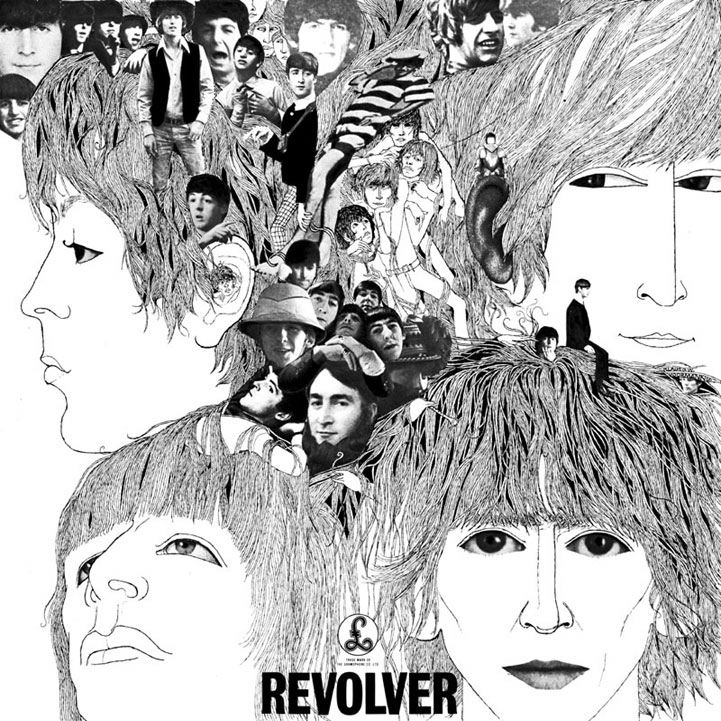
Multiple mixes case #1: The Beatles - Revolver
While I could have used any Beatles record up through the Beatles (and I may even refer to them), I chose Revolver because it shows the starkest contrast of all their records. Why are there multiple mixes of the Beatles? You'd sort of assume some band as big as the Beatles would have all their business together and just have one set. But that's hardly the case. It's a rather ludicrous reason to go and release another set of mixes, but it happened. And there's one reason why:
Stereo. Stereo was a newfangled thing back in 1968-1969. It was never really around before that, and it took the Beatles Abbey Road to utilize stereo even one bit. So what was before? Mono. And all of the prior records were mixed for mono. Everything from Please Please Me through the Beatles was mixed in mono. The Beatles themselves took care of the mixing in this format, and they had every control over the process to make the records what they were back in the day, staggering monoliths in rock music. But when the stereo craze hit, something was realized: re-release all the previous records in stereo! More money! Alas, none of the Beatles were involved in this. While I'm pretty certain George Martin was helping with these new stereo mixes, many things happened:
1. Straight up different takes were used. So between mono and stereo, a totally different vocal take was used, or a different version of a guitar solo. While it doesn't sound like a big deal at a first glance, it matters a great deal because a different vocal or instrument line can change the way a song feels to a listener.
2. Sometimes with going back and forth, songs ended up in different keys. For example, "She's Leaving Home" off of Sgt. Pepper's Lonely Hearts Club Band is in different keys on stereo and mono versions.
3. Spreading some of the tracks over two ears (i.e. vocals in one ear, instruments in another) makes the entire mix of the song really thin and not as full as it should.
4. A lot of the songs just didn't come off as well in their stereo mixes. Revolver is my case in point.
I'm going to be honest. So even in its stereo mix, it's still a truly perfect record...that's undeniable. But listening to the stereo mix and comparing it to the mono mix, there's no choice involved. The mono mix is simply the best. It's how the Beatles wanted the record heard, and they used up all the best takes in creating Revolver, leading to the re-mixers appropriating the unused takes for the stereo mixes (they were probably unused for a reason...). The way the backwards guitar creeps in on you when you're drifting to "I'm Only Sleeping" is positively supernatural. Revolver just sounds more alive when it's in mono.
Multiple mixes case #2: The Velvet Underground - The Velvet Underground
This record does, in fact, exist in two mixes. The first was done by Lou himself, and was only released on the initial pressings of the US vinyl. It's famously known as the "Closet Mix"...because it sounds like everything's in a closet when you listen to it. Everything is bracing and immediate, with vocals brought straight to the foreground. The other was done by Val Valentin, and so it's known as, well, the "Valentin Mix"; it's a little more even-handed with all the material, as the vocals aren't as overpowering as they are in the "Closet Mix," in addition to some takes being entirely different: "Some Kinda Love" on the "Closet Mix" is a much slower version of the tune in comparison to the "Valentin Mix."
On the whole, though? The picture is a bit fuzzier. Nowadays, if you went out and got this record (and if you haven't, DO IT, it's a command), you'd get the "Valentin Mix," not the "Closet Mix." But if you went and sought out the Velvets box set, Peel Slowly and See, you'd end up with the "Closet Mix." Is there a right answer? Largely, no. Outside of "Some Kinda Love," which still fits perfectly in each of the records regardless of the mix, there are no glaring differences between the two mixes that firmly place one mix worse than the other (unlike the Beatles stereo mixes). Some people may prefer one mix over the other. Personally? I prefer the "Closet Mix." Perhaps it's because I (perhaps too) highly value artist intent: if there's any case where I can choose the artist mixing it themselves versus an outside source, I will choose the artist's mix. It's really just a case of preference more than anything in this instance. The record is far too perfect for a minor mix issue to come into the way of enjoying it.
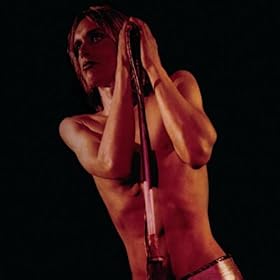
Multiple mix cases #3: The Stooges - Raw Power
This is another very famous case of "multiple mixes." I very briefly referred to it in my Punk Primer entry, but perhaps it's time to address this record's mixing woes more in full. First, Iggy wanted to mix it. He produced a rough mix, but the label hated it. So they brought Iggy compatriot David Bowie in to mix it, and outside of "Search and Destroy," Bowie's mix is largely what pervades the first edition of the record. But no one liked it. Haters be hating, but no one liked his mix.
Then in 1997, when everyone realized that the Stooges were actually brilliant and deserve whatever kudos they want (their recent induction into the Rock & Roll Hall of Fame was long overdue, damnit), Columbia told Iggy he could come in and remix the record. And then, suddenly, when his mix came out, many (including former Stooges) cried foul over this new mix of the record (thus referred to as the "Iggy Mix"). Some of it is perhaps a legitimate claim. This record is mixed very, very, loud. It's obnoxiously loud. In probably an attempt to mix the loudest record ever, Iggy pushed all the levels up as far as they would go. It turns out that Iggy's Raw Power mix is likely one of the loudest records, ever. And for that reason, the record suffers some. The rumor is that the original producer failed to get enough volume off of the instruments, so pushing the instruments to the levels on the Iggy Mix introduced the distortion heard. And so, some elements of the record became uncomfortably distorted. Of course, I hardly think that this record was meant to be "comforting" in any way, shape or form.
So really, since everyone is hating on every version of this record, there still, to this day, is no real good mix of Raw Power, and it's really unlikely that we will ever hear the "real" version of Raw Power. Which is rather unfortunate. However, I'm inclined to think that the lack of a legitimate mix of Raw Power means very little. Just look at the name of the record. Raw Power. This record is supposed to be raw. Maybe that's the way the record is supposed to be, forevermore: raw, rough, with no "glossy" or "perfect" mix for it. As the adage goes, "some stones are better left unturned" and a good part of me believes that applies to Raw Power, no matter how much "the perfect mix" of it may tickle the audiophile in me.
----------
So there it is, three different records with three different mixing crises, some more than others, some making big differences to what you hear and some making very little difference. Largely, the mix matters, but in some cases, if the differences are minor enough, it really doesn't matter what mix you choose because they're all good. Sometimes, these problems occur because the studio can be considered as a precise instrument that can add or detract so much to a recording. Sometimes, it's there to capture the moment, whether done well or, um, rather poorly.
My contention is that there isn't a particularly good way to say that there's multiple legitimate ways of hearing a record. This is mostly because there one important thing to consider: artist intent. For many of the most important records, the artist was not involved in one of the present mixes. I will discuss three cases below. The first containing a whole swath of records (but with a focus on one in particular), the second being a particular instance with less variation than imagined, and a third which has had the roughest time of all when it comes to getting mixed right.
Multiple mixes case #1: The Beatles - Revolver
While I could have used any Beatles record up through the Beatles (and I may even refer to them), I chose Revolver because it shows the starkest contrast of all their records. Why are there multiple mixes of the Beatles? You'd sort of assume some band as big as the Beatles would have all their business together and just have one set. But that's hardly the case. It's a rather ludicrous reason to go and release another set of mixes, but it happened. And there's one reason why:
Stereo. Stereo was a newfangled thing back in 1968-1969. It was never really around before that, and it took the Beatles Abbey Road to utilize stereo even one bit. So what was before? Mono. And all of the prior records were mixed for mono. Everything from Please Please Me through the Beatles was mixed in mono. The Beatles themselves took care of the mixing in this format, and they had every control over the process to make the records what they were back in the day, staggering monoliths in rock music. But when the stereo craze hit, something was realized: re-release all the previous records in stereo! More money! Alas, none of the Beatles were involved in this. While I'm pretty certain George Martin was helping with these new stereo mixes, many things happened:
1. Straight up different takes were used. So between mono and stereo, a totally different vocal take was used, or a different version of a guitar solo. While it doesn't sound like a big deal at a first glance, it matters a great deal because a different vocal or instrument line can change the way a song feels to a listener.
2. Sometimes with going back and forth, songs ended up in different keys. For example, "She's Leaving Home" off of Sgt. Pepper's Lonely Hearts Club Band is in different keys on stereo and mono versions.
3. Spreading some of the tracks over two ears (i.e. vocals in one ear, instruments in another) makes the entire mix of the song really thin and not as full as it should.
4. A lot of the songs just didn't come off as well in their stereo mixes. Revolver is my case in point.
I'm going to be honest. So even in its stereo mix, it's still a truly perfect record...that's undeniable. But listening to the stereo mix and comparing it to the mono mix, there's no choice involved. The mono mix is simply the best. It's how the Beatles wanted the record heard, and they used up all the best takes in creating Revolver, leading to the re-mixers appropriating the unused takes for the stereo mixes (they were probably unused for a reason...). The way the backwards guitar creeps in on you when you're drifting to "I'm Only Sleeping" is positively supernatural. Revolver just sounds more alive when it's in mono.
Multiple mixes case #2: The Velvet Underground - The Velvet Underground
This record does, in fact, exist in two mixes. The first was done by Lou himself, and was only released on the initial pressings of the US vinyl. It's famously known as the "Closet Mix"...because it sounds like everything's in a closet when you listen to it. Everything is bracing and immediate, with vocals brought straight to the foreground. The other was done by Val Valentin, and so it's known as, well, the "Valentin Mix"; it's a little more even-handed with all the material, as the vocals aren't as overpowering as they are in the "Closet Mix," in addition to some takes being entirely different: "Some Kinda Love" on the "Closet Mix" is a much slower version of the tune in comparison to the "Valentin Mix."
On the whole, though? The picture is a bit fuzzier. Nowadays, if you went out and got this record (and if you haven't, DO IT, it's a command), you'd get the "Valentin Mix," not the "Closet Mix." But if you went and sought out the Velvets box set, Peel Slowly and See, you'd end up with the "Closet Mix." Is there a right answer? Largely, no. Outside of "Some Kinda Love," which still fits perfectly in each of the records regardless of the mix, there are no glaring differences between the two mixes that firmly place one mix worse than the other (unlike the Beatles stereo mixes). Some people may prefer one mix over the other. Personally? I prefer the "Closet Mix." Perhaps it's because I (perhaps too) highly value artist intent: if there's any case where I can choose the artist mixing it themselves versus an outside source, I will choose the artist's mix. It's really just a case of preference more than anything in this instance. The record is far too perfect for a minor mix issue to come into the way of enjoying it.
Multiple mix cases #3: The Stooges - Raw Power
This is another very famous case of "multiple mixes." I very briefly referred to it in my Punk Primer entry, but perhaps it's time to address this record's mixing woes more in full. First, Iggy wanted to mix it. He produced a rough mix, but the label hated it. So they brought Iggy compatriot David Bowie in to mix it, and outside of "Search and Destroy," Bowie's mix is largely what pervades the first edition of the record. But no one liked it. Haters be hating, but no one liked his mix.
Then in 1997, when everyone realized that the Stooges were actually brilliant and deserve whatever kudos they want (their recent induction into the Rock & Roll Hall of Fame was long overdue, damnit), Columbia told Iggy he could come in and remix the record. And then, suddenly, when his mix came out, many (including former Stooges) cried foul over this new mix of the record (thus referred to as the "Iggy Mix"). Some of it is perhaps a legitimate claim. This record is mixed very, very, loud. It's obnoxiously loud. In probably an attempt to mix the loudest record ever, Iggy pushed all the levels up as far as they would go. It turns out that Iggy's Raw Power mix is likely one of the loudest records, ever. And for that reason, the record suffers some. The rumor is that the original producer failed to get enough volume off of the instruments, so pushing the instruments to the levels on the Iggy Mix introduced the distortion heard. And so, some elements of the record became uncomfortably distorted. Of course, I hardly think that this record was meant to be "comforting" in any way, shape or form.
So really, since everyone is hating on every version of this record, there still, to this day, is no real good mix of Raw Power, and it's really unlikely that we will ever hear the "real" version of Raw Power. Which is rather unfortunate. However, I'm inclined to think that the lack of a legitimate mix of Raw Power means very little. Just look at the name of the record. Raw Power. This record is supposed to be raw. Maybe that's the way the record is supposed to be, forevermore: raw, rough, with no "glossy" or "perfect" mix for it. As the adage goes, "some stones are better left unturned" and a good part of me believes that applies to Raw Power, no matter how much "the perfect mix" of it may tickle the audiophile in me.
----------
So there it is, three different records with three different mixing crises, some more than others, some making big differences to what you hear and some making very little difference. Largely, the mix matters, but in some cases, if the differences are minor enough, it really doesn't matter what mix you choose because they're all good. Sometimes, these problems occur because the studio can be considered as a precise instrument that can add or detract so much to a recording. Sometimes, it's there to capture the moment, whether done well or, um, rather poorly.
Sunday, April 25, 2010
Spiritual Successors #1: The Clash
The purpose of the "Spiritual Successors" entries is to figure out one thing about an artist/group: will another similar artist ever come along after that achieves similarly to the original group.
This requires a few things:
1. Spiritually similar. Are they both trying to achieve the same thing? This could be from being highly political to highly introspective/spiritual. As long as they are the same or similar, then we can consider the later the successor of the former.
2. Following from 1., but also of import: being a spiritual successor does not mean they have to be stylistically similar...not at all. For one, being overly restrictive limits options, and two, the nature of music has been dynamic, with different things "in" and different things "out," which means that what's good one era is not good in another (ahem, punk). To apply an analogy, if you expect yourself to be reincarnated, you wouldn't be reincarnated as "yourself," no? You would be reborn in a different vessel and do things in a unique way.
3. Similar music "methodologies." This mostly concerns the approaches that both the predecessor and the follower take to the music. Are they both generally eclectic and incorporate all sorts of elements into their music? Or do they both prefer to ply the trade they have perfected? The general consensus is here that the sorts of spiritual successor strains will be of the "eclectic" variety; most artists tire of continually "plowing their own field" (to use the vernacular of a bygone era) and choose to try something new, or to at least incorporate something new.
That being said, this does not imply that there will always be a spiritual successor for a group before. The Beatles are a good example of such. While perhaps I can discuss this at a later date and prove that no group has been able to recreate the Beatles with any degree of success, the point to make is that the Beatles were so good, so unique, so diverse in what they achieved that no artist has ever come close to the creative burst that powered their years. It really was a perfect storm for them.
Now that I've outlined the guidelines for the "Spiritual Successors" series, let's begin...
---------
The Clash were regarded as "the only band that matters," as said by pretty much everyone. Roaring along in the 1970s, they were the distinctly political side of punk. With anthems such as "White Riot" which promoted action (i.e. violence) and even the dirges such as "Straight to Hell" (hint...this song will come into play later), they lamented their lot in life much like the rest of the punk movement, but what separated them from the rest of the chaff was their willingness to try to change it.
And they were simply good. When you put on the Clash and hear "Clash City Rockers" explode out of your speakers for the very first time, the riff is quite simply embedded in your head for the rest of your life. In typing that last sentence, the riff just came bubbling out of the blue, a sort of semi-conscious recall that implies a sort of timelessness to their work (no matter how dated the punk movement became). And yes, before purists cry out, when I refer to "Clash City Rockers" playing from the Clash, I am, in fact, referring to the U.S. version of the record that came out post-Give 'em Enough Rope, as the U.K. version was never available in the United States...and, well, I'm from the United States.
Then there was their seminal record: London Calling. There is no need to defend the record. But it's important to point out how eclectic the record is in comparison to their previous ones (and to basically most records in existence). They started incorporating reggae, they dabbled in parlor jazz, noisy blues-rock, and the like. Nothing was off limits, because punk was about "no limits," not the power chord. The pop of "Train In Vain." The sinister crawl of "The Guns of Brixton." The apocalyptic march of the title track. Need I go on?
While perhaps Sandinista! was a strange choice, it pushed the boundaries of what "eclectic" meant. If you want an explanation (and don't want to trudge through 3 LPs, which at times is hard to manage), then look no further than the children's chorus version of one of their more famous "old school punk" songs, "Career Opportunities." It was already a highly political message in its first form, and given the new dressing, gained an especially vicious edge to its commentary.
As I said earlier, it was their political stance that separated them from the rest, the men from the children (so to speak). No one dared to get explicitly political, because there was always a sense of fear given that if you were outside the box, you would never get anywhere. Of course, given the Clash, getting anywhere was not really the issue, because they started nowhere, so somewhere was better than there. But most of all, they were simply bold enough to insert themselves into the political issues of the time (see the title of their fourth record: Sandinista! and you see).
So we see two trends from the Clash: while at first content to stew their own pot, they later became quite eclectic in their approach. They were also highly political (and generally great people to boot, but that's a separate entry), unafraid to confront their lot in life, and to make a stand and send a message. Is there anyone who, perhaps, can be viewed as their spiritual successor? I say yes. It is, in fact, this artist/person:
M.I.A., as she's known, is essentially a rapper from London, I believe, who traces her roots back to Sri Lanka. Her two records, Arular and Kala, are dizzyingly eclectic, with noises and sounds, thick and dirty beats flying in and out, all tied together by her verses. Stylistically, the two are far apart. Rap vs. punk, and you see a stark contrast, an uncrossable rift between the two. But neither artist treated their respective genres as a chafing categorization, but moreover a springboard to something new. The Clash incorporated reggae primarily, alongside almost every other genre into their songs, while M.I.A. has been fearless in her sampling of tracks that make her songs unmissable (in fact, "Straight to Hell" was sampled in M.I.A.'s "Paper Planes," which was her mainstream hit...it all makes sense now, no?). While the methods of each artist's eclecticism are different, that seems to be a product of the dynamic state of music, rather than an inherently different approach to their music.
While she does not dedicate herself to political material (not even the Clash did that), the amount of it is staggering and is likely comparable to that of the Clash. Of course, M.I.A. has probably been better off than the Clash have ever been in a financial sense, but M.I.A., like the Clash, took one issue to heart (the Clash's was essentially the poor standard of living in London, though usually more general than just London). Her core issue relates to her ancestry in Sri Lanka, specifically concerning the Tamil uprising and the conflict that enveloped the region (and, I would hazard to guess that it's probably not as over as some people like to think).
The comparison seems fairly apt. Both highly political, both highly eclectic. While perhaps I have not treated the "issue" (though I don't consider a faux-academic examination of an aspect of rock music to be much of a pressing "issue," much less an actual "issue") with as much depth as it may deserve, I think in general, the point has been made and brought up for discussion.
Also, M.I.A.'s new track, "Born Free," is ridiculously awesome, which partially inspired me to write the first entry to this series (I had the idea for the series already, just hadn't gotten around to it yet).
This requires a few things:
1. Spiritually similar. Are they both trying to achieve the same thing? This could be from being highly political to highly introspective/spiritual. As long as they are the same or similar, then we can consider the later the successor of the former.
2. Following from 1., but also of import: being a spiritual successor does not mean they have to be stylistically similar...not at all. For one, being overly restrictive limits options, and two, the nature of music has been dynamic, with different things "in" and different things "out," which means that what's good one era is not good in another (ahem, punk). To apply an analogy, if you expect yourself to be reincarnated, you wouldn't be reincarnated as "yourself," no? You would be reborn in a different vessel and do things in a unique way.
3. Similar music "methodologies." This mostly concerns the approaches that both the predecessor and the follower take to the music. Are they both generally eclectic and incorporate all sorts of elements into their music? Or do they both prefer to ply the trade they have perfected? The general consensus is here that the sorts of spiritual successor strains will be of the "eclectic" variety; most artists tire of continually "plowing their own field" (to use the vernacular of a bygone era) and choose to try something new, or to at least incorporate something new.
That being said, this does not imply that there will always be a spiritual successor for a group before. The Beatles are a good example of such. While perhaps I can discuss this at a later date and prove that no group has been able to recreate the Beatles with any degree of success, the point to make is that the Beatles were so good, so unique, so diverse in what they achieved that no artist has ever come close to the creative burst that powered their years. It really was a perfect storm for them.
Now that I've outlined the guidelines for the "Spiritual Successors" series, let's begin...
---------
The Clash were regarded as "the only band that matters," as said by pretty much everyone. Roaring along in the 1970s, they were the distinctly political side of punk. With anthems such as "White Riot" which promoted action (i.e. violence) and even the dirges such as "Straight to Hell" (hint...this song will come into play later), they lamented their lot in life much like the rest of the punk movement, but what separated them from the rest of the chaff was their willingness to try to change it.
And they were simply good. When you put on the Clash and hear "Clash City Rockers" explode out of your speakers for the very first time, the riff is quite simply embedded in your head for the rest of your life. In typing that last sentence, the riff just came bubbling out of the blue, a sort of semi-conscious recall that implies a sort of timelessness to their work (no matter how dated the punk movement became). And yes, before purists cry out, when I refer to "Clash City Rockers" playing from the Clash, I am, in fact, referring to the U.S. version of the record that came out post-Give 'em Enough Rope, as the U.K. version was never available in the United States...and, well, I'm from the United States.
Then there was their seminal record: London Calling. There is no need to defend the record. But it's important to point out how eclectic the record is in comparison to their previous ones (and to basically most records in existence). They started incorporating reggae, they dabbled in parlor jazz, noisy blues-rock, and the like. Nothing was off limits, because punk was about "no limits," not the power chord. The pop of "Train In Vain." The sinister crawl of "The Guns of Brixton." The apocalyptic march of the title track. Need I go on?
While perhaps Sandinista! was a strange choice, it pushed the boundaries of what "eclectic" meant. If you want an explanation (and don't want to trudge through 3 LPs, which at times is hard to manage), then look no further than the children's chorus version of one of their more famous "old school punk" songs, "Career Opportunities." It was already a highly political message in its first form, and given the new dressing, gained an especially vicious edge to its commentary.
As I said earlier, it was their political stance that separated them from the rest, the men from the children (so to speak). No one dared to get explicitly political, because there was always a sense of fear given that if you were outside the box, you would never get anywhere. Of course, given the Clash, getting anywhere was not really the issue, because they started nowhere, so somewhere was better than there. But most of all, they were simply bold enough to insert themselves into the political issues of the time (see the title of their fourth record: Sandinista! and you see).
So we see two trends from the Clash: while at first content to stew their own pot, they later became quite eclectic in their approach. They were also highly political (and generally great people to boot, but that's a separate entry), unafraid to confront their lot in life, and to make a stand and send a message. Is there anyone who, perhaps, can be viewed as their spiritual successor? I say yes. It is, in fact, this artist/person:
M.I.A., as she's known, is essentially a rapper from London, I believe, who traces her roots back to Sri Lanka. Her two records, Arular and Kala, are dizzyingly eclectic, with noises and sounds, thick and dirty beats flying in and out, all tied together by her verses. Stylistically, the two are far apart. Rap vs. punk, and you see a stark contrast, an uncrossable rift between the two. But neither artist treated their respective genres as a chafing categorization, but moreover a springboard to something new. The Clash incorporated reggae primarily, alongside almost every other genre into their songs, while M.I.A. has been fearless in her sampling of tracks that make her songs unmissable (in fact, "Straight to Hell" was sampled in M.I.A.'s "Paper Planes," which was her mainstream hit...it all makes sense now, no?). While the methods of each artist's eclecticism are different, that seems to be a product of the dynamic state of music, rather than an inherently different approach to their music.
While she does not dedicate herself to political material (not even the Clash did that), the amount of it is staggering and is likely comparable to that of the Clash. Of course, M.I.A. has probably been better off than the Clash have ever been in a financial sense, but M.I.A., like the Clash, took one issue to heart (the Clash's was essentially the poor standard of living in London, though usually more general than just London). Her core issue relates to her ancestry in Sri Lanka, specifically concerning the Tamil uprising and the conflict that enveloped the region (and, I would hazard to guess that it's probably not as over as some people like to think).
The comparison seems fairly apt. Both highly political, both highly eclectic. While perhaps I have not treated the "issue" (though I don't consider a faux-academic examination of an aspect of rock music to be much of a pressing "issue," much less an actual "issue") with as much depth as it may deserve, I think in general, the point has been made and brought up for discussion.
Also, M.I.A.'s new track, "Born Free," is ridiculously awesome, which partially inspired me to write the first entry to this series (I had the idea for the series already, just hadn't gotten around to it yet).
Monday, April 12, 2010
Lost Albums
Since it's been a long time, this entry is like a "lost entry" and so I feel like it's fair to discuss "lost albums":
Lost albums in rock lore are pretty much legendary. Sometimes they surface soon. Sometimes they surface much later. Sometimes they don't. Sometimes it's just a bunch of tapes that are compiled later, or sometimes they are completely re-imagined from the ground up. Here's a look at the more famous ones (and some personal favorites)
Cases in point:
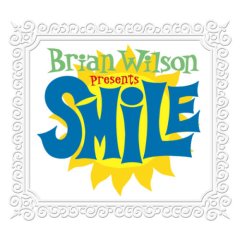
1. The Beach Boys - Smile
This is probably the most fabled one of the "lost albums" bunch. This was supposed to be Brian Wilson's "teenage symphony to God." It was supposed to eclipse, yes, eclipse Pet Sounds. How the hell is that supposed to happen? Make another record more perfect than one of the most perfect pop records ever? But for one reason or another, this album became lost. Brian Wilson went a bit bananas, battling various sorts of not-very-good mental states, group conflict, and the ilk, all causing the project to fall to the wayside. This record was bootlegged heavily, with fights all over, trying to compile the definitive statement regarding Smile. But all that was, for most intents and purposes, settled in 2004 when Brian Wilson, finally returning to peak form, completed the record (now with strange capitalization schemes) we all know and love as SMiLE:
Who knows if this is as good as the original was supposed to be? I prefer to not think about that and just rejoice in the perfect pop that the record is. In some sense, with age changing Brian Wilson's voice, the songs take on a new meaning, one of wizened (and therefore sly) reflection rather than the youth and innocence that so starkly characterized Pet Sounds...but it gives the record a second meaning. And as I said, it's neither here nor there, as the album is as good as it gets (and I consider it one of the best entries of the previous decade).
2. Bob Dylan & the Band - The Basement Tapes
Another ubiquitous "lost album" that found its way to shelves when its commercial power was realized. And what a powerful set of songs this is. Down home folk, rolling blues, and the like, all casually tossed off as if recorded over breakfast or during a brief period of downtime in the middle of the day. The songs ooze cool, nonchalance, a folksy wisdom that only Bob Dylan and the Band have been able to replicate (the Band moreso than Bobby D, but I think Bob Dylan made the conscious choice to avoid the same path).
Dylan was recovering from a motorcycle accident that had nearly ended him, and just recording by himself and the Band. No one knows the particulars and the details, and various forms of the set of tapes exist. In some ways, this album is still lost because there is no definitive statement on this time period outside of either going whole-hog with the entire complete set of the Basement Tapes (something like a five-disc set with at least three takes of most tracks) to the very short two-disc version missing some tracks. The debate will always continue, and I honestly think Bob Dylan prefers it that way.
3. The Velvet Underground - VU
So perhaps this not necessarily a straight up "lost album" like Smile or just a smattering of tapes all thrown together like the Basement Tapes (despite similar origins), but the record has been compiled from rough mixes and demos into a finely tuned, muscular beast. Mostly from the end of their career at MGM records, these tracks were supposed to be the last record on their deal there, but for reasons no man can fathom, they were unceremoniously booted from the label. These demos and rough mixes were recorded for MGM before they left and recorded Loaded, but these tracks were left undiscovered until the 1980s when the Velvet Underground underwent a bit of a renaissance in terms of sales and opinion.
The record may seem to be a sort of outtakes and demos compilation that seems pre-solo Lou Reed more than anything else, but the (obvious) secret is that Lou Reed's best outfit for performing his songs had been and will always forever be with the Velvet Underground (i.e. John or Doug, Moe, and Sterling). So yes, "Andy's Chest" shows up on Transformer, but the lazy beat on his solo work is replaced by a bouncing giddy-ness here that is superior. "Stephanie Says" became "Caroline Says II" on Berlin, but to be frank, "Caroline Says II" is not great whereas "Stephanie Says" is perfect...a slightly cruel, very melancholy ballad that was likely directed at their manager at the time.
The record was prepared with as much care and consideration as, to a great extent, any other Velvet Underground record. I consider it more or less canon, placing it in its recorded-chronological place rather than its release-chronological place (i.e. between the Velvet Underground and Loaded rather than post-Loaded). The urge to wax more eloquent on this record is tempting, but I will prevent myself on doing so because it's quite contrary to the point of this entry.
There are other examples, both great and not so great, but given these case studies (Smile being the famous one, the Basement Tapes being the pretty famous one, and VU being the personal favorite), it is clear that at some point, a lost album will always be found. As the myth indicates, "all that wander are not lost," and perhaps the idiom applies to a great extent for records in rock music.
Lost albums in rock lore are pretty much legendary. Sometimes they surface soon. Sometimes they surface much later. Sometimes they don't. Sometimes it's just a bunch of tapes that are compiled later, or sometimes they are completely re-imagined from the ground up. Here's a look at the more famous ones (and some personal favorites)
Cases in point:
1. The Beach Boys - Smile
This is probably the most fabled one of the "lost albums" bunch. This was supposed to be Brian Wilson's "teenage symphony to God." It was supposed to eclipse, yes, eclipse Pet Sounds. How the hell is that supposed to happen? Make another record more perfect than one of the most perfect pop records ever? But for one reason or another, this album became lost. Brian Wilson went a bit bananas, battling various sorts of not-very-good mental states, group conflict, and the ilk, all causing the project to fall to the wayside. This record was bootlegged heavily, with fights all over, trying to compile the definitive statement regarding Smile. But all that was, for most intents and purposes, settled in 2004 when Brian Wilson, finally returning to peak form, completed the record (now with strange capitalization schemes) we all know and love as SMiLE:
Who knows if this is as good as the original was supposed to be? I prefer to not think about that and just rejoice in the perfect pop that the record is. In some sense, with age changing Brian Wilson's voice, the songs take on a new meaning, one of wizened (and therefore sly) reflection rather than the youth and innocence that so starkly characterized Pet Sounds...but it gives the record a second meaning. And as I said, it's neither here nor there, as the album is as good as it gets (and I consider it one of the best entries of the previous decade).
2. Bob Dylan & the Band - The Basement Tapes
Another ubiquitous "lost album" that found its way to shelves when its commercial power was realized. And what a powerful set of songs this is. Down home folk, rolling blues, and the like, all casually tossed off as if recorded over breakfast or during a brief period of downtime in the middle of the day. The songs ooze cool, nonchalance, a folksy wisdom that only Bob Dylan and the Band have been able to replicate (the Band moreso than Bobby D, but I think Bob Dylan made the conscious choice to avoid the same path).
Dylan was recovering from a motorcycle accident that had nearly ended him, and just recording by himself and the Band. No one knows the particulars and the details, and various forms of the set of tapes exist. In some ways, this album is still lost because there is no definitive statement on this time period outside of either going whole-hog with the entire complete set of the Basement Tapes (something like a five-disc set with at least three takes of most tracks) to the very short two-disc version missing some tracks. The debate will always continue, and I honestly think Bob Dylan prefers it that way.
3. The Velvet Underground - VU
So perhaps this not necessarily a straight up "lost album" like Smile or just a smattering of tapes all thrown together like the Basement Tapes (despite similar origins), but the record has been compiled from rough mixes and demos into a finely tuned, muscular beast. Mostly from the end of their career at MGM records, these tracks were supposed to be the last record on their deal there, but for reasons no man can fathom, they were unceremoniously booted from the label. These demos and rough mixes were recorded for MGM before they left and recorded Loaded, but these tracks were left undiscovered until the 1980s when the Velvet Underground underwent a bit of a renaissance in terms of sales and opinion.
The record may seem to be a sort of outtakes and demos compilation that seems pre-solo Lou Reed more than anything else, but the (obvious) secret is that Lou Reed's best outfit for performing his songs had been and will always forever be with the Velvet Underground (i.e. John or Doug, Moe, and Sterling). So yes, "Andy's Chest" shows up on Transformer, but the lazy beat on his solo work is replaced by a bouncing giddy-ness here that is superior. "Stephanie Says" became "Caroline Says II" on Berlin, but to be frank, "Caroline Says II" is not great whereas "Stephanie Says" is perfect...a slightly cruel, very melancholy ballad that was likely directed at their manager at the time.
The record was prepared with as much care and consideration as, to a great extent, any other Velvet Underground record. I consider it more or less canon, placing it in its recorded-chronological place rather than its release-chronological place (i.e. between the Velvet Underground and Loaded rather than post-Loaded). The urge to wax more eloquent on this record is tempting, but I will prevent myself on doing so because it's quite contrary to the point of this entry.
There are other examples, both great and not so great, but given these case studies (Smile being the famous one, the Basement Tapes being the pretty famous one, and VU being the personal favorite), it is clear that at some point, a lost album will always be found. As the myth indicates, "all that wander are not lost," and perhaps the idiom applies to a great extent for records in rock music.
Subscribe to:
Posts (Atom)