My contention is that there isn't a particularly good way to say that there's multiple legitimate ways of hearing a record. This is mostly because there one important thing to consider: artist intent. For many of the most important records, the artist was not involved in one of the present mixes. I will discuss three cases below. The first containing a whole swath of records (but with a focus on one in particular), the second being a particular instance with less variation than imagined, and a third which has had the roughest time of all when it comes to getting mixed right.
Multiple mixes case #1: The Beatles - Revolver
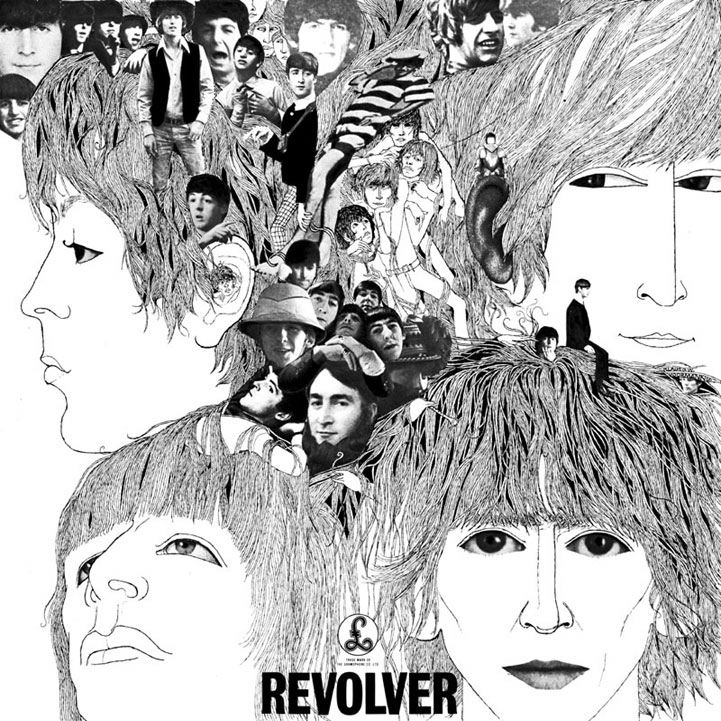
While I could have used any Beatles record up through the Beatles (and I may even refer to them), I chose Revolver because it shows the starkest contrast of all their records. Why are there multiple mixes of the Beatles? You'd sort of assume some band as big as the Beatles would have all their business together and just have one set. But that's hardly the case. It's a rather ludicrous reason to go and release another set of mixes, but it happened. And there's one reason why:
Stereo. Stereo was a newfangled thing back in 1968-1969. It was never really around before that, and it took the Beatles Abbey Road to utilize stereo even one bit. So what was before? Mono. And all of the prior records were mixed for mono. Everything from Please Please Me through the Beatles was mixed in mono. The Beatles themselves took care of the mixing in this format, and they had every control over the process to make the records what they were back in the day, staggering monoliths in rock music. But when the stereo craze hit, something was realized: re-release all the previous records in stereo! More money! Alas, none of the Beatles were involved in this. While I'm pretty certain George Martin was helping with these new stereo mixes, many things happened:
1. Straight up different takes were used. So between mono and stereo, a totally different vocal take was used, or a different version of a guitar solo. While it doesn't sound like a big deal at a first glance, it matters a great deal because a different vocal or instrument line can change the way a song feels to a listener.
2. Sometimes with going back and forth, songs ended up in different keys. For example, "She's Leaving Home" off of Sgt. Pepper's Lonely Hearts Club Band is in different keys on stereo and mono versions.
3. Spreading some of the tracks over two ears (i.e. vocals in one ear, instruments in another) makes the entire mix of the song really thin and not as full as it should.
4. A lot of the songs just didn't come off as well in their stereo mixes. Revolver is my case in point.
I'm going to be honest. So even in its stereo mix, it's still a truly perfect record...that's undeniable. But listening to the stereo mix and comparing it to the mono mix, there's no choice involved. The mono mix is simply the best. It's how the Beatles wanted the record heard, and they used up all the best takes in creating Revolver, leading to the re-mixers appropriating the unused takes for the stereo mixes (they were probably unused for a reason...). The way the backwards guitar creeps in on you when you're drifting to "I'm Only Sleeping" is positively supernatural. Revolver just sounds more alive when it's in mono.
Multiple mixes case #2: The Velvet Underground - The Velvet Underground

This record does, in fact, exist in two mixes. The first was done by Lou himself, and was only released on the initial pressings of the US vinyl. It's famously known as the "Closet Mix"...because it sounds like everything's in a closet when you listen to it. Everything is bracing and immediate, with vocals brought straight to the foreground. The other was done by Val Valentin, and so it's known as, well, the "Valentin Mix"; it's a little more even-handed with all the material, as the vocals aren't as overpowering as they are in the "Closet Mix," in addition to some takes being entirely different: "Some Kinda Love" on the "Closet Mix" is a much slower version of the tune in comparison to the "Valentin Mix."
On the whole, though? The picture is a bit fuzzier. Nowadays, if you went out and got this record (and if you haven't, DO IT, it's a command), you'd get the "Valentin Mix," not the "Closet Mix." But if you went and sought out the Velvets box set, Peel Slowly and See, you'd end up with the "Closet Mix." Is there a right answer? Largely, no. Outside of "Some Kinda Love," which still fits perfectly in each of the records regardless of the mix, there are no glaring differences between the two mixes that firmly place one mix worse than the other (unlike the Beatles stereo mixes). Some people may prefer one mix over the other. Personally? I prefer the "Closet Mix." Perhaps it's because I (perhaps too) highly value artist intent: if there's any case where I can choose the artist mixing it themselves versus an outside source, I will choose the artist's mix. It's really just a case of preference more than anything in this instance. The record is far too perfect for a minor mix issue to come into the way of enjoying it.
Multiple mix cases #3: The Stooges - Raw Power

This is another very famous case of "multiple mixes." I very briefly referred to it in my Punk Primer entry, but perhaps it's time to address this record's mixing woes more in full. First, Iggy wanted to mix it. He produced a rough mix, but the label hated it. So they brought Iggy compatriot David Bowie in to mix it, and outside of "Search and Destroy," Bowie's mix is largely what pervades the first edition of the record. But no one liked it. Haters be hating, but no one liked his mix.
Then in 1997, when everyone realized that the Stooges were actually brilliant and deserve whatever kudos they want (their recent induction into the Rock & Roll Hall of Fame was long overdue, damnit), Columbia told Iggy he could come in and remix the record. And then, suddenly, when his mix came out, many (including former Stooges) cried foul over this new mix of the record (thus referred to as the "Iggy Mix"). Some of it is perhaps a legitimate claim. This record is mixed very, very, loud. It's obnoxiously loud. In probably an attempt to mix the loudest record ever, Iggy pushed all the levels up as far as they would go. It turns out that Iggy's Raw Power mix is likely one of the loudest records, ever. And for that reason, the record suffers some. The rumor is that the original producer failed to get enough volume off of the instruments, so pushing the instruments to the levels on the Iggy Mix introduced the distortion heard. And so, some elements of the record became uncomfortably distorted. Of course, I hardly think that this record was meant to be "comforting" in any way, shape or form.
So really, since everyone is hating on every version of this record, there still, to this day, is no real good mix of Raw Power, and it's really unlikely that we will ever hear the "real" version of Raw Power. Which is rather unfortunate. However, I'm inclined to think that the lack of a legitimate mix of Raw Power means very little. Just look at the name of the record. Raw Power. This record is supposed to be raw. Maybe that's the way the record is supposed to be, forevermore: raw, rough, with no "glossy" or "perfect" mix for it. As the adage goes, "some stones are better left unturned" and a good part of me believes that applies to Raw Power, no matter how much "the perfect mix" of it may tickle the audiophile in me.
----------
So there it is, three different records with three different mixing crises, some more than others, some making big differences to what you hear and some making very little difference. Largely, the mix matters, but in some cases, if the differences are minor enough, it really doesn't matter what mix you choose because they're all good. Sometimes, these problems occur because the studio can be considered as a precise instrument that can add or detract so much to a recording. Sometimes, it's there to capture the moment, whether done well or, um, rather poorly.




 Posts
Posts

