Every artist has thought about making a double album. Few have done it, and even fewer have even met any sort of success doing it. Why has the double album been so appealing, and what determines the success (or failure) of a double album?
I think that the reason why the double LP has been so popular is that it gives artists a great amount of artistic lenience with what they want to pursue. If they don't have a particular direction in mind, they can make a double album going every sort of direction! It's actually a pretty convenient solution. This sort of smorgasbord approach is likely the most common approach when it comes to double albums: there's too much to cut out to make a single LP, either due to egos (i.e. the Beatles, perhaps) or because maybe there's just too much good material there (also i.e. the Beatles). Basically, the problem (too much stuff) is resolved by keeping the problem (too much stuff? keep it)...like throwing everything and the kitchen sink at a problem. Sometimes, the extra space is needed to expound on an album concept (closely intertwining with the art of the concept album), like the Who's Tommy. This last iteration is much less common, but its validity cannot be dismissed.
It's necessary to break the double-LP into two categories because each has to be graded on very different forms. While all albums should still follow the general criteria I outlined much earlier, double-LPs gain some leniency in some quarters but generate some extra rules in return. The first, which we'll call the "sprawl" double-LP:
1. The "sprawl" double-LP must cover enough ground. If it doesn't, it's what we'll call the "under-sprawl" double-LP. If you do not have enough variation to cover two LPs, then don't do it. It may be bearable to go through the same shtick for one LP, but two is overkill. Simply put, you have enough room to tinker around, so do it! Don't waste the space on the same genre the whole time!
2. That being said, there is such thing as "over-sprawl," where you just cover way too much ground without stylistic focus and a core to what you're going for. This is typically the worst version of the double-LP, too much of everything, not enough of something. The "over-sprawl" double LP uses the extra space as room for experimenting. Do that in the studio! Don't release that if it's only use was to mess with that random studio effect! You're hurting the album in all quarters by going with the "over-sprawl" approach!
3. All Criteria established in my Mission Statement still apply, no questions asked. However, given the nature of a double-LP, flow can oftentimes be broken up LP by LP, or side by side, depending on the record. That rule requires the "double-LP exception," which I actually hinted at there.
The concept double-LP has a different set of criteria:
1. Does the concept deserve to be on two LPs? Is it really that expansive to require that second LP? Do you really need an extra 40 minutes to expound on your hero's walk from his garden to the grocery store? Probably not. But do you need an extra 40 minutes to talk about key events, themes, and motifs? If yes, then you need the second LP! Yes, this can apply to instrumental segues on a double-LP, which oftentimes are very capable of providing respite or a connecting piece to another section of a record.
2. Are all tracks thematically relevant? Related to the above rule but sort of distinct. It can musically fulfill the concept, or lyrically fulfill the concept, but if it doesn't, throw it out! It doesn't belong at all! This is basically a corollary to the "over-sprawl" rule with a specific application to double-LPs.
3. Same as the "sprawl" double-LP rule. Everything still applies. But with a concept double-LP, there simply is less room for flow problems, and flow separation (or lack thereof) becomes a much bigger issue.
Given the criteria, it's simply quite easier to craft a good "sprawl" double-LP than it is to craft a good "concept" double-LP. Here's a list of masterful double-LPs, and it's actually quite short (no order):
The Beatles - The Beatles
The Rolling Stones - Exile On Main St.
The Jimi Hendrix Experience - Electric Ladyland
The Clash - London Calling
Led Zeppelin - Physical Graffiti
Bob Dylan - Blonde On Blonde
Bob Dylan and the Band - The Basement Tapes
Miles Davis - Bitches Brew
The Who - Tommy
Derek and the Dominos - Layla & Other Assorted Love Songs
Bruce Springsteen - The River
Sonic Youth - Daydream Nation
The Minutemen - Double Nickels on the Dime
It's by no means the definitive list, but it's a good compilation of the good stuff when it comes to double-LPs. Each record I listed I would probably consider a must-listen at some point. Yes, it's going to be a full 70-90 minutes of your life to work through it, but I'll be damned if it won't be a 70-90 minutes very, very well spent. While it's definitely hard to apply my criteria to the Miles Davis record, really...who doesn't love that record (except the traditional jazz cats)?
I did want to mention what I consider to be the outer frontier of the double-LP: the triple-LP. Until this week, I was only able to think of two musicians who had even dared to compile a triple-LP: George Harrison and the Clash. And, coincidentally, they're both ridiculously good records...
George Harrison - All Things Must Pass
The Clash - Sandinista!
The only person since then that had even dared to venture into that territory just joined the field this week - Joanna Newsom - with the record Have One On Me. Maybe it should have been called Have Two On Me, because there's two extra LPs (and in this instance, yes, in the LP sense because the album spans over three LPs...meaning it is two hours long). Time will only tell if Joanna Newsom joins the ranks of the Clash and George Harrison as the only people to ever successfully produce a triple LP. Even daring to do it deserves many accolades...at least in my opinion.
Thursday, February 25, 2010

Thursday, February 4, 2010
Punk Primer
It seems rather useless to write about punk, to be honest. Punk is about the gut feeling. Punk is about harnessing feelings. So what is the use of writing about punk? You put on punk, you get lost in the masses. But, as usual, the scholarly side of me (though there is not much that is scholarly about rock music) wants to break it down and present my theories and concepts with regards to punk music. So here goes...the nature of punk music says that what I'll be saying is useless and that you should ignore it (see: the "Ignore Alien Orders" sticker emblazoned on Joe Strummer's guitar), so do what you will:
Punk music essentially started with, well, proto-punk. Quite obvious, really. But where does proto-punk begin? I would argue that it began with the Velvet Underground. "I'm Waiting for the Man" and "White Light/White Heat" (to just name a few) move forward almost recklessly, propelled forward by some supernatural force. Trademark punk sound (which, as I will argue, hardly defines punk) is not there, but certainly the aesthetic was bred (reckless abandon) by the Velvet Underground (the White Light/White Heat record in its entirety is a pretty damn good lesson in proto-punk, but it's not for the faint of heart).
But, when most people envision proto-punk, it's not the Velvet Underground. It's the Stooges. These guys, for the unfamiliar (shame on you if you are unfamiliar):
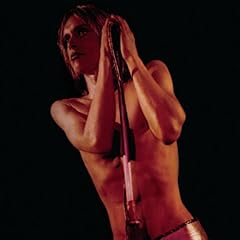
That's the cover of what's arguably the most influential record in the development of punk music. It's strikingly simple (a classic hallmark of "punk" but not necessarily true), it's angry, it's mad, but it exhibits what I think is the classic "feeling" associated with punk music: alienation. The guitars bite, the guitars snarl, the bass is sinister, the drums insane, and everything just sounds like it's barreling forward only to self-destruct (another classic hallmark). Raw Power is simply one of the finest records around. I'm not sure where I would rank it, but it's really damn good. Ironically, everyone involved with Raw Power says that no mix of it is good (there are "Bowie Mix" haters, "Iggy Mix" haters, "Rough Mix" haters, and all). But that's not the point, because irrespective of the mix, this record shows proto-punk at its finest (and it actually outclasses many, many, punk records).
But onward to punk. The aforementioned feeling of alienation drives punk. Disillusionment with the establishment, the loss of connectedness to the world around, those are the feelings that drive punk. Alienation typically leads to either apathy or the outright rejection and revolt towards the offenders, and those choices are a very good approximation of the punk dichotomy. Naturally, I would hesitate to offer strict dichotomies when it comes to punk music, because artists can easily dip back and for, to and fro from one side of the dichotomy together, but it presents a stark view of the way punk music was an outlet for frustrations towards the alienation they faced. To put it in a more or less succinct manner, if you were punk, you were either a nihilist or an activist.
Nihilism is generally regarded as the not caring about anything. This camp is the apathetic camp, who have chosen to not care about their situation: they are essentially to disillusioned to even care about much at all and would much rather self-destruct than deal with it. I would argue that the Sex Pistols embodied this nihilistic side the best. The easy thing to do is point to the implosion of Sid Vicious, but I'm going to instead point to the track "No Feelings" off of, well, their only record. "I got no emotions for anybody else, you better understand...I'm in love with myself" is an example of pure nihilism.
The activists in the punk movement are your politi-punk bands, who choose to care and try to change their situation, and if they can't peacefully, well, force isn't out of the question. The Clash are the prime example of this. "White Riot" speaks, well, of itself, calling for drastic action because they have been sidelined and ignored (not in terms of race, mind you, but it's a class struggle). It's inherently possible to say that these groups were a bit Marxist, but when you're the lower class, a lot of things become an issue of class conflict.
But punk, after the feeling of alienation, is an aesthetic or mindset more than anything else. It's not "three chords and a sneer," which is apparently how most people define punk. Punk knows no limits. How else can you examine the fact that London Calling is so much more than just a punk record? It mashes anything and everything together to create a supernatural experience, but you still always know that they're all about the issues, but they just take care of it more than anyone else. Perhaps the blame can be put on punk itself. Punk prided itself on its simplicity, and so it became associated with less when it wanted to say more.
Joe Strummer, as I recall, said that punk is what you want it be, what you make it out to be, and you better damn well believe him. Even with the Mescaleros, his later output, such as Global A Go Go, I still saw that as a punk record. Just punk with an ear towards world music. You look at punk groups who have also seen "righteous" success (I'll deal with my usage of the term "righteous" here in a bit) and you see the Minutemen, whose Double Nickels on the Dime record stretches punk's sound to crazy limits while still definitively carrying the punk spirit.
And I come to my use of the term "righteous." There was a neo-punk movement in the 1990s powered by the likes of Green Day and blink-182 and the ilk. Let me just say that none of it is very good. They mostly capitalized on the "three chords and a sneer" and tried to run with it. And those groups got popular by abusing the spirit of punk. Dookie was probably the best of the crop, but in terms of where it belongs, it still doesn't rank very highly (it's a rather nihilistic record, and in that area, you can't come within a universe's length of the Sex Pistols there). Still, it's damning to see the way punk has been despoiled and stained. There are a few groups carrying the spirit of punk, but I'm not sure that I could call them completely punk bands.
I'm not sure we will ever see another truly punk band out there. I think our last chance left with this guy:

He was the last great punksman (if such a term could ever exist), the last shining light of hope where all was dark. Rest in peace, Joe Strummer (1952.08.21-2002.12.22). Every time I think about punk, I think about this angelic figure. The unlikely revival of punk kills me, because "righteous" punk music was the first thing I'd ever gotten into.
Thursday, January 21, 2010
Chameleons in Music
Ah, the chameleons in the world of rock music. Chameleons in the best sense preempt environment changes. If the winds of music are going one way, the chameleon was, in all likelihood, there first. But they ceaselessly reinvent themselves to the point where to try to describe the artist in one word, or even a sentence (or a paragraph, or so on and so forth...) is a fruitless exercise. There are only a couple of chameleons in rock music that are of note, and I think it's necessary to at least examine each chameleon in some sort of detail or length. These two are Bob Dylan and David Bowie, and they both have led stellar careers where each milestone coincides with some sort of reinvention and/or landmark work that either pioneered a genre or proved to be that genre's finest work.

But really, which image would best describe "Bob Dylan" as the man? You'd be hard-pressed to pick one picture and say "That there is everything Bob Dylan was."
He was a folk revivalist, a neo-folkie who brought the genre back into the popular consciousness pushed its boundaries in form. He then forsook folk for more fertile territories by going electric, infusing the ferocity of rock with a lyrical inventiveness that has never been replicated since. But then he became "the lonesome hobo" and then a country crooner. And then, in the wake of his marriage, became the epitome of lovesick and in one fell swoop created the "confessional singer-songwriter" genre, all while penning a classic album that simply is the best breakup album of all time, if not standing tall as one of the greatest records, ever. Next he found himself and became born again. That didn't last, though, as he changed his colors and became the world-weary, grizzled old wise man that he is today.
In every sense, he either invented the genre (neo-folk), or proved to produce the finest records in whatever genre he happened to be in at the time (Highway 61 Revisited, Blonde On Blonde, among the rest of them). Perhaps you could make an argument that in strict terms of music, you'd be hard-pressed to find a genre that Bobby D actually invented for himself. But I think that there's almost no such thing as a completely "new" genre: it's built from the blocks of older genres and appropriated and given a fresh new light, which is what Bob Dylan did.
Regardless, just by looking through the previous paragraph that condenses a 40 or so year career into a paragraph probably does Bob Dylan oodles of grave injustices. No man has ever been as slippery as Bob Dylan. Hard to get a hold of, because he is, and hard to get a hold of because he has changed too many times to account, to keep up with the times as they changed around him.\

Now, I could have also picked from a ton of possible photos for David Bowie, but of all the ones I could choose, I prefer this photo, as I wanted to avoid using the album cover for Low at every turn (because really, I would have no problem with that). But David Bowie has led almost as long as a career as Bob Dylan, with almost as many twists and turns, which were arguably more drastic than Dylan's.
First plumbing psychadelic folk, Bowie later turned to glam rock, which later became a brief foray into soul and R&B before he went entirely experimental and avant-garde with the so-called "Berlin Trilogy," a classic landmark. After "retreating" a bit into more accessible music for a long while, Bowie turned to electronica before basically spending his time reinventing his legacy.
While at first it doesn't seem like as many twists and turns as Dylan's career was, Bowie's were undoubtedly more revolutionary. Bowie essentially invented glam rock with Hunky Dory and the Ziggy Stardust record. He also pioneered the use of electronics in music and essentially helped form post-punk and New Wave with his "Berlin Trilogy." Those achievements alone are astounding, but when taken in the context that it was all basically done by one man, who had either the wits or just the fleeting sense of creativity to change his musical appearance so drastically, then this proposition becomes mind-blowing. Most artists spend their lives daydreaming about inventing genres and becoming a pervasive influence in music; David Bowie spent most of his time, well, inventing genres and becoming a pervasive influence in music.
-----------
And so, there you have it. They're a little brief, but I hope you get the gist of it. Dylan and Bowie were both quintessential chameleons: they never remained in a state of stasis for very long in their careers, as either they just kept on changing to their environment or actually creating a new environment around them. Because of their successes in their changes, they both have had lasting influences in rock music and have both created, together, at least 50 records that must be heard before a person dies. That's pretty damn impressive, right?

But really, which image would best describe "Bob Dylan" as the man? You'd be hard-pressed to pick one picture and say "That there is everything Bob Dylan was."
He was a folk revivalist, a neo-folkie who brought the genre back into the popular consciousness pushed its boundaries in form. He then forsook folk for more fertile territories by going electric, infusing the ferocity of rock with a lyrical inventiveness that has never been replicated since. But then he became "the lonesome hobo" and then a country crooner. And then, in the wake of his marriage, became the epitome of lovesick and in one fell swoop created the "confessional singer-songwriter" genre, all while penning a classic album that simply is the best breakup album of all time, if not standing tall as one of the greatest records, ever. Next he found himself and became born again. That didn't last, though, as he changed his colors and became the world-weary, grizzled old wise man that he is today.
In every sense, he either invented the genre (neo-folk), or proved to produce the finest records in whatever genre he happened to be in at the time (Highway 61 Revisited, Blonde On Blonde, among the rest of them). Perhaps you could make an argument that in strict terms of music, you'd be hard-pressed to find a genre that Bobby D actually invented for himself. But I think that there's almost no such thing as a completely "new" genre: it's built from the blocks of older genres and appropriated and given a fresh new light, which is what Bob Dylan did.
Regardless, just by looking through the previous paragraph that condenses a 40 or so year career into a paragraph probably does Bob Dylan oodles of grave injustices. No man has ever been as slippery as Bob Dylan. Hard to get a hold of, because he is, and hard to get a hold of because he has changed too many times to account, to keep up with the times as they changed around him.\

Now, I could have also picked from a ton of possible photos for David Bowie, but of all the ones I could choose, I prefer this photo, as I wanted to avoid using the album cover for Low at every turn (because really, I would have no problem with that). But David Bowie has led almost as long as a career as Bob Dylan, with almost as many twists and turns, which were arguably more drastic than Dylan's.
First plumbing psychadelic folk, Bowie later turned to glam rock, which later became a brief foray into soul and R&B before he went entirely experimental and avant-garde with the so-called "Berlin Trilogy," a classic landmark. After "retreating" a bit into more accessible music for a long while, Bowie turned to electronica before basically spending his time reinventing his legacy.
While at first it doesn't seem like as many twists and turns as Dylan's career was, Bowie's were undoubtedly more revolutionary. Bowie essentially invented glam rock with Hunky Dory and the Ziggy Stardust record. He also pioneered the use of electronics in music and essentially helped form post-punk and New Wave with his "Berlin Trilogy." Those achievements alone are astounding, but when taken in the context that it was all basically done by one man, who had either the wits or just the fleeting sense of creativity to change his musical appearance so drastically, then this proposition becomes mind-blowing. Most artists spend their lives daydreaming about inventing genres and becoming a pervasive influence in music; David Bowie spent most of his time, well, inventing genres and becoming a pervasive influence in music.
-----------
And so, there you have it. They're a little brief, but I hope you get the gist of it. Dylan and Bowie were both quintessential chameleons: they never remained in a state of stasis for very long in their careers, as either they just kept on changing to their environment or actually creating a new environment around them. Because of their successes in their changes, they both have had lasting influences in rock music and have both created, together, at least 50 records that must be heard before a person dies. That's pretty damn impressive, right?
Saturday, January 16, 2010
This Record Probably Should Have Been Released...
...33 years ago. So, released 2008 shoulda been 1975.

This record is like, Bruce Springsteen. No, really. The frontman, Brian Fallon, sounds like the Boss himself, except minus the growl and tear that develops in the Boss's singing.
But that's not really only it. Both the Gaslight Anthem and the Boss utilize the same themes, perhaps recycled a whole lot, but still just as powerful: songs about late night films, old cars, the whole bit. So why am I writing about this record, when I could be writing about the Boss himself?
Well, first off I don't feel like addressing the Boss himself yet. That'll be later. But this is a damn good record. One reviewer put it this way (credit is due, yeah?):
Bruce Springsteen went and saw the Ramones once, and was inspired to write his hit, "Hungry Heart," which he was going to give to them. But his manager, I think, wanted Bruce to keep it, because Bruce had often given away #1 hits. Lo and behold, he kept it, and his first #1 hit. But what if he had went ahead and given it to the Ramones?
And if the Ramones were doing Bruce, that's sort of what the Gaslight Anthem would sound like. They're technically a punk band, but they don't sing "punk" in the typical sense: not like the Sex Pistols with the nihilism, not like the Clash with their activism. They channel the furious roar of Bruce Springsteen, who rides a middle-class vibe. Bruce's characters are sad and/or mad with their current position in society: they care about the situation they're in, but they're not going to create a riot over it...they will just cope the best they can and get the hell out of town. Stories are carved through the stories of middle America. That's what the Gaslight Anthem go for here. So while they apparently play the whole Warped scene, they don't really fit at all.
And for all the imagery and lyric material that they plumb fearlessly, for all its almost cheesy language and abuse of clichés, it is not they are improperly applied. Clichés are at their worst when applied poorly, or done without good intentions. When Fallon sings on this record, you get a true sense of sincerity. There's no sense of triteness, no sense of being sly, just all serious, all there. When you hear him lift straight from Springsteen's "No Surrender," it feels like it belongs there.
For being such a modern record, its construction implies a much older age than, well, two years, give or take a bit. There are no indicators of any sort of modernity: just the old way of going about it, pure muscle, feeling, integrity. All the parts are simple enough, which also evokes those days closely following and around Springsteen's Born to Run era. So that's why this record should have really been released back then. But since it's here and not there, it's a brilliant and nostalgic trip back to those days.
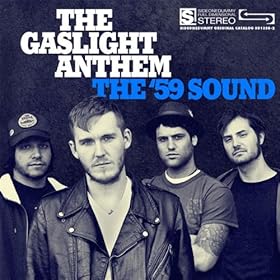
This record is like, Bruce Springsteen. No, really. The frontman, Brian Fallon, sounds like the Boss himself, except minus the growl and tear that develops in the Boss's singing.
But that's not really only it. Both the Gaslight Anthem and the Boss utilize the same themes, perhaps recycled a whole lot, but still just as powerful: songs about late night films, old cars, the whole bit. So why am I writing about this record, when I could be writing about the Boss himself?
Well, first off I don't feel like addressing the Boss himself yet. That'll be later. But this is a damn good record. One reviewer put it this way (credit is due, yeah?):
Bruce Springsteen went and saw the Ramones once, and was inspired to write his hit, "Hungry Heart," which he was going to give to them. But his manager, I think, wanted Bruce to keep it, because Bruce had often given away #1 hits. Lo and behold, he kept it, and his first #1 hit. But what if he had went ahead and given it to the Ramones?
And if the Ramones were doing Bruce, that's sort of what the Gaslight Anthem would sound like. They're technically a punk band, but they don't sing "punk" in the typical sense: not like the Sex Pistols with the nihilism, not like the Clash with their activism. They channel the furious roar of Bruce Springsteen, who rides a middle-class vibe. Bruce's characters are sad and/or mad with their current position in society: they care about the situation they're in, but they're not going to create a riot over it...they will just cope the best they can and get the hell out of town. Stories are carved through the stories of middle America. That's what the Gaslight Anthem go for here. So while they apparently play the whole Warped scene, they don't really fit at all.
And for all the imagery and lyric material that they plumb fearlessly, for all its almost cheesy language and abuse of clichés, it is not they are improperly applied. Clichés are at their worst when applied poorly, or done without good intentions. When Fallon sings on this record, you get a true sense of sincerity. There's no sense of triteness, no sense of being sly, just all serious, all there. When you hear him lift straight from Springsteen's "No Surrender," it feels like it belongs there.
For being such a modern record, its construction implies a much older age than, well, two years, give or take a bit. There are no indicators of any sort of modernity: just the old way of going about it, pure muscle, feeling, integrity. All the parts are simple enough, which also evokes those days closely following and around Springsteen's Born to Run era. So that's why this record should have really been released back then. But since it's here and not there, it's a brilliant and nostalgic trip back to those days.
Sunday, January 10, 2010
Record for the Ages: David Bowie - Low

When most people think of David Bowie, they think of the Ziggy Stardust character he created, or him just being a weird guy. Like, a really weird guy. I don't blame them. Ziggy is by far his most popular record, and David Bowie was weird back then (I am actually of this opinion too, but in a more...accepting manner). But when I think of David Bowie, I think of this work of staggering proportions, Low: masterful, and groundbreaking.
That is not really to say that Low necessarily blazed the trail; in fact, Iggy Pop's the Idiot did it first. But, for those familiar with the album, David Bowie had a heavy influence and guiding hand in the musical direction of the record. In fact, outside of a couple of cuts, Bowie wrote the music to the Idiot. Bowie's work on his friend's record allowed him to pursue his goals on Low with greater courage, dexterity, and awareness, therefore making this the far superior selection.
Much of Low's success can be attributed therein to his collaborator on the record, Brian Eno. Eno has always been one of those unique figures in rock and roll. Few know of his existence, but his influence is beyond widespread. Besides his solo records which are avant-garde and experimental, Eno's producing and collaborative work itself reads like a best-of list of all the artists, such as:
Talking Heads - More Songs About Building and Food, Fear of Music, Remain In Light
U2 - The Unforgettable Fire, The Joshua Tree, Achtung Baby
Devo - Q: Are We Not Men? A: We Are Devo!
David Byrne and Brian Eno - My Life in the Bush of Ghosts, Everything That Happens Will Happen Today
among countless others.
For one reason or another, working with Eno seems to elevate the quality of everything he touches...perhaps his challenges to rock conventions challenge the artist to be more, or maybe it is some insane sort of coincidences that align the full blossoming of an artist and their collaborator/producer in Eno towards one goal. Regardless, while Bowie is still Bowie here, we can say that Eno probably pushed the record further into greatness than what could have been expected without him.
Side A, beginning with "Speed of Life," is filled with these "art songs," whose length per track is actually beneficial to the organization of the work as a whole. While some tracks seem like strange cast-offs given their short length, if fully fleshed out and given length, my impression is that they would also lose their power. The strength of Side A is the way it flits from picture to picture as if time is precious. To move through Side A is to move through a powerful set of songs that pull at the gut and strain the brain as they all come by in quick and dizzying succession. The strangely glittering parts to "Sound and Vision" is a particular delight, with its main recourse, "waiting for the gift of sound and vision," alluding to Bowie's search for both musical and artistic zen (as he was getting back into art once again).
Side B is the other side of the coin, the other half of Low. Whereas Side A plumbed a brighter existence, Side B was the barren half that more closely resembled a futuristic leap into the depths of space (though I would argue that the tracks would fit very well with the plight of the commoner in the USSR, as evidenced by the titling of "Warszawa"). Through four dirge-like and languid instrumentals, Bowie paints a dark image: sometimes funeral-esque, sometimes sounding almost lost; but in a sense, as the saxophone finally drifts off at the end of "Subterraneans," and the outcome is unknown, the end is somehow fitting. Bowie was just escaping the icy clutch of an addiction to cocaine, and his sense of insecurity about the future is somehow reflected on Side B.
Low is a record that stands tall with the best of them. In my personal opinion, this record is an easy shot within a top fifty records of all time list, and I'd be even more inclined to include it on a top twenty(-five) records of all time list. And while initially I scoffed at Pitchfork's placement of this record over London Calling as the best record of the 1970s, after many plays, I can see why they chose Low: it's quite simply a groundbreaking record, whose incorporation of avant-garde and electronic influences was unprecedented, forward-looking and still familiar at the same time.
Apparently, much of the instrumental material that appears on Low was written (at least primitively) by Bowie as the soundtrack for a movie he acted in, the Man Who Fell to Earth. They were rejected by the director, as the rumor is that the director wanted a more folk direction with it. I wonder how that guy feels now, knowing he passed up a masterpiece.
Friday, January 1, 2010
Debut Records...Debuting the New Decade!
Debut records from bands have always been given a sort of free pass; if it’s not fully formed, or if their sound isn’t quite discovered and is rather cliché, it’s passed off as the band simply not being there yet...and the band gets a bit of a freebie in that area. A decent debut is considered about equivalent to a good second or third record (perhaps only the latter, as the second record is always, always the hardest to create, so in that sense a slightly less than decent second record is equivalent to the decent debut and good third record).
But me? I’m better than that. Sort of. When a record is presented, that is the perfect time to present a cohesive vision branded with a group’s unique sound. Any sense of derivation is perhaps allowed, but looked down upon with some degree of severity. A group’s debut is not as if the band just formed yesterday and are recording immediately. Most group’s debuts come a couple years down the road, so the group does have enough time to put something reasonable to release as a record.
This is not to say that the development of a group’s sound must have occurred only before their debut. Change is necessary in a group’s sound; stagnation throughout a career is a surefire way to make an early exit. Bands, groups, or artists with chameleonic careers (i.e. the Beatles, Bob Dylan, David Bowie, Talking Heads) have always been the most interesting, most groundbreaking, and the best catalogues.
The impression is that a debut record should be treated differently than a record farther down the line. In some sense that is true, but on the greater whole, a record is still, well, a record. So it must be good, first off. Then the rest of the process is merely just making sure a record is just their first record. In compiling a “best debut records” list, one can promote or demote good records beyond the normal criteria of a “good” record, to include the elements described above, strictly concerning cohesiveness of sound and lyric. In addition, a good debut can be groundbreaking: forging a new sound that is copied earns that particular debut record brownie points in my book.
And, well, this is what I’ve done (surprise, surprise). Without further ado:

1. The Velvet Underground - The Velvet Underground & Nico
Did you seriously expect any other result? As a record, it stands tall as a titanic feat of achievement. Absolute perfection in every facet of its existence, from the childish sounds of the celeste ringing in “Sunday Morning” to the cacophony that ends the record on “European Son.” The same raw sound permeates the record, both forecasting punk as the first proto-punk record and the avant-garde experimentalism that would become the norm for any band seeking some sort of “credentials.” For what it’s worth, this record is fast becoming a personal favorite of mine, and if I were to definitely construct a top records of all time (eventually, I will get around to it), this would be in the top ten, and perhaps even shaking up what once was, in my mind, a top five list (which has been discussed earlier at length).

2. The Sex Pistols - Never Mind the Bollocks
No, you have not heard me talk about this record before. But yes, it is necessary to hear. The Sex Pistols were the opposite side of punk compared to the Clash. The Clash were activists in every sense, aiming to right the wrongs of the world with violence, if perhaps necessary. The Sex Pistols, though, embodied the rampant nihilism of the genre, which acknowledged the dour state of affairs but simply refused to do anything about it, choosing to self-destruct rather than destroying the existing system. This record is ranked above my beloved Clash mostly because the rampant nihilism had wider implications on the whole of rock music; while certainly there were a good amount of politi-punk bands running around, the lion’s share of the punk bands chose to be nihilists rather than activists. That is not to say that this record is not as good as the Clash’s debut or, given argument, as good as London Calling. Never Mind the Bollocks is quite simply one of the two finest punk rock records of all time. And, mind you, one of the finest records of all time.

3. Television - Marquee Moon
I’ve talked about this record at length. But it is incredible to note that the feat of achievement that Marquee Moon is it is a debut record. It sounds as both a coming shot of perhaps what is to come but it also sounds like a final salvo of virtuosic bliss and the potential of post-punk, which, unfortunately, did not last as long as it could have. The guitars weave in and out like swords in a dance of death, both perfectly moving in unison and creating a force perfectly complemented by the propulsive force of the rhythm section, which still recalls punk in many ways.

4. Joy Division - Unknown Pleasures
And another record I have talked about at length already. This record is not only brilliant, but its application of atmospherics can be considered key to a whole host of genres, both in and out of rock music: dubstep, alternative rock, among others, owe a great deal to the path that Joy Division paved with this record. Part of it is that you feel the record to the greatest degree; the application of such atmospherics means that the fading in of the album itself chills to the bone, and until the final track fades, you are in the merciless grip of Joy Division’s melancholia that is truly affecting.

5. The Clash - The Clash
As I mentioned earlier, this is the flip side to the Sex Pistols. The activism and desire for change here are contagious, and undoubtedly around the time this record was released, many did probably go out and start their own “white riot.” They saw the decay in their country and wanted to change it. This record is considerably more raw than the Sex Pistols’ record. That was likely a conscious decision by both parties. The fact is, though, the Clash’s record perhaps embodies more of the “simplicity” inherent that had defined punk: keeping it simple...stupid. The Clash seems to essentially be a live record: a testament to the righteous fury that punk was capable of. The Clash perhaps chose the right route through activism, as the Sex Pistols combusted soon after their debut record, concerning “career opportunities” (I am terribly sorry for these puns, so I will blame it on the jet lag). Regardless, this fact is a masterpiece of raw power, and it undoubtedly went on the influence many.
From there, the list really goes nowhere at all. You can list them, but from this juncture it degenerates into an absolute mess of arguments without a clear set of rankings, unlike above. What I would consider as other great debut records:
Pavement - Slanted and Enchanted
The Beatles - Please Please Me
Elvis Costello - My Aim Is True
Arcade Fire - Funeral
The Strokes - Is This It
R.E.M. - Murmur
Tom Waits - Closing Time
The Replacements - Sorry Ma, Forgot to Take Out the Trash
Weezer - Weezer
The Avalanches - Since I Left You
But me? I’m better than that. Sort of. When a record is presented, that is the perfect time to present a cohesive vision branded with a group’s unique sound. Any sense of derivation is perhaps allowed, but looked down upon with some degree of severity. A group’s debut is not as if the band just formed yesterday and are recording immediately. Most group’s debuts come a couple years down the road, so the group does have enough time to put something reasonable to release as a record.
This is not to say that the development of a group’s sound must have occurred only before their debut. Change is necessary in a group’s sound; stagnation throughout a career is a surefire way to make an early exit. Bands, groups, or artists with chameleonic careers (i.e. the Beatles, Bob Dylan, David Bowie, Talking Heads) have always been the most interesting, most groundbreaking, and the best catalogues.
The impression is that a debut record should be treated differently than a record farther down the line. In some sense that is true, but on the greater whole, a record is still, well, a record. So it must be good, first off. Then the rest of the process is merely just making sure a record is just their first record. In compiling a “best debut records” list, one can promote or demote good records beyond the normal criteria of a “good” record, to include the elements described above, strictly concerning cohesiveness of sound and lyric. In addition, a good debut can be groundbreaking: forging a new sound that is copied earns that particular debut record brownie points in my book.
And, well, this is what I’ve done (surprise, surprise). Without further ado:
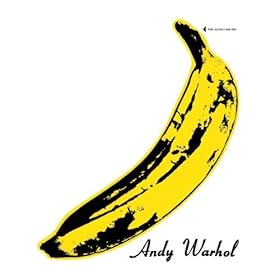
1. The Velvet Underground - The Velvet Underground & Nico
Did you seriously expect any other result? As a record, it stands tall as a titanic feat of achievement. Absolute perfection in every facet of its existence, from the childish sounds of the celeste ringing in “Sunday Morning” to the cacophony that ends the record on “European Son.” The same raw sound permeates the record, both forecasting punk as the first proto-punk record and the avant-garde experimentalism that would become the norm for any band seeking some sort of “credentials.” For what it’s worth, this record is fast becoming a personal favorite of mine, and if I were to definitely construct a top records of all time (eventually, I will get around to it), this would be in the top ten, and perhaps even shaking up what once was, in my mind, a top five list (which has been discussed earlier at length).
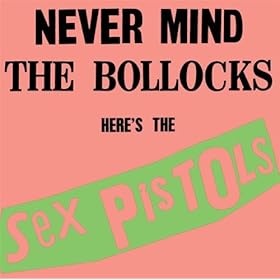
2. The Sex Pistols - Never Mind the Bollocks
No, you have not heard me talk about this record before. But yes, it is necessary to hear. The Sex Pistols were the opposite side of punk compared to the Clash. The Clash were activists in every sense, aiming to right the wrongs of the world with violence, if perhaps necessary. The Sex Pistols, though, embodied the rampant nihilism of the genre, which acknowledged the dour state of affairs but simply refused to do anything about it, choosing to self-destruct rather than destroying the existing system. This record is ranked above my beloved Clash mostly because the rampant nihilism had wider implications on the whole of rock music; while certainly there were a good amount of politi-punk bands running around, the lion’s share of the punk bands chose to be nihilists rather than activists. That is not to say that this record is not as good as the Clash’s debut or, given argument, as good as London Calling. Never Mind the Bollocks is quite simply one of the two finest punk rock records of all time. And, mind you, one of the finest records of all time.

3. Television - Marquee Moon
I’ve talked about this record at length. But it is incredible to note that the feat of achievement that Marquee Moon is it is a debut record. It sounds as both a coming shot of perhaps what is to come but it also sounds like a final salvo of virtuosic bliss and the potential of post-punk, which, unfortunately, did not last as long as it could have. The guitars weave in and out like swords in a dance of death, both perfectly moving in unison and creating a force perfectly complemented by the propulsive force of the rhythm section, which still recalls punk in many ways.

And another record I have talked about at length already. This record is not only brilliant, but its application of atmospherics can be considered key to a whole host of genres, both in and out of rock music: dubstep, alternative rock, among others, owe a great deal to the path that Joy Division paved with this record. Part of it is that you feel the record to the greatest degree; the application of such atmospherics means that the fading in of the album itself chills to the bone, and until the final track fades, you are in the merciless grip of Joy Division’s melancholia that is truly affecting.

5. The Clash - The Clash
As I mentioned earlier, this is the flip side to the Sex Pistols. The activism and desire for change here are contagious, and undoubtedly around the time this record was released, many did probably go out and start their own “white riot.” They saw the decay in their country and wanted to change it. This record is considerably more raw than the Sex Pistols’ record. That was likely a conscious decision by both parties. The fact is, though, the Clash’s record perhaps embodies more of the “simplicity” inherent that had defined punk: keeping it simple...stupid. The Clash seems to essentially be a live record: a testament to the righteous fury that punk was capable of. The Clash perhaps chose the right route through activism, as the Sex Pistols combusted soon after their debut record, concerning “career opportunities” (I am terribly sorry for these puns, so I will blame it on the jet lag). Regardless, this fact is a masterpiece of raw power, and it undoubtedly went on the influence many.
From there, the list really goes nowhere at all. You can list them, but from this juncture it degenerates into an absolute mess of arguments without a clear set of rankings, unlike above. What I would consider as other great debut records:
Pavement - Slanted and Enchanted
The Beatles - Please Please Me
Elvis Costello - My Aim Is True
Arcade Fire - Funeral
The Strokes - Is This It
R.E.M. - Murmur
Tom Waits - Closing Time
The Replacements - Sorry Ma, Forgot to Take Out the Trash
Weezer - Weezer
The Avalanches - Since I Left You
Monday, December 21, 2009
Immortality in Rock Music
There are certain figures regarded as immortal in rock music. To name a few:
Jimi Hendrix
Jim Morrison
John Lennon
Bob Marley
Ray Charles
Marvin Gaye
George Harrison
Kurt Cobain
Joe Strummer
Johnny Cash
Stevie Ray Vaughn
John Bonham
Elliot Smith
Keith Moon
and the like. I don't necessarily agree with some inclusions (I'm not sold on Morrison and Cobain, for starters), but for all intents and purposes those are commonly known "immortals" in rock music. What holds these together? They're all dead. And this leads me to my first Immutable Law in Rock Music:
"
To be truly immortal in Rock Music, one must die.
"
Of course, this makes zero sense at first. If you're dead, how are you alive? You're no longer making music. But take a look. Posthumous careers for many of these careers have either overshadowed or recharged some careers. I'm going to pull a different example than some of the people I listed above to prove my point: Ian Curtis of Joy Division.
Joy Division were not really well known when Curtis died. They were on the rise, but not really at that point yet where they got it "good." And then, poof! Ian Curtis, gone from the world. And then everyone discovered "Love Will Tear Us Apart," and the landmark records Unknown Pleasures and Closer. Then, all of a sudden, Joy Division were kind of a big deal. This allowed New Order (the rest of Joy Division) to get a head start, and has furthermore led to reissues, reprintings, and box sets of Joy Division's work. If Ian Curtis had died, would Joy Division have been big? Sure. Would they have been as big as they are now had Ian Curtis died? Arguably, no. Ian Curtis' death casts a long shadow over the melancholia that permeates every Joy Division song. In light of his depression and epilepsy, Joy Division records and songs gain a whole backstory and a whole new meaning. Divorced from their meaning, the songs are quite obviously powerful, muscular, and constantly effecting, but with this meaning every Joy Division song becomes a tour de force that simply obliterates the listener when heard.
The context of death makes everything about the artist more striking, granting the band/artist an aura that is impossible to penetrate. To elaborate on the above example, Ian Curtis, on his dying day, watched a Herzog film, put on Iggy Pop's the Idiot, and then hung himself. Curtis has attained a sort of mysticism due to that. Marvin Gaye was shot by his father, John Lennon was assassinated, while Kurt Cobain and Jimi Hendrix died due to overdoses. They're all now seen with a sort of reverence, an air of the mystic thanks to their deaths.
Each person who has died in the midst of their career has, in a sense, gained a sort of "impenetrable fog" that protects them from any sort of heated criticism and guarantees them a favorable standing in the world of rock music. I'm not saying it's undeserved. Lennon obviously deserves the "impenetrable fog"; his work with the Beatles, Plastic Ono Band and Imagine are all stone-cold classics and monoliths in rock music, and as an activist his edge has been unmatched. But Walls and Bridges? Some Time In New York City? Neither record is much better than mediocre, in my humble opinion. But his death erased any sort of criticism that could be levied against him.
This is why I'm inclined to believe Paul McCartney often suffers in critic circles: he's still around, he's still pounding it out, but either because he's been oft considered as the "soft" Beatle or because of his long career which has led to a fair number of duds to go alongside his many, many studs, he's likely the least respected Beatle (though perhaps Ringo also is given this same title). Now of course, saying someone is the least-respected Beatle is saying the fourth-most respected artist of all time, but that's neither here nor there. John Lennon has two (to three, depending on your level of scathing) duds to go alongside his studs. Granted, it's folly to extrapolate a career and look at sample sizes to examine careers of rock musicians, but it should be duly noted.
I'm also not ragging against John Lennon. Let me make that clear. John Lennon is the fucking man. I observe his birthday and his dying day every year. I don't take the day off, but for that whole day, John Lennon, everything he did and everything he stood for is always on my mind. But his death has granted him a place in the hallowed hall of rock immortals, perhaps given a slightly easier screening process than others. As have countless others, for better or for worse.
If you look at the ripples caused by a musician's death, the effect is pretty obvious. At least nowadays, the artist in question is rewarded with many, many posthumous awards and accolades. George Harrison was inducted into the Rock and Roll Hall of Fame shortly after his death. Ray Charles won a whopping eight Grammies from his record, Genius Loves Company, which was released two months after his death. Johnny Cash's American IV won a few CMA's and his rendition of "Hurt" absolutely slayed everyone and reaped some rewards soon after he passed (myself included...but his rendition of "Hurt" is great regardless of the circumstances).
The general rule? In rock music, sometimes it's better to die than to live. It doesn't make any sense, really, but it's true. It's truly a peculiar phenomenon. But it's observable. To refuse to acknowledge its existence is shortsighted. It's not talked about a lot...but it's there. Sort of like a dirty little secret. It's also something that should never be wished on someone. Death for the profit of afterlife. Perhaps it is the manifestation of "what could have been?" had they continued to be around; continued to be the great musicians they were.
Key, though, is to enjoy the careers that these immortals have brought us before their dying breath. In this sense, each album is worth more because there are less albums around. So it's therefore to critical to enjoy each landmark work each immortal brings us, to listen and bask in its eternal glory.
Jimi Hendrix
Jim Morrison
John Lennon
Bob Marley
Ray Charles
Marvin Gaye
George Harrison
Kurt Cobain
Joe Strummer
Johnny Cash
Stevie Ray Vaughn
John Bonham
Elliot Smith
Keith Moon
and the like. I don't necessarily agree with some inclusions (I'm not sold on Morrison and Cobain, for starters), but for all intents and purposes those are commonly known "immortals" in rock music. What holds these together? They're all dead. And this leads me to my first Immutable Law in Rock Music:
"
To be truly immortal in Rock Music, one must die.
"
Of course, this makes zero sense at first. If you're dead, how are you alive? You're no longer making music. But take a look. Posthumous careers for many of these careers have either overshadowed or recharged some careers. I'm going to pull a different example than some of the people I listed above to prove my point: Ian Curtis of Joy Division.
Joy Division were not really well known when Curtis died. They were on the rise, but not really at that point yet where they got it "good." And then, poof! Ian Curtis, gone from the world. And then everyone discovered "Love Will Tear Us Apart," and the landmark records Unknown Pleasures and Closer. Then, all of a sudden, Joy Division were kind of a big deal. This allowed New Order (the rest of Joy Division) to get a head start, and has furthermore led to reissues, reprintings, and box sets of Joy Division's work. If Ian Curtis had died, would Joy Division have been big? Sure. Would they have been as big as they are now had Ian Curtis died? Arguably, no. Ian Curtis' death casts a long shadow over the melancholia that permeates every Joy Division song. In light of his depression and epilepsy, Joy Division records and songs gain a whole backstory and a whole new meaning. Divorced from their meaning, the songs are quite obviously powerful, muscular, and constantly effecting, but with this meaning every Joy Division song becomes a tour de force that simply obliterates the listener when heard.
The context of death makes everything about the artist more striking, granting the band/artist an aura that is impossible to penetrate. To elaborate on the above example, Ian Curtis, on his dying day, watched a Herzog film, put on Iggy Pop's the Idiot, and then hung himself. Curtis has attained a sort of mysticism due to that. Marvin Gaye was shot by his father, John Lennon was assassinated, while Kurt Cobain and Jimi Hendrix died due to overdoses. They're all now seen with a sort of reverence, an air of the mystic thanks to their deaths.
Each person who has died in the midst of their career has, in a sense, gained a sort of "impenetrable fog" that protects them from any sort of heated criticism and guarantees them a favorable standing in the world of rock music. I'm not saying it's undeserved. Lennon obviously deserves the "impenetrable fog"; his work with the Beatles, Plastic Ono Band and Imagine are all stone-cold classics and monoliths in rock music, and as an activist his edge has been unmatched. But Walls and Bridges? Some Time In New York City? Neither record is much better than mediocre, in my humble opinion. But his death erased any sort of criticism that could be levied against him.
This is why I'm inclined to believe Paul McCartney often suffers in critic circles: he's still around, he's still pounding it out, but either because he's been oft considered as the "soft" Beatle or because of his long career which has led to a fair number of duds to go alongside his many, many studs, he's likely the least respected Beatle (though perhaps Ringo also is given this same title). Now of course, saying someone is the least-respected Beatle is saying the fourth-most respected artist of all time, but that's neither here nor there. John Lennon has two (to three, depending on your level of scathing) duds to go alongside his studs. Granted, it's folly to extrapolate a career and look at sample sizes to examine careers of rock musicians, but it should be duly noted.
I'm also not ragging against John Lennon. Let me make that clear. John Lennon is the fucking man. I observe his birthday and his dying day every year. I don't take the day off, but for that whole day, John Lennon, everything he did and everything he stood for is always on my mind. But his death has granted him a place in the hallowed hall of rock immortals, perhaps given a slightly easier screening process than others. As have countless others, for better or for worse.
If you look at the ripples caused by a musician's death, the effect is pretty obvious. At least nowadays, the artist in question is rewarded with many, many posthumous awards and accolades. George Harrison was inducted into the Rock and Roll Hall of Fame shortly after his death. Ray Charles won a whopping eight Grammies from his record, Genius Loves Company, which was released two months after his death. Johnny Cash's American IV won a few CMA's and his rendition of "Hurt" absolutely slayed everyone and reaped some rewards soon after he passed (myself included...but his rendition of "Hurt" is great regardless of the circumstances).
The general rule? In rock music, sometimes it's better to die than to live. It doesn't make any sense, really, but it's true. It's truly a peculiar phenomenon. But it's observable. To refuse to acknowledge its existence is shortsighted. It's not talked about a lot...but it's there. Sort of like a dirty little secret. It's also something that should never be wished on someone. Death for the profit of afterlife. Perhaps it is the manifestation of "what could have been?" had they continued to be around; continued to be the great musicians they were.
Key, though, is to enjoy the careers that these immortals have brought us before their dying breath. In this sense, each album is worth more because there are less albums around. So it's therefore to critical to enjoy each landmark work each immortal brings us, to listen and bask in its eternal glory.
Subscribe to:
Posts (Atom)


 Posts
Posts

