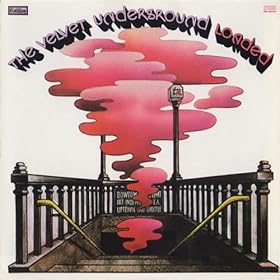
One of the strangest bits of rock music is the fact that even some of its most heralded documents can be heard in startlingly different mixes. This mostly occurs because two different people mix the same set of tracks in two different ways: one dude this way, one dude that way. It's a rather peculiar thing. But the problem that I run into (and others may too), is that when multiple distinct mixes of the same thing appear, which is considered to be the "real" mix? Can we even identify a "real" mix, or are there just simply multiple legitimate ways of hearing a record?
My contention is that there isn't a particularly good way to say that there's multiple legitimate ways of hearing a record. This is mostly because there one important thing to consider: artist intent. For many of the most important records, the artist was not involved in one of the present mixes. I will discuss three cases below. The first containing a whole swath of records (but with a focus on one in particular), the second being a particular instance with less variation than imagined, and a third which has had the roughest time of all when it comes to getting mixed right.
Multiple mixes case #1: The Beatles - Revolver
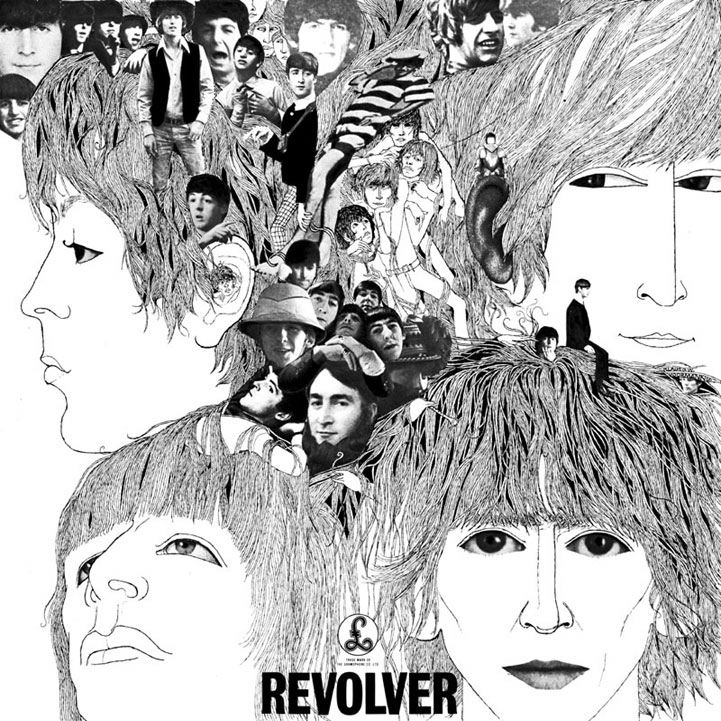
While I could have used any Beatles record up through the Beatles (and I may even refer to them), I chose Revolver because it shows the starkest contrast of all their records. Why are there multiple mixes of the Beatles? You'd sort of assume some band as big as the Beatles would have all their business together and just have one set. But that's hardly the case. It's a rather ludicrous reason to go and release another set of mixes, but it happened. And there's one reason why:
Stereo. Stereo was a newfangled thing back in 1968-1969. It was never really around before that, and it took the Beatles Abbey Road to utilize stereo even one bit. So what was before? Mono. And all of the prior records were mixed for mono. Everything from Please Please Me through the Beatles was mixed in mono. The Beatles themselves took care of the mixing in this format, and they had every control over the process to make the records what they were back in the day, staggering monoliths in rock music. But when the stereo craze hit, something was realized: re-release all the previous records in stereo! More money! Alas, none of the Beatles were involved in this. While I'm pretty certain George Martin was helping with these new stereo mixes, many things happened:
1. Straight up different takes were used. So between mono and stereo, a totally different vocal take was used, or a different version of a guitar solo. While it doesn't sound like a big deal at a first glance, it matters a great deal because a different vocal or instrument line can change the way a song feels to a listener.
2. Sometimes with going back and forth, songs ended up in different keys. For example, "She's Leaving Home" off of Sgt. Pepper's Lonely Hearts Club Band is in different keys on stereo and mono versions.
3. Spreading some of the tracks over two ears (i.e. vocals in one ear, instruments in another) makes the entire mix of the song really thin and not as full as it should.
4. A lot of the songs just didn't come off as well in their stereo mixes. Revolver is my case in point.
I'm going to be honest. So even in its stereo mix, it's still a truly perfect record...that's undeniable. But listening to the stereo mix and comparing it to the mono mix, there's no choice involved. The mono mix is simply the best. It's how the Beatles wanted the record heard, and they used up all the best takes in creating Revolver, leading to the re-mixers appropriating the unused takes for the stereo mixes (they were probably unused for a reason...). The way the backwards guitar creeps in on you when you're drifting to "I'm Only Sleeping" is positively supernatural. Revolver just sounds more alive when it's in mono.
Multiple mixes case #2: The Velvet Underground - The Velvet Underground
This record does, in fact, exist in two mixes. The first was done by Lou himself, and was only released on the initial pressings of the US vinyl. It's famously known as the "Closet Mix"...because it sounds like everything's in a closet when you listen to it. Everything is bracing and immediate, with vocals brought straight to the foreground. The other was done by Val Valentin, and so it's known as, well, the "Valentin Mix"; it's a little more even-handed with all the material, as the vocals aren't as overpowering as they are in the "Closet Mix," in addition to some takes being entirely different: "Some Kinda Love" on the "Closet Mix" is a much slower version of the tune in comparison to the "Valentin Mix."
On the whole, though? The picture is a bit fuzzier. Nowadays, if you went out and got this record (and if you haven't, DO IT, it's a command), you'd get the "Valentin Mix," not the "Closet Mix." But if you went and sought out the Velvets box set, Peel Slowly and See, you'd end up with the "Closet Mix." Is there a right answer? Largely, no. Outside of "Some Kinda Love," which still fits perfectly in each of the records regardless of the mix, there are no glaring differences between the two mixes that firmly place one mix worse than the other (unlike the Beatles stereo mixes). Some people may prefer one mix over the other. Personally? I prefer the "Closet Mix." Perhaps it's because I (perhaps too) highly value artist intent: if there's any case where I can choose the artist mixing it themselves versus an outside source, I will choose the artist's mix. It's really just a case of preference more than anything in this instance. The record is far too perfect for a minor mix issue to come into the way of enjoying it.
Multiple mix cases #3: The Stooges - Raw Power
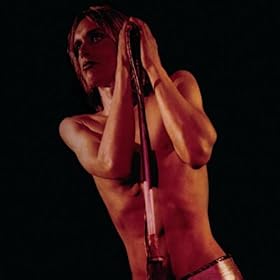
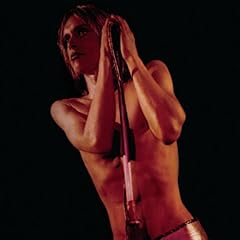
This is another very famous case of "multiple mixes." I very briefly referred to it in my Punk Primer entry, but perhaps it's time to address this record's mixing woes more in full. First, Iggy wanted to mix it. He produced a rough mix, but the label hated it. So they brought Iggy compatriot David Bowie in to mix it, and outside of "Search and Destroy," Bowie's mix is largely what pervades the first edition of the record. But no one liked it. Haters be hating, but no one liked his mix.
Then in 1997, when everyone realized that the Stooges were actually brilliant and deserve whatever kudos they want (their recent induction into the Rock & Roll Hall of Fame was long overdue, damnit), Columbia told Iggy he could come in and remix the record. And then, suddenly, when his mix came out, many (including former Stooges) cried foul over this new mix of the record (thus referred to as the "Iggy Mix"). Some of it is perhaps a legitimate claim. This record is mixed very, very, loud. It's obnoxiously loud. In probably an attempt to mix the loudest record ever, Iggy pushed all the levels up as far as they would go. It turns out that Iggy's Raw Power mix is likely one of the loudest records, ever. And for that reason, the record suffers some. The rumor is that the original producer failed to get enough volume off of the instruments, so pushing the instruments to the levels on the Iggy Mix introduced the distortion heard. And so, some elements of the record became uncomfortably distorted. Of course, I hardly think that this record was meant to be "comforting" in any way, shape or form.
So really, since everyone is hating on every version of this record, there still, to this day, is no real good mix of Raw Power, and it's really unlikely that we will ever hear the "real" version of Raw Power. Which is rather unfortunate. However, I'm inclined to think that the lack of a legitimate mix of Raw Power means very little. Just look at the name of the record. Raw Power. This record is supposed to be raw. Maybe that's the way the record is supposed to be, forevermore: raw, rough, with no "glossy" or "perfect" mix for it. As the adage goes, "some stones are better left unturned" and a good part of me believes that applies to Raw Power, no matter how much "the perfect mix" of it may tickle the audiophile in me.
----------
So there it is, three different records with three different mixing crises, some more than others, some making big differences to what you hear and some making very little difference. Largely, the mix matters, but in some cases, if the differences are minor enough, it really doesn't matter what mix you choose because they're all good. Sometimes, these problems occur because the studio can be considered as a precise instrument that can add or detract so much to a recording. Sometimes, it's there to capture the moment, whether done well or, um, rather poorly.
Showing posts with label The Velvet Underground. Show all posts
Tuesday, May 4, 2010
Thursday, February 4, 2010
Punk Primer
It seems rather useless to write about punk, to be honest. Punk is about the gut feeling. Punk is about harnessing feelings. So what is the use of writing about punk? You put on punk, you get lost in the masses. But, as usual, the scholarly side of me (though there is not much that is scholarly about rock music) wants to break it down and present my theories and concepts with regards to punk music. So here goes...the nature of punk music says that what I'll be saying is useless and that you should ignore it (see: the "Ignore Alien Orders" sticker emblazoned on Joe Strummer's guitar), so do what you will:
Punk music essentially started with, well, proto-punk. Quite obvious, really. But where does proto-punk begin? I would argue that it began with the Velvet Underground. "I'm Waiting for the Man" and "White Light/White Heat" (to just name a few) move forward almost recklessly, propelled forward by some supernatural force. Trademark punk sound (which, as I will argue, hardly defines punk) is not there, but certainly the aesthetic was bred (reckless abandon) by the Velvet Underground (the White Light/White Heat record in its entirety is a pretty damn good lesson in proto-punk, but it's not for the faint of heart).
But, when most people envision proto-punk, it's not the Velvet Underground. It's the Stooges. These guys, for the unfamiliar (shame on you if you are unfamiliar):
That's the cover of what's arguably the most influential record in the development of punk music. It's strikingly simple (a classic hallmark of "punk" but not necessarily true), it's angry, it's mad, but it exhibits what I think is the classic "feeling" associated with punk music: alienation. The guitars bite, the guitars snarl, the bass is sinister, the drums insane, and everything just sounds like it's barreling forward only to self-destruct (another classic hallmark). Raw Power is simply one of the finest records around. I'm not sure where I would rank it, but it's really damn good. Ironically, everyone involved with Raw Power says that no mix of it is good (there are "Bowie Mix" haters, "Iggy Mix" haters, "Rough Mix" haters, and all). But that's not the point, because irrespective of the mix, this record shows proto-punk at its finest (and it actually outclasses many, many, punk records).
But onward to punk. The aforementioned feeling of alienation drives punk. Disillusionment with the establishment, the loss of connectedness to the world around, those are the feelings that drive punk. Alienation typically leads to either apathy or the outright rejection and revolt towards the offenders, and those choices are a very good approximation of the punk dichotomy. Naturally, I would hesitate to offer strict dichotomies when it comes to punk music, because artists can easily dip back and for, to and fro from one side of the dichotomy together, but it presents a stark view of the way punk music was an outlet for frustrations towards the alienation they faced. To put it in a more or less succinct manner, if you were punk, you were either a nihilist or an activist.
Nihilism is generally regarded as the not caring about anything. This camp is the apathetic camp, who have chosen to not care about their situation: they are essentially to disillusioned to even care about much at all and would much rather self-destruct than deal with it. I would argue that the Sex Pistols embodied this nihilistic side the best. The easy thing to do is point to the implosion of Sid Vicious, but I'm going to instead point to the track "No Feelings" off of, well, their only record. "I got no emotions for anybody else, you better understand...I'm in love with myself" is an example of pure nihilism.
The activists in the punk movement are your politi-punk bands, who choose to care and try to change their situation, and if they can't peacefully, well, force isn't out of the question. The Clash are the prime example of this. "White Riot" speaks, well, of itself, calling for drastic action because they have been sidelined and ignored (not in terms of race, mind you, but it's a class struggle). It's inherently possible to say that these groups were a bit Marxist, but when you're the lower class, a lot of things become an issue of class conflict.
But punk, after the feeling of alienation, is an aesthetic or mindset more than anything else. It's not "three chords and a sneer," which is apparently how most people define punk. Punk knows no limits. How else can you examine the fact that London Calling is so much more than just a punk record? It mashes anything and everything together to create a supernatural experience, but you still always know that they're all about the issues, but they just take care of it more than anyone else. Perhaps the blame can be put on punk itself. Punk prided itself on its simplicity, and so it became associated with less when it wanted to say more.
Joe Strummer, as I recall, said that punk is what you want it be, what you make it out to be, and you better damn well believe him. Even with the Mescaleros, his later output, such as Global A Go Go, I still saw that as a punk record. Just punk with an ear towards world music. You look at punk groups who have also seen "righteous" success (I'll deal with my usage of the term "righteous" here in a bit) and you see the Minutemen, whose Double Nickels on the Dime record stretches punk's sound to crazy limits while still definitively carrying the punk spirit.
And I come to my use of the term "righteous." There was a neo-punk movement in the 1990s powered by the likes of Green Day and blink-182 and the ilk. Let me just say that none of it is very good. They mostly capitalized on the "three chords and a sneer" and tried to run with it. And those groups got popular by abusing the spirit of punk. Dookie was probably the best of the crop, but in terms of where it belongs, it still doesn't rank very highly (it's a rather nihilistic record, and in that area, you can't come within a universe's length of the Sex Pistols there). Still, it's damning to see the way punk has been despoiled and stained. There are a few groups carrying the spirit of punk, but I'm not sure that I could call them completely punk bands.
I'm not sure we will ever see another truly punk band out there. I think our last chance left with this guy:
He was the last great punksman (if such a term could ever exist), the last shining light of hope where all was dark. Rest in peace, Joe Strummer (1952.08.21-2002.12.22). Every time I think about punk, I think about this angelic figure. The unlikely revival of punk kills me, because "righteous" punk music was the first thing I'd ever gotten into.
Labels:
Punk,
the Clash,
the Sex Pistols,
the Stooges,
The Velvet Underground
Thursday, November 26, 2009
In Defense Of: The Velvet Underground - Loaded
Because let's face it, every Velvet Underground record is a masterpiece. The Velvet Underground & Nico? Please, let's move on, because A. I've already discussed it at length previously and B. if you don't like the record, you are doomed for an existence in the Hellscape of rock and roll. White Light/White Heat is an experimentalist's dream come true, with all the avant-garde elements finally coming to fruition in a hectic and chaotic wall of noise surrounding the disarming beauty of "Here She Comes Now." The Velvet Underground is a much quieter affair, focusing much more on that same unguarded beauty in "Here She Comes Now," with just as good results. It's still a visceral record, but it's a quiet sort of visceral, one that silently pulls at your heart rather than just sort of tearing it out.
But Loaded? It's sort of the black sheep in the VU canon. Lou Reed's voice was deteriorating at a fairly alarming rate (Doug Yule had to often pick up Lou's leads on tour when his voice gave out). And for the recording of Loaded, Moe Tucker, the percussionist, was out on maternity leave, basically. So you see, the original Velvets were losing it. The drummer gone and the lead man perpetually listed as "Questionable" on every day of touring or recording (this is a pro football reference, for those who do not understand)? Not a great recipe for success.
And since the Velvets had finally secured the funds to make something even remotely polished, this subjected them to the thumb of the record label (whereas before they were allowed to really roam as free as they wished). Hence the title, Loaded, 'cause all the label wanted was a record loaded with hits...get it? It's probably a behind-the-back jibe at the label, knowing Lou Reed. But with those extra funds to achieve a bigger sound came the risk of having to sacrifice artistic freedom for commercial viability (the crux of the issue for any self-respecting artist).
Loaded proved a couple of things: the first is that Lou Reed could write anthemic, truly catchy pop songs. "Sweet Jane" is as anthemic as it gets. You just want to scream "Sweet Jane" along with Lou. "Who Loves the Sun"? I don't, thanks to Lou (and Doug for the vocal). And so on and so forth. The second thing is that (at least in those days) it was possible to perfect art without sacrificing it for commerical viability. "Sweet Jane" and "Rock & Roll" were fairly large hits (and still receive play today) while still being legitimate songs in their own right, and being able to form those tracks and the others into a legitimate album.
While Loaded is already a virtual masterpiece, the "What could have been?"s that plague the development of this record lead us to figure that, man, if most of it could have been, how much more awesome could this record even get? Numerous Velvets have sort of ragged on the record itself. Morrison wanted all the vocal leads to have been done by Lou. Doug Yule himself thinks he may have been a little overused on the record (he even stepped in on drums in Moe Tucker's absence).
I am of the opinion that all this "What could have been?" talk sort of diminishes the view that people have on the record. Let's focus our eyes on the prize. Evaluate what you have, not what you could have had. You're better off that way. And when you take that, what you have is a record of pure pop perfection. The other thing that always puts a downer on this record is the past record of the Velvets. Pioneers in art-rock, proto-punk (and therefore punk), experimental, and avant-garde, where does this fit in? It really doesn't. Loaded is simply a pop record. But when disassociated from the rest of the Velvets' legacy, well, it turns out to be a fantastic record. And that is why I chose to defend Loaded in this entry, though it shouldn't need defense. Loaded is regarded as inferior because of its associates. That is no way to treat a masterpiece.
Wednesday, November 11, 2009
Music Progenitor: The Velvet Underground
There are a few things certain in life: the Beatles are likely the best band to ever exist in rock and roll, but the Velvet Underground were likely the most influential band to ever exist in rock and roll. Now "hold on!," you might say. I admittedly have only recently come of this opinion. I still am of the belief that the Beatles invented most forms of popular music today. But a lot of their territory is gone in my mind because the Velvets simply did it better. Because, let's be frank: the Beatles were master popsmiths. If it didn't have a good melody, it wasn't worth it to them. And thank God for that, because they had a fucking ear for melody. But the seedy underbelly, the counter-culture, the reverse flow of music, that oft-forgotten side...that was the area the Velvets held tightly in their grasp.
If you thought the Beatles were already sort of counter-culture, boy, you're in for a surprise. The Velvets, with their first two records, pushed every boundary imaginable. No topic was left untouched as a lyric. "Heroin" was a literal description of, well, doing heroin, while the cryptic "Venus In Furs" documents a tale of sexual deviance. "The Gift" was a spoken word tale of a boy mailing himself to his girl only to get killed waiting to get out of the box. This wasn't your normal stuff...no way. This was 1967, and even the Beatles never dared to venture this far with their lyrical exploration. The Velvets initially got a lot of crapola for their exploration of social deviance, but in retrospect it sincerely opened the door for virtually any artist to explore deviance in a meaningful way.
But on the music side, they pushed the envelope in many ways. The most striking thing about the Velvet Underground & Nico is the use of the viola. John Cale's experimentalism really drove the band forward within the first two records, and on the first record, it's through that viola. Instead of crafting elegant lines or whatever most people think a nice old viola should do, John Cale used the viola to create drones and a prickly bed of thorns for the rest of the band to play over...on the aforementioned "Heroin" and "Venus In Furs," those drones set the tone for the music and bring an intensity that could not have been constructed otherwise.
On White Light/White Heat, their experimentalism came from what John Cale had once called a quest for "anti-beauty." On the 15+ minute epic "Sister Ray," the apparent goal was to simply play louder than each other, with John Cale's organ fighting with Lou Reed's and Sterling Morrison's guitars, Moe Tucker's drums, and Lou's vocals, all the pieces (sort of) eternally locked in a battle to be the loudest. Previously mentioned "The Gift" is a spoken word piece, with the voice panned to one side and the instruments to the other, and in its strange way if you wanted to listen to an audiobook, you listened to the left channel, but if you wanted a jam, put in the right channel. Or you could, you know, put in both and enjoy it. But it was those little bits of experimentalism that made the record.
But the noise, oh, the noise. "I Heard Her Call My Name" is the prime example. Lou Reed's guitar runs wild like a depraved animal, squalling, sometimes off-key, deranged and self-destructive. But that was the point. It's so visceral, it rips you and forces you to listen, to be as raw as they were then. The sort of "guitar squalling feedback crazy weird solo" pops up time and time again in rock music, and it started here. You know, though, no one ever exerted less restraint with their solos than the Velvets did, and for that they proved to be the most dangerous and perhaps the most affecting.
I have vouched for the Velvets for their experimentalism, but they were not to be completely outdone on the pop front. Lou Reed knew how to write a good song, with catchy hooks aplenty. He just never indulged in it. They're seen early on in the Velvet Underground & Nico tunes "I'll Be Your Mirror" and "Sunday Morning," but until their third self-titled, it was never apparent. The Velvet Underground is a disarmingly quiet record, with not even a bit of feedback in sight. Every song except for "The Murder Mystery" (which is strikingly similar to "The Gift" but with many more interacting parts in it) is a bona fide pop masterpiece, from the mantra-like "Jesus" to the Factory-dedicated "Candy Says."
And then there's Loaded. Finally recognized for his pop sensibilities, Lou Reed was given a budget to sound like a pop star, and finally given a bit of production muscle, the record is, well, loaded with (potential) hits, with "Sweet Jane" and "Rock & Roll" actually becoming quite popular. It's a classic pop record, meaning that the Velvets were actually quite impressive pop auteurs...they just chose to not take the beaten path to get there.
Those familiar with Velvet lore know that Cale left the group ("ushered" out, whatever, it doesn't make much of a difference) after White Light/White Heat, thereafter replaced by Doug Yule. The word on the street is that this change from an experimentalist to another pop auteur changed the balance in the band. No one knows if this is true, but if it is, so what? The Velvets were an all-around damn good band regardless of form (mostly). Take it for what it's worth. They paved the way for experimentalists with the first two records and showed how anyone can write a good pop record with the last two...and no Squeeze IS NOT, IS NOT IS NOT a Velvet Underground record. It's just not. Don't even bother.
The argument then is that Lou Reed was the heart and soul of the Velvet Underground...and I'd have to agree.
But on their influence? The Velvets were proto-punk. See how "I'm Waiting For The Man" churns along, with Lou's sort of sneer-ish voice providing a groundwork for the nihilism of early punk. Their lyrical exploration empowered punk to do the same. While in a sense with all the instrumental experimentalism brought forth by the Velvets was dismantled by the punk bands, the point is still there. Post-punk titans Joy Division covered "Sister Ray" in some of their shows (not as long as the Velvets' original version, sure, but still a daunting task regardless). David Bowie loved the Velvets (and Lou Reed) so much that Bowie single-handedly revived Lou Reed's solo career with the Transformer record (a damn good one, when you think about it).
And the Velvets' influence is still around today. The Strokes have cited the Velvets as a key influence, and you can hear Casablancas do his best Lou Reed impression on their debut album, Is This It. The raggedy guitar solos done by Reed back in the day show up now and again, in works by Neil Young (his guitar-playing style is highly Velvet-ish, I would argue) to even Wilco (the cacaphony that surrounds the postlude to "At Least That's What You Said," with it's scraggly guitars and tense atmosphere can be traced to the Velvets at its core). Though they were decidely left-field, it's pretty obvious that the Velvets had a most widespread impact, creeping in and never letting go.
Convinced yet? I would hope so.
Subscribe to:
Posts (Atom)