Showing posts with label Records of Great Influence. Show all posts

Monday, June 1, 2009

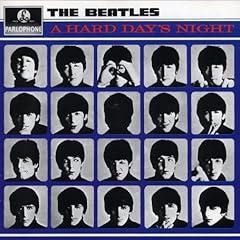
Records of Great Influence (#3): The Beatles - A Hard Day's Night


You may wonder why I didn't select the more "consummate" Beatles records, the more obvious choices like Sgt. Pepper's Lonely Hearts Club Band, Revolver, The Beatles, or even Rubber Soul.  The simplest explanation for this particular selection is that this was the first Beatles record that I "got," in the weird sense where it all clicked for me.  There are other reasons, but first things first...

As you may have read previously, I was the epitome of "late bloomer" when it came to the genre of "rock music."  It took London Calling to save me from the dark, and it took me Being There to grasp at perhaps what rock had to celebrate.  But I was missing something, more, you could say.  The "roots of rock."  Where did it all begin?  Where was the "peak" that I had heard so much about?  That was the Beatles.  And it took me my freshman year in college to realize that greatness.  And that's where this record comes in to play.  This was that first Beatles record.  And, yeah, for all intents and purposes I got Beatlemania, though 45 years later.  Better late than never, right?

The question arises: "How did it take so long for you to like the Beatles?  Like, really?"  And I have no good answer to that.  My only real snippets of pre-Fab remembrance are my dad singing "Yesterday" as he would do work around the house, and maybe hearing "Hey Jude" playing now and again.  But I don't know why I didn't pursue that line for so long.  Blame it on all my classical music training, my lack of curiosity, whatever, but finally I got it.  And that's the first reason for selecting this record.

But in another sense, this was the Beatles at the top of their "early pop" game: there is nary a not-catchy song on this record, and coincidentally, nary a really un-danceable track (some tracks lend themselves to slow dancing, which is still dancing, for all ye heathens).  Their first all-original album holds strong.  There really isn't a weak track on this record, which is surprising since even the most enthusiastic Beatles fans (myself included) acknowledge that many a Beatles record contained filler (i.e. not one, but two Carl Perkins covers on Beatles for Sale).  That doesn't mean I don't love the filler, but there was often an obvious quality difference, and with very few exceptions you can tell when you hit those lower points.

The most obvious musical point that most think of when this record is brought up is the first note, a mix of God-knows-what (though likely just a couple of pianos and guitars) that rings in a pop masterpiece.  And, it followed a ragtag adventure of a movie.  But I really shouldn't have to defend this record, or the movie, or any song on it (that point is more arguable, but still, don't try me).

So this was the first Beatles record that really got me.  But in some ways, it lay dormant until the end of that freshman year in college, and then I finally, finally, realized the Beatles, if that makes any sense.  And then I couldn't get enough of the Beatles.  Within the span of a couple months I racked up an ungodly amount of Beatles airtime (my last.fm proves this), which rocketed them to the top of my artist list, where they have comfortably been since usurping Wilco that long time ago.

More importantly, I realized, that in some strange, kooky way, the Beatles invented almost every genre in popular music today.  Metal?  Hah, the Beatles did that "Helter Skelter"...even though Lennon liked to argue that "Ticket to Ride" was the first metal track thanks to a Ringo drumline.  They birthed the psychadelic genre (though I would argue that the genre is largely meaningless), among virtually every other genre while still perfecting their "home genre," so to speak, that of pop.  Only two genres can conceivably be considered un-Beatled: punk, which was colonized by Elvis Presley, and rap, which Bob Dylan started ("Subterranean Homesick Blues" started it all).

Therefore, for the reason of uncovering the iceberg, I put The Beatles' A Hard Day's Night as a "Record of Great Influence."  I originally intended to sort of do one record per artist, but it's clear the Beatles will violate that rule, among a couple of other artists.

In other news, too, the Beatles Rock Band trailer was unveiled earlier today.  To regrettably use the parlance of our times, I am so sprung for this game.  I am going to preorder it.  Almost now.

Wednesday, May 20, 2009

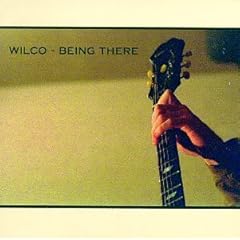
Records of Great Influence (#2): Wilco - Being There

Ah, yes, step number two.  This is the first record, period, that grabbed me when I was "reborn" in the musical sense.  London Calling was like the nine months in a pregnancy.  Life first starting, everything was new to me.  I had thrown out all previous (mis)conceptions as to what rock music was, and I was ready to really understand it.  Being There is like a general roadmap to the world of rock; breathtaking in its scope, able to draw from all corners while being able to still remain an ultimately personable album for the ages.

Shame on you, if you have never heard this record before.  In my truly honest opinion, this is still Wilco's crowning achievement.  Not that Yankee Hotel Foxtrot wasn't an accomplishment.  That record was straight evidence that rock could evolve, that it could adapt to a modern world with funny sounds and the like.  Yankee Hotel Foxtrot represented what the "Americana" genre could bring to the table in the 21st century without coming off as old-school.  But Being There is different.  Perhaps because it came close to the end of the 20th century, or whatever, but it celebrates where rock music has been, what rock and Americana brought to the table in the 20th century and celebrated it to the greatest extent.

In a way, you could compare this album to Exile On Main Street by the Rolling Stones.  Objectively, Exile is still probably a better record, I do not think anyone is denying this, but in my books Being There ranks higher because it fits my music tastes much better than Exile does.  That's not the point, however.  They both are double albums.  That's the first thing.  But the other thing is the scope of the records.  They do everything.  No stone is really left unturned.  You can fault both records all you want for this, but for one thing I love it, and for another thing such ambition is remarkable and should be commended on every level.

Since this record is hardly as universally recieved as my previous "Record of Great Influence," I felt the need to perhaps defend the record from all ye naysayers.  But now to the more important part.  This record was probably the one thing that most greatly shaped my existence.  Since the first time that I popped this record in, I have been a diehard Wilco fan ever since.  If you know me in real life, you know what this is like.  I have an extensive Wilco bootleg collection.  I tracked their tours for a long, long time, looking at and grading setlists, however much of a fruitless practice that is.  As an aspiring songwriter I threw out songs because they sounded too much like Wilco and because none of them could do justice to my main inspiration for many years.  The only stain on the record is that I have only seen Wilco as a band once. I passed up a Jeff Tweedy solo show opportunity because I had no transportation, though I was able to see Glenn Kotche and Nels Cline perform solo and together.  Now, I'm a little less diehard, which is likely a good thing...

But the fact that Wilco was able to shape my behavior like that isn't what made the band (and this record) part of such a crucial point in my development.  I gained an awareness for the world.  In those "dark days," I had no awareness of what was going on around me.  This record has a remarkable sense of awareness about it, and in many ways I've tried to be like that, too.  It was also, essentially, was my first "experience with the light."  I finally became a person, and this record symbolizes that to me.  Expansive, ambitious, and all over the place.  Messy, sure, but that is inevitable.  But that is part of the charm of the record and, in its own way, has become a part of me.

Friday, April 24, 2009

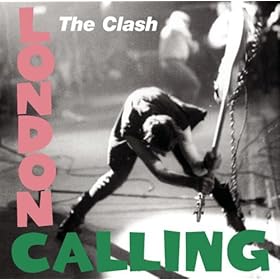
Records of Great Influence (#1): the Clash - London Calling


I shouldn't have to defend this record for its artistic merit.  It's an utterly useless exercise (because it shouldn't need to be said), and if I honestly have to defend it I will go bonkers.  That being said, this was the record that changed my life. I'm really not going to lie about that. Let me state my case:

When I was in high school, for better or for worse, I got caught up in what I consider to be the "neo-punk" movement. Green Day, blink-182, the works. Not only is this not really what can be considered "good" to "great" music, it started me down a bad road. I'm not saying I got to the point of drugs or anything, but I started hanging out with less than savory crowds and who knows what would have happened if I had stayed there. To me, punk and "neo-punk" was a sound, pure aggression, little else. There was a bad guy, and a worse guy. Fight the power with any means necessary, while languishing in the recesses of society. That's the kind of view I was surrounded with. Perhaps in retrospect I'm simplifying the situation or casting my situation in the early high school years as worse than they actually were, but at least now in retrospect I see that period of my life as close to a dead end as I could have ever been.  But this record changed every single thing that I thought was true, and changed me.

I realized after this record that punk wasn't a sound. Punk was not about heavy distortion and power chords. It wasn't the balls-to-the-walls, blow-shit-up, or the backed-into-a-corner-and-about-to-explode mentality that I had thought it was. Thanks to Joe Strummer, I realized punk was an aesthetic. More or less, it was a do-it-yourself mentality. No one gives you your breaks; you make them yourself. But moreover, punk music is more or less what you make of it. This point was hit home on another record I might talk about down the road, the Minutemen's Double Nickels on the Dime.  There were things in this world that you could change, and that should be the driving force in all you can do.  It's common sense, but music often doesn't promote it.  But the Clash were common sense, in their own way.  In some ways they exhibited the tenets of "neo-punk" that I've railed against thus far, but the Clash differs in that they actually meant what they said.  They meant change.  "Neo-punk" loves staying in their corner, singing about how they'll explode and change the world, but doing nothing about it.  Utterly useless.  The Clash?  They meant what they said, and their word was good.

They meant good...they meant to change what they could.  Tales of generosity about the Clash are many, but the best (and funniest) concern the sales of their records at outrageously low prices.  To sell London Calling as a double album for the price of one, the story says they managed to con the record company into attaching another EP record (or similar short-play format) to their standard album by saying they were including a B-side when in fact they were including another disc entirely.  Reportedly, the Clash forwent the royalties on Sandanista! to sell the triple-album for the price of one.  And perhaps the most telling, Joe Strummer would wait and talk to every fan who wanted to talk, after every show.  These were real guys.  Fame didn't get to them.  They were real dudes, but they had a mission.  They weren't just malcontents, they were malcontents who knew they had every power in the world to make things right.  And that's the crux of the record.  And that's the crux of how I changed entirely.  Small changes can yield great results.