Wednesday, June 29, 2011

Record of the Moment, Record Review: Bon Iver - Bon Iver


Where to start with this record? It's absolutely stunning. I know that gets thrown around a lot (I have, after all, ranted and raved about many records here), but this record simply is that. It's a record that is unlike any other, something that seemingly can't come from this world...but yet, it rings as completely heartfelt, warm, and true when at first it seems that such a record would be impossible to make.

I am going to opt against discussing at length the legend and the myth that surrounds the ethos of Bon Iver, with the whole "cabin in the winter writing songs of heartbreak" thing that everyone else seems to think is paramount to understanding Bon Iver. Partially because I could copy and paste any Bon Iver-related review which will most assuredly host a painstaking analysis over Bon Iver's roots, thus saving me work. But the bigger thing is that for Bon Iver, it's totally unnecessary for understanding or enjoying the record (no backstory should be required to make an album "good," that's for sure).

The one word I would use to describe this record is: ethereal. It seems to exist in a plane of living outside of ours, but the record speaks with a warmth and sincerity. A peculiar way to describe the record, sure, so let me use an analogy even more peculiar which may shed some light. If a dream could be physically represented, I'd personally characterize it as silvery stuff, which is not a very helpful description at all. In many ways, it's sort of reminiscent of the physical manifestation of memories in Harry Potter, but fluffier, perhaps. Either way, it represents something that seems to us as entirely real but isn't exactly real. This bizarre feeling is perhaps the best way I can describe Bon Iver.

The record is essentially structureless: songs fail to adhere to traditional structures, being more abstract landscapes of places ranging from the real ("Perth") to not-so-real ("Hinnom, TX"). But it's not as if that each track decides to take the "Perth sound" or "Tex-Mex" and make a song about it as if creating a pastiche (for that matter, I'm not sure what "Perth sound" would sound like, and the thought of Bon Iver going into "Tex-Mex" is frightening in that it would be odd, but I wouldn't be surprised if Vernon made it work). Each locale on the record has its own mood, style of sound that is evoked during the track, giving something as location-less as an emotion a place to stay, develop, and grow. Each location's emotion is part of a whole and (rather ironically) contributes to that holistic sense of being place-less; Bon Iver essentially asserts that though there are places that generate emotional responses in us, the constant things in life, our emotions, are boundless. The record sounds warm, at home, and pastoral while expanding the horizons of sound and music-craft to dizzying heights bordering (and oftentimes achieving) the epic at the same time.

And I suppose I should mention that perhaps what holds the record together is Justin Vernon's voice. At the same time earthly and beyond this world, his voice is the extremely pliable tool with which the emotional heft of the record is solely based upon. Without its capabilities of a divinely-given and inspired falsetto through to the earthy tones of the lower octaves, the record's emotional base would not exist; given the scope of the music around it, the entire record would have likely collapsed into an overly trite heap of scrap. But Vernon's voice holds it together and creates a record that is far beyond the sum of its parts, creating something truly inspired and beyond here with things of this world.

This is a record is what the world has been waiting for, for a long time. So much of music now and from before is "dated" and bound to a specific time or a specific place. Bon Iver, though, manages to elude such trappings of space and time to contribute something absolutely beautiful, meaningful, and stunning in both beauty and scope. A record truly timeless that will likely stand tall when not only the music of this year is reflected upon, but in the scope of eternity when all things are considered.

100/100

ed: Sure, this review is late. Whoops. But in my defense, like this record, I'm not bound to human systems like "time."

Sunday, June 5, 2011

An Apology

I do sincerely apologize for the apparent lack of rock verbiage being said on this blog here recently, and I thoroughly blame my last quarter of university ever.  I have some new topics to write about this summer, and hopefully they'll be coming at a normal rate.  Some record ravings (x's Los Angeles comes to mind at the very least), and some other stuff too.

But a little tidbit...how utterly bizarre is this?


Weezer covering Radiohead.  You ask someone to define good 90's music, and 65% of people would probably either mention Weezer or Radiohead.  The voices of Rivers and Thom covered different spheres but they both totally represented the 90s.  So for one to cover the other is absolutely inane.  And I mean that in a good way.  You expect Thom's voice to slink and and Rivers just charges it and so the song is given a whole different feel.  It's complete accurate outside of the whole Rivers v. Thom thing and some of the guitar solos.  I personally dig it even if it's totally not the original.  It's just...different.  The only way to accurately describe it is bizarro.  And that's all.

Friday, March 4, 2011

Getting the Party Started...Right

There's many ways to start a party...but there's only one way to start it right.  And when I say "party," I actually mean "record."

The observant will note that I sort-if-did rail on The King of Limbs for having an extremely weak opening track.  While coincidental that this entry follows, there is no cause-and-effect to it, as I've been thinking about this issue for awhile.

So...how does one start a record off right?  It's a few things.  Personally, I think the key ingredient in a good opening track is a sense of direction, a sense of momentum.  It's got to pull you in and get you hooked, and nothing does that like imbuing the listener with a sense of direction.  It doesn't necessarily have to be, you know, a song that blazes at 250bpm with only power chords or something (i.e. punk), but it does have to feel like it moves and it has to move you.

Which brings up the second point.  It has to move the listener, and at least imbue the listener with a sense of feeling.  You've got to identify with it...you've got to FEEEEEEEEEEEEEEEEEEEEEL it.  Or something like that.  On the whole, though, I think the former criteria of direction is more important than feeling/catharsis.  The best songs have heaps of both, but there are some cases where catharsis can trump direction as the go-to effect.  So to discuss some examples:


1. Bob Dylan - Highway 61 Revisited
So it probably figures that my favorite record ever also has the best starting track to ever grace mankind?  Yep.  No coincidence there.  I don't need to elaborate on the title track.  Because if I do, there is a serious problem.  "Like A Rolling Stone" is the best song ever.  Period.  But why is it so good?  Because, quite simply, it changes your world.  It says "HERE COMETH I, THE SPIRIT OF ROCK" or something cheesy like that.  It executes a bombing raid on your brain and leaves it in ashes and rubble.  And after it completely resets your brain, the rest of the album continues the blitz.  And that's why this record is the best ever.  But of course, you don't believe me.  But let Bruce Springsteen convince you:  

"The first time I heard Bob Dylan, I was in the car with my mother listening to WMCA, and on came that snare shot that sounded like somebody'd kicked open the door to your mind ... The way that Elvis freed your body, Dylan freed your mind, and showed us that because the music was physical did not mean it was anti-intellect. He had the vision and talent to make a pop song so that it contained the whole world. He invented a new way a pop singer could sound, broke through the limitations of what a recording could achieve, and he changed the face of rock'n'roll for ever and ever."
-Bruce Springsteen


2. Ramones - Ramones
There are a lot of punk records that start off with a bang (The Clash and Never Mind the Bollocks, Here's the Sex Pistols certainly spring to mind), but I have to tip my hat and use the Ramones as an example.  How ubiquitous is "Blitzkrieg Bop"?  You tell someone to name off a punk song and anyone who's anyone has a 64.37% chance of saying "Blitzkrieg Bop."  That's the sort of effect it had.  As a title track, it's a blunt instrument that serves as the rallying call of all punk rockers everywhere (of course, it likely attracted more nihilists than activists, but on the whole probably they're one and the same).  The insistent beat, the chugging chords all embody the force of nature, the armament of sheer simplicity and the power of punk music at its finest.  It sets up the breakneck pace of the rest of the record, alongside the sheer brilliance of the Ramones as a whole.


3. Funkadelic - Maggot Brain
This record most closely embodies how catharsis can easily trump direction.  The opener and title track is simply a Eddie Hazel solo over some solemn and arpeggiated guitar.  Which is weird, because Funkadelic is a funk band (obviously).  But the track simply is a masterwork, and it sets the stage for the revival that occurs on the rest of the record.  The legend is that Eddie Hazel was told to play the solo as if he had heard his mama just died, and then at one point to change it so that he found out the rumor wasn't true.  What resulted is the stuff of legends, completely face-melting, cathartic, barn-burning goodness that can only come from true feeling.  I can't explain the song more than that.  Listen for yourself.  But then notice how "Maggot Brain"'s sense of doom finely segues into the feelings of revival evidenced by the rest of the record, and be wowed.

That's all I have the energy for today.  There are modern examples (namely, "Neighborhood #1 (Tunnels)" on Arcade Fire's Funeral and "Everything In Its Right Place" on Radiohead's Kid A), but they're hard to come by these days, which breaks my heart.

Tuesday, February 22, 2011

Radiohead - The King of Limbs [Review]


And...here we go.  The King of Limbs.  Let's face it: Radiohead never make an easy record.  To prove my point, I first thought this record was absolute trash except for three songs.  Now?  I think it's pretty damn brilliant outside of the first and last tracks.  Perhaps it's one of those things with Radiohead; their records require time to mature, like a fine wine, for example.  To try to make a snap judgment is to dismiss it too quickly (and then you'll be a fool when you're proven wrong).  And when Radiohead try something different?  That's the norm, but when "different" doesn't sound like what you thought "different" was, it's also way too easy to dismiss when it should be embraced.

The record is a brisk eight songs long (or short?), coming to a short length of less than 40 minutes.  To talk about the sequencing, I think if you lopped off "Bloom" and maybe re-slotted "Separator" somewhere else, the record would be a tight-knit bomb that would explode everyone's heads off with its sheer awesomeness.  I think "Bloom" is a little far too off-kilter and doesn't really get moving anywhere, trading direction for ambient texture.  And, in my most humble opinion, the thing you need the most in a song is direction,  especially for something as critical as the pole position on a record.  "Separator," to me, is a little too lazy.  If there was a little "more" to the track, a little more energy than what there currently is, I think it'd be good, but as it is the job seems "unfinished" when it boils down to it.

And now I'm bloody done griping about the record, because the rest of it is pretty amazing.  "Morning Mr Magpie" has that off-kilter, demonic sense of urgency, while songs such as "Lotus Flower" and "Little By Little" have that trademark groove workout that Radiohead have recently employed to great effect (see: "15 Step" on In Rainbows).  But I think the change-of-pace tunes, "Codex" and "Give Up the Ghost" that almost close the record (and if I had any say, would have closed the record) showcase the real power of Radiohead.

Radiohead, at least to me and to basically almost everyone who's anyone, marked a new era in rock music.  Especially with Kid A: they looked at the book of what rock music was, said "what's this?," then tore it up to bits and pieced it together to come up with a new definition of rock music, where electronic and acoustic perfectly merge to form a more perfect whole.  Given this, they've always been masters of texture.  And so on "Codex" and "Give Up the Ghost," the texture is slowly piled on until each track reaches a point of absolute catharsis and beauty.  If you aren't moved by those moments, you're probably either dead, a robot or a zombie (take your pick).  Texture has largely been Radiohead's calling card and the real reason to listen to them, and on "Codex" and "Give Up the Ghost" they prove once again why, on the whole, they're probably the best rock band out there today, bar none.  And I say this with sorrow as I begin the demoralizing task of deciding where Wilco goes on my list of "the best out there today."

That being said, what score can I give this record?  I find it hard to give it much higher than 88/100 given the general mess that "Bloom" is and how slightly underwhelming "Separator" is.  But that's to say that this record went from "absolutely brilliant" to "almost brilliant" thanks to those two tracks.

And its place in Radiohead canon?  Yeah, another great entry.  It's pretty much impossible to compare to Kid A and OK Computer and probably In Rainbows, but beyond that it's fair game.  My guess is that The Bends still holds major sway, but I'd say The King of Limbs is at least on par with Hail to the Thief and Amnesiac while remaining miles better than Pablo Honey (wait, Pablo Honey was actually Radiohead?  What?!?).  If you look at that numerically, it looks terrible because it's fifth or sixth on the list of Radiohead records, but think about it, folks, this is Radiohead.  They've only made one record that's not to the level of "really damn good" (Pablo Honey, as noted above, was "basically" not Radiohead anyways so you could claim that they've never made a record worse than "really damn good").  So, shut your pie hole, put on a Radiohead record and bask in their brilliance.  I sure am.

So there you have it.  Radiohead - The King of Limbs.  Almost brilliant, which by current standards means "better than almost anything else out there."

Monday, January 17, 2011

The Kinks - The Odd Man Out

Well, I eventually got around to it, right?
----------------


Quite simply put, the Kinks have always been the odd man out.  When you look at the big boys in the British Invasion, you have to include the Kinks in the same group as the Beatles, the Stones, and the Who (at the very least because of "You Really Got Me").  But when the invasion had, for all intents and purposes, stagnated, where did they all look to for inspiration?  The Beatles looked to India and all over, the Stones delved even more into the American rhythm and blues, and the Who went for broke by creating modern rock operas.  The Kinks, however, looked back towards where they came from: England.  This was particularly odd, because so much of the 1960s was predicated on the new and looking for new things, bigger and better things.  But to use England for inspiration was decidedly the opposite: they drew their inspiration on the old and the familiar (and for all intents and purposes, the dying) to create (still, folks...still) some of the best music out there today.

I'm not really going to consider much of their British Invasion period.  Great?  All I can say is "duh."  But it's the British Invasion, and it's been beaten to death by others, and I'm not going to beat it to death unless I feel like doing something futile.  I did however, want to consider the aftermath: to see how bands reacted to a virtually post-apocalyptic landscape is far more interesting and telling (and at least to me, I certainly prefer the post-Invasion music, period).

Some say that Ray Davies searched for his new identity in the old, familiar, "smaller" and "common"as a result of the stress that being in the Kinks necessarily entailed (I use quotes here to imply that while perhaps the descriptors can be used, they are not always completely accurate).  It also was, of course, the opposite response of almost every other British Invasion band: the rest went for newer, bigger, and "better" (I use quotes here because newer quite obviously did not imply better...but that was the idea behind their transformations).  But the Kinks forged an identity consisting of old England, of times leaving and dying, of the common people all around, and created some of the most poignant, catchy, and satisfying music ever.  Case in point:


In many ways, the Kinks are the Village Green Preservation Society was to the Kinks as Sgt. Pepper's Lonely Hearts Club Band was to the Beatles...their apex, their brightest moment in the history of rock music and quite obviously a concept album.  But, of course, both are quite different.  Sgt. Pepper was a record based in timelessness, without any "home," made from the universe and one with it (so to speak).  VGPS was a record steeped in the time period, lamenting the passing of old England as it made way for a new one.  I'm not saying that VGPS is quite nearly as good as Sgt. Pepper, but the distance is closer than one would normally think.  I currently do not remember where I rank the album in my own personal top 30 list, but chances are I ranked it far, far too low.

The Kinks are the Village Green Preservation Society is a stone cold classic.  This album is a "lighter" one with very few (if any) tracks that could be considered "heavy," but instead of creating imbalance, it creates balance.  Instead of making it hard to believe the Kinks, it lends authenticity to their treatment of the concept.  But it still is a rock record and it's brilliant.  From the twinkle that kicks off the record (the title track), the "oohs" and "aahs" that punctuate "Picture Book," the music hall that marks "Starstruck," and the overall sense of nostalgia that permeates the record, such as the laments of the passing of the few remaining customs that older England had held onto ("Last of the Steam-Powered Trains" is particularly indicative) that makes the record so good.  The record is wistful, witty, poignant, and moving, all at the same time.

The Kinks were always good at that sort of stuff.  Of all the British Invasion Bands, they were probably the smartest, and were just as good as any other band at the time.  They just chose to look in a different direction.  Perhaps there is a slight chance that I overvalue the Kinks: after all, I spent six months abroad in London, and though London epitomizes the culture that the old England gave way to...they're the most British band I know.  But don't let that get in the way of the music of the Kinks, because the music carries so much meaning and worth that letting any preconceptions cloud your trip through the Kinks would be a disservice.

Thursday, November 25, 2010

Giving Thanks: Songs I'm Thankful For

I was going to write about the Kinks, but since it's Thanksgiving, I wanted to just write a brief entry about the songs I have been thankful for since, like, ever (the Kinks do cameo here, however).  I'm going more or less in chronological order of when I found them, or rather when they finally took on special meaning with me.  I'm limiting this list to ten songs, I think.

---------

1. The Clash - Lost in the Supermarket
2. Wilco - Theologians
3. The Beatles - Hey Jude
4. Bon Iver - For Emma
5. Arcade Fire - Neighborhood #1 (Tunnels)
6. Pavement - Here
7. Big Star - I'm in Love with a Girl
8. The Velvet Underground - Pale Blue Eyes
9. LCD Soundsystem - All I Want
10. The Kinks - Strangers

---------

Have a great Thanksgiving, all ya'll.

Monday, November 22, 2010

Sex, Drugs, and Rock & Roll: Why They All Go Together

So why do sex, drugs, and rock and roll seem to come hand in hand, kind of like how it's almost impossible to order the B without the L and the T, or any combination thereof?  The most drugged out rockers seem to be most blessed with the gift of rock and roll: Keith Richards and Jimi Hendrix were infamous with their use of the horse (i.e. heroin), while others such as David Bowie and Iggy Pop were all about the blow (i.e. cocaine).  But the drugs, in addition to sex, seem to always take precedence or even define the very nature of rock and roll: without the sex and the drugs, rock and roll would not exist at all today, in any way, shape or form.  While hypothetical situations such as that can be debated, the bigger question is "why?"  Why have sex and drugs shaped rock and roll as much as they have?  I think the answer lies in the concept of euphoria.

Sex and drugs are able to foster the highest highs and the lowest lows in a person.  Whether it be a most innocent affection or love (i.e. the Herman's Hermits classic "I'm Into Something Good"), a straight-out depiction of a trip (i.e. "Tomorrow Never Knows" by the Beatles), or something utterly raunchy (like Marvin Gaye's "Let's Get It On"), they all evidence the same feeling of euphoria, the same complete happiness with one's state.  See also their flip-sides, those moments of pain due to the realization of lost love (Joy Division's masterwork "Love Will Tear Us Apart") the need for drugs (another masterwork, "Heroin" by the Velvet Underground), the evidence for why sex and drugs have been a vital part of the rock and roll livelihood and the basis for its mystique is because that sex and drugs typically bring out the happiest and the saddest in human beings.  Euphoric joy when everything is going right thanks to love, sex, and drugs, and crippling depression when those things leave the rock and roll man with nothing left to live for.

The easiest full-blown examples of those highs and lows lie within the breakup albums: the best examples are Sea Change by Beck, Blood on the Tracks by Bob Dylan, Layla & Other Assorted Love Songs by Derek and the Dominos.  Ok, so perhaps the last one is a stretch in that order, but if you were in love with your best friend's wife, I'd say that's about equivalent to a breakup, if not worse.  They all evince the same themes: sheer joy, the throes of despair, it's all there, plain to see.  While not really relating completely to the notion of drugs in rock and roll, the emotions they generate are inherently the same.

All the highs and lows would be useless if it weren't for the narrators who reveal the story, reveal the triumphs and the downfalls, and make us feel.  Rock and roll is (usually) about wearing your heart on your sleeve, so we as listeners 100% identify with the narrator of the song, to live with (or through) them during both the good times and the bad; without the capacity to generate empathy, rock would be as cold and forbidding as electronica.  Every emotion is completely represented in the rock and roll psyche, from hope for the best to the realization of dread, from the best party the night before to the raging hangover after: if it were not for the sex and drugs, then those emotions would not be as easy to channel into a rock and roll song, and today we would be left with a most infantile rock and roll genre of music, which would honestly be terrible, not only to say that this blog would likely be nonexistent if that were true.

That is not to say that sex and drugs are the only things that go together with rock and roll.  Virtually anything could go together with rock and roll, given that it makes those rampant emotions easy to generate, bottle up and unleash in a rock and roll song.  Sex and drugs are simply the easiest ways to tap into that reserve of our emotions and connect us to them, because they're things many of us have to grapple with.  For example, gospel/worship music (I have somehow referred to them very often the past couple of entries when the previous year I'd not mentioned them at all) derives all its euphoric highs and debilitating lows from the relationship between the singer/listener and God.  But for the non-religious, it's certainly harder for one to relate to their plight; whereas most everyone battles with sex and drugs, not everyone battles with the nature of their relationship with God.

For the rest of rock and roll's existence, it will probably still be forever bundled with sex and drugs.  Probably for the better, sex and drugs more easily made emotions easier to access for rock and roll: the barest confessionals, the unabashed statements of love and the hilarious tales of hangovers or adventures would simply not exist without them.  Am I implicitly condoning the rampant use of sex and drugs?  I hope not, as excessive use of either is simply self-destructive.  I'm merely pointing out that the history of rock and roll shows that for better or for worse, sex and drugs were tightly interwoven into the fabric of rock and roll, and perhaps in some ways as rock and roll glorified and brought out the best in sex and drugs, sex and drugs glorified and brought out the best in rock and roll.

Monday, November 15, 2010

The Power of the Rock Anthem

In my typically fine form, I'm choosing not to write about what I said I would write earlier.  I chose to write this one instead because I can't get the chorus of Paul Stanley's "Live to Win" out of my head...the verses kind of suck, but the chorus sticks in your head and suddenly you yourself LIVE TO WIN!!! (no lie)... I suppose the fact that it's in South Park doesn't hurt its cause at all.  That song just screams "rock anthem," and so here we are.

-------

Yeah, you can name 'em.  Everyone recognizes them.  From virtually every song by Bruce Springsteen to David Bowie's "Heroes," from "Hey Jude" by the Beatles (moreso the last mantra section) to "Sweet Virginia" by the Rolling Stones, rock anthems are powerful tools that are amazing because they inspire the listener and create such intense emotions in the listener so much as to create action, usually.  Sometimes to even relate in music you need a rock anthem because their "sound," their energy, their spirit is a great unifier of people.  This is why when a song like "Bohemian Rhapsody" comes on, everyone, and I mean everyone (unless you are so hipster that you choose to non-conform to such a tradition) goes full throttle into the song all through the end.  True rock anthems are, quite simply, uniters and not dividers.  So really, what distinguishes the rock anthem and what makes it so good?


The main ingredient in a rock anthem is usually the "sense of the epic."  While this sounds broad, nondescript and generally useless, it's the best term to use.  What may help illustrate my point, however, are examples of the "sense of the epic."  Bruce Springsteen, as mentioned before, is essentially the king of the rock anthem, and one of his most widely known tracks, "Born to Run," illustrates the point.  It sounds big.  It goes for broke.  The power in the song rattles you to your bones.  His lyrics also display of a "sense of the epic, " painting desolation around but lo! the eternal ray of light that is worth pursuing prevails!  For Bruce Springsteen's characters, it's quite simply a "do or die" moment and this sense of utmost importance and urgency imbues the song with a strong sense of power, direction, and purpose, not to mention an overall "sense of the epic."

Therefore, is there a sound that defines the rock anthem?  I'd argue that there isn't, though the evidence seems to suggest the contrary.  Tracks like the aforementioned "Heroes" (by Bowie), "Bohemian Rhapsody" or even "Wake Up" by Arcade Fire all have extremely ornate production.  The layering of such a large quantity of instruments (an offshoot or spinoff of the "Wall of Sound") generates a large sound, hence the "sense of the epic" and hence a rock anthem.  However, I would also posit that anthems such as "Sweet Virginia" by the Rolling Stones, "Hey Jude" by the Beatles, and other tunes like "The Night They Drove Old Dixie Down" all suggest that the rock anthem as a dense and layered concoction brewed in the studio may not be necessarily true, though the trend is evident and typically suggests otherwise.

For a rock anthem to truly succeed, the necessary portion is that of the chorus.  If the chorus is not rally-worthy, then the song is not a rock anthem.  It's the power in the chorus that makes the rock anthem such a uniter: who doesn't sing "BORNNNNN IN THE USAAAAAAAA-EAAAAAAA!!!!!!!" when it comes on?  I rest my case.  The chorus has to be easily accessible: even the layman must be able to get around to remember it, so that perhaps even in his drunkest hour he may be able to belt out the chorus when prompted.  But it has to be catchy, it has to be powerful, or else it would not be able to resonate with everyone, from even the most snobby of hipsters down to the guy who doesn't even really like music all that much and could really do without it.  Just take a look here at some rock anthem choruses and see all of the above:

"Come on up for the rising/Come on up, lay your hands in mine/Come on up for the rising/Come on up for the rising tonight."
-Bruce Springsteen

"We can be heroes...just for one day."
-David Bowie

"Na, nah nah, nah nah nah nah, nah nah nah nah, hey Jude!"
-The Beatles

All instantly recognizable, all instantly hummable.  If you've heard the song before (I suppose liking it would help some), you can instantly belt out the chorus.  They're all anthemic.  All epic-sounding, all-relatable, all-inspiring, all-encompassing...that is what a rock anthem is.

Tuesday, November 9, 2010

A Short Exercise: Top 25 Records, Ever?

In my very very first entry, I already determined the top five records of all time based on whatever barometers I came up with...and this is what I did come up with:


1.      Highway 61 Revisited
2.      Sgt. Pepper’s Lonely Hearts Club Band
3.      Music From Big Pink
4.      London Calling
            5.      Pet Sounds

Do I still agree with these top five?  I think so.  No record has come out within the last 20 years that could get close.  But as an intellectual exercise for myself (and for you to see, I suppose), I present to you what I would consider to be the top twenty records of all time:

            1. Bob Dylan - Highway 61 Revisited
            2. The Beatles - Sgt. Pepper's Lonely Hearts Club Band
            3. The Band - Music From Big Pink
            4.  The Clash - London Calling
            5. The Beach Boys - Pet Sounds
            6. The Velvet Underground - The Velvet Underground & Nico
            7. The Beatles - The Beatles
            8. John Coltrane -  A Love Supreme
            9. The Beatles - Revolver
            10. Bob Dylan - Blonde on Blonde
            11. The Rolling Stones - Exile on Main Street
            12. Marvin Gaye - What's Going On
            13. The Beatles - Abbey Road
            14. The Rolling Stones - Beggar's Banquet
            15. Bob Dylan - Bringing It All Back Home
            16. Patti Smith - Horses
            17. Television - Marquee Moon
            18. Joy Division - Unknown Pleasures
            19. Sonic Youth - Daydream Nation
            20. Bruce Springsteen - Born to Run
            21. David Bowie - Low
            22. The Velvet Underground - The Velvet Underground
            23. Jimi Hendrix - Electric Ladyland
            24. Led Zeppelin - Physical Graffiti
            25. Bob Dylan Blood on the Tracks


Looking over this list, there could be some changes, i.e. dropping Zeppelin off the list, but overall it provides a solid start, as I never have tried to completely rank 1-25 of the best records ever.  The records I'm especially high here that show up in the top 25 whereas they normally wouldn't be are The Velvet Underground, Low, and Physical Graffiti.  I perhaps have underrated Revolver, Blood on the Tracks and Marquee Moon, but I am rather satisfied with the list at the moment.  Do note with some hilarity that no record released after 1988 made this list (and if you discount Daydream Nation, no record was released after the 1970s...).  I think it quite clearly indicates a trend that "old school" is "good school"...if I were to use the vernacular.

Next up will likely be looking at culture appropriation in rock music.  That is likely to say, the entire history of rock music, since much of it has just been stealing culture unique to sections of society and incorporating it into the general framework of rock music.

Wednesday, October 27, 2010

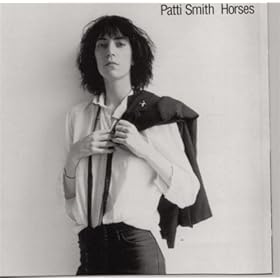
Rapid Reaction: Patti Smith - Horses


I suppose the good question is this: how did it take me so long to get to this record?  And my answer is this: I sincerely don't know.  It's got all the connections that would put it on my radar: John Cale produced this, it counts as proto-punk, Tom Verlaine played on the record and you can connect Van Morrison and the Smiths to this.  I realize that my position pretty indefensible...there is no real excuse for not hearing this until now,  but at least I've now rectified that mistake.


I've listened to it once and am currently working through it the second time as I write this, and I can honestly say it deserves all the cred it gets: it's a masterwork.  It's one of those records that will blow your mind open; it blasts your brains, picks up the pieces and reforms your brain into something new.  All from the first note.

Aside from the intro to "Gloria" that slinks in before it makes its presence known, the record is a ball of fury and energy, and if you're not getting blitzed by the energy in the proto-punk sound, you're getting blitzed by her lyrics, which are part beat poetry and part stream-of-consciousness not unlike the master himself, Bob Dylan.  The sound has a proto-punk roar that hangs around the big guys like the Velvet Underground, and Patti Smith sounds like an extremely angry cross between Lou Reed and Iggy Pop.  The passion in this record doesn't just seep out and let you "sort of" feel it: the amount of passion in this record is explosion-inducing and you feel it.  And if you don't, you're not alive.  Plain and simple.

I don't know how else to put it.  This record is a force of nature.  And it's one to behold.  I'm sure a lot of others have been able to wax more poetic about it than I have, but maybe that would do the record an injustice, as it's so stripped down and bare in its proto-punk approach, that to speak more about is contrary to the spirit of the record.  It's one that has to be heard to be believed.

Friday, October 15, 2010

Spirituality and Music, redux

Two entries in two days?!?  I am finally starting to get back into the swing of things, apparently.  Homework beckons, but my thoughts beckon more...

---------------------

You can search for my old entry (about a year old) and see that I railed quite heavily on the genre of Christian rock music for its faults.  It was because quite frankly, it is still true to a great extent.  I still find Christian rock to be rather pedestrian and unimaginative, but as I've recently been trying to live out the penultimate words of George Harrison ("Everything can wait, but the search for God cannot wait."), I perhaps may have judged the genre too harshly.  It is worship music, and despite my perception of it, people still connect to it and through it to that higher plane, so it must therefore hold some value.  And as everyone knows, music is one of the most subjective fields, so when it comes to trying to organize it and present it in a remotely academic manner there is bound to be some oversight, and I am "being the bigger man" in admitting to some of that.

But that does not mean that I am totally recanting my statement.  It just means that I previously undervalued it.  What made me reconsider my stance was something the legendary Mavis Staples said when interviewed on the Colbert Report.  When asked about her reasons for moving from gospel to soul in the 1960s (and her thoughts about the cries of "traitor" it generated from the community), Mavis essentially said: "All music glorifies God."  While I'm unsure if she is familiar with Slayer, one realizes it is essentially true.  And it simply goes beyond any religious notions.  Whether or not one believes in the vehicle of God or otherwise, music is inherently powerful and it showcases the unique power that humanity has, in weakness and in strength.  Whether it is worship music or gleefully skewering religion (see: "Highway 61 Revisited" for a particularly delightful roasting of the Abraham story), it all essentially carries infinite power and meaning.  That is what makes music, well, music.

I still think that Christian rock has quite a-ways to go if it wants to be considered as proficient in the "academic" and "quality" sense I have been trying to impart.  If I may continue tooting this particular horn, it is so pre-occupied with presenting the message of Lord without realizing that the music itself is already the message!  Music already glorifies the Lord, so if you simply strive make good music, you are already completing your objective!  Now, this is not obvious to most people, so I understand that perhaps in needing to spread their message they are tempted to brandish a big stick, but that is what makes the music so pedestrian to me.  The music becomes clumsy and unimaginative when the only thing music has is to be graceful and imaginative!  I don't necessarily mean this in the technical-playing sense (thus punk would be ruled out, and we all know punk has too much heart and balls of steel for that), but in the artistic, striving-for-quality sense.  As evidence, I present the best "worship" record of all time, in my opinion:


A Love Supreme is beyond a masterwork: it is a monolith of the power of music, standing tall as a man among boys.  Far and away the best jazz record of all time (it would most certainly rank in my top 20, if not top 10 records of all time), it is a testament: to Coltrane's power, to Coltrane's skill, to Coltrane's faith.  Coltrane made the record to demonstrate his faith and his love for his Lord.  The devotional poem in the liner notes is "recited" via his saxophone in the last movement, with the final lines in that poem showing his love for God:

"Elation. Elegance. Exaltation. All from God. Thank you God. Amen."

The record is overbearing only in that it is overbearingly perfect.  It does not wield its faith like a stick to beat home the point, but the faith is implemented like a fine knife used to carve the most detailed of sculptures.  The search for quality in the music mirrors Coltrane's search for God, and in both Coltrane finds what he had been looking for.  It doesn't matter if you aren't a believer or not in Coltrane's faith.  The music contains so much of that often-sought "soul" that by the end of the record you believe: if not in his faith or his skill, you will at least believe in the power of music.

And it reinforces the point I have been trying to hit home in this entry: the power of music is the power of that higher plane.  Take care of the first and the rest will follow.  It is something that Christian rock would do well to heed if it wants to reinforce its connection to the Lord and actually serve as quality music.  Under the "Mavis Staples assumption" (as I'll call it from here on out...assuming I ever refer back to it), any music is inherently worship music, so quality music is the highest worship music attainable.  So strive for it.  Music is a microcosm of life: if one stops searching for meaning and quality, then all is hopeless and futile.

-----------------------

If one needs proof that Christian rock needs to strive for quality once more, one only needs to realize that it was skewered rather successfully by South Park in the Season 7 episode "Christian Rock Hard."

Thursday, October 14, 2010

What's (Not) Wrong With Electronica

Once again, supremely late, but once again I find myself unwilling to commit myself to sleeping (despite a severe lack of it) and so I finally now have the time to commit some of my thoughts once again...

-----------------

Yes, I've always considered older music to be infinitely better than what's out now.  You get a true sense of soul from it, from Sam Cooke (i.e. Live at the Harlem Square Club 1963) to the wistful sighs of Richard Manuel and the way he, Rick Danko, and Levon Helm combine to tug at your heartstrings, there is always the sense of "soul" found in the recording.  It speaks, it breathes character, exudes emotions.  Those feelings are what let us connect to the music, and at least for me I find that older music fosters that in a much more meaningful way (let alone connect at all).  Modern music just always seemed to lack that "soul" that would draw me to it.  Until, perhaps, now.

Perhaps I had judged it incorrectly.  Electronica/dance is a different beast compared to rock and roll (though it can certainly be an analogous construct): it must be evaluated on separate parameters.  It's unlikely that electronica/dance will provide the payoff that, say, a Staple Singers track may provide with goosebump-causing moments, where Mavis and co. just pull off that moment of release with utmost mastery.  However, electronica/dance still can contain soul, but it's not in the same way rock and roll often stakes its livelihoods in those climaxes (ahem...Sigur Rós).  Electronica/dance contains "soul" once it establishes a beat: but it has to grab you from your "inner core," so to speak, and drive you to simply feel it.  A true track would likely simply cause you to want, or even need, to dance.

Case in point?  Daft Punk.  They can be classified as French house, which is apparently separate from Detroit house, from all other sorts of electronica, but at least when it comes to mainstream/crossover appeal, no one has had more success than Daft Punk.  And it's not especially difficult to see how and why.


Perhaps moreover known for being sampled by le Kanye West in his track "Stronger," it is impossible to deny that Daft Punk craft excellent tracks.  From "Da Funk" to "Around the World," "Face to Face," "One More Time," and "Robot Rock," Daft Punk essentially have mastered their form of art.  Their beats are uncomplicated, and perhaps therein lies the charm.  They utilize basic beats but the layers above add the character to the track, allowing for someone to simply be "grabbed" and pulled into the song (and, perhaps, into dancing).  Oftentimes, unlike other artists, they tend to emphasize the groove and tend to delve into "funk"-ier areas of existence, such as "Da Funk," which is essentially a clinic on how to groove like a master.

But it's really their live material where they shine.  On Alive 1997, they essentially DJ for 45 straight minutes, rolling through such prime cuts like "Rollin' and Scratchin'," the oft-mentioned "Da Funk," among other tracks.  The tracks are stretched, altered, and fixed up to match the length, with interludes and other bits providing perfect segues in between the more recognizable sections.  Then, on Alive 2007, Daft Punk essentially provide a "Greatest Hits" DJ-mashup attack, smartly and cleverly combining tracks to provide new glances at them and give them a fresh context and meaning.  "Television Rules the Nation" kicks off one track, and when combined with "Crescendolls" off of Discovery, gives both tracks strange new life as the tone of "Crescendolls" gets dramatically altered with "Television Rules the Nation" thumping under it.  "Face to Face" is also a prime example of such as the disco feel in the backbeat is replaced by the "Harder Better Faster Stronger" theme, giving the song a fresh backdrop and also a subliminal meaning that gels quite nicely with the intent of "Face to Face" before it segues into "Short Circuit."

While I certainly love Discovery, Homework, and Human After All to death, it is impossible to say that Daft Punk aren't a better live machine than a studio machine.  And that is saying quite a lot given that Discovery is at least a "masterwork +," Homework is a "masterwork" and Human After All is "reasonably good" (tracks off of Human After All benefit considerably on Alive 2007 with the mashups providing new context and life).

Regardless, after waxing at length about the prowess of Daft Punk, the point is this: after listening to them for awhile and finally getting into it, their records made me realize that perhaps electronica/dance could perhaps contain what I have always sought in music, that being "soul."  It's not the same sort of "soul" as I had been searching for prior, and that is the likely reason why I hadn't found it; I simply wasn't looking in the right place for the "soul" of the work.  Amidst all the rigidity in structure, form, and instrumentation, the "soul" was indeed possible in the energy of the work, that it infiltrates you and makes you unable of doing anything else but enjoying the work present.

I am no electronica/dance expert, but the existence of Daft Punk disproved my "technological advancement is bad for music" theory.  I had figured it was a sure way to wipe the soul straight out of a work, but I was apparently wrong, as a compelling counter-argument has revealed itself.  Daft Punk could perhaps be a rare exception to the rule, but an exception's existence makes the theory likely wrong.  Further examination will likely have to follow.  But that still doesn't mean that I prefer modern music to old-school music, it just means that I undervalued it.

PS. I have an odd question: is there EVER an inappropriate time to listen to Daft Punk?  I thought so.

Thursday, September 9, 2010

The Art of the Pastiche

Tremendous oversight, perhaps, or just post-(re-)moving, I have neglected this vehicle of thought for far too long, probably.  But here I am, again, and now I am ready to hit the road again (as far as writing on here is concerned).  I've actually been meaning to write this entry for awhile now (a very long while, come to think of it), so here it finally is.

----

All music is derived.  Yes, it's true.  No artist is completely original.  Not even the Beatles.  Shocking?  Perhaps to some, but it's the truth.  Most artists try to brand themselves as entirely unique: after all, if you're the first one there, you're at least going to get the title of "progenitor of ______ genre," if not "Godfather and King of _______ genre."

But what of the musical pastiche?  Surely no one would ever consider engaging themselves in the art of the pastiche if it got one nowhere.  Utterly useless.  However, music is luckily one of those things where as long as it's good, it's good.

I suppose I should clarify as to what a musical pastiche is.  A pastiche is basically an artistic work which borrows heavily from themes present in earlier works.  So a musical pastiche is simply some work (song, obviously in the context here) that borrows heavily from other themes.

How does one make a pastiche not come across as a trite, meaningless wankery?  Well, the obvious key is that it simply has to be a good song.  While not very helpful in the sense of getting to the heart of a good pastiche, it's true.  It has to be a good song more than anything else.  However, a few identifying characteristics:

1. As a musical pastiche, you can borrow heavily from a certain style or genre, but please, never make it a complete ripoff.  Not only would you get your bum sued in a second (lawyers are prone to do that these days) but you'd also be derided in critical circles as nothing but a copycat...which may or may not be true given the circumstances.
2. The song should attempt to align with the genre's characteristics as much as possible.  While this sounds exactly like the first point, it actually travels a lot deeper than that.  Say you're doing a music hall pastiche (will come back to this later, too...).  Do you write lyrics that would befit a Joy Division song?  No sir, music hall is lighthearted.  Singing about how the world is a heartless place like that would do no good for your song.  Do you make your song sound like music hall?  Of course, or else it wouldn't be called a pastiche of music hall.  It would be just some derivation of music hall, and who knows...you could be credited with a sub-genre if you do so.  But that's not the point.
3. The pastiche is usually outside of the grasp of the artist's usual work, but by no means should the genre pastiched be too far out of the ordinary.  This means someone, like Arcade Fire, for example, cannot dabble into rap-rock and get away with calling it a pastiche.
4. Every pastiche is essentially a tribute to the source material, and should thus do it proud in some way.

There are few rules to the art of pastiche, but it's incredibly hard to pull off without coming across as meaningful and honest.  A couple that come to mind are explained below:

The Beatles is chock full of pastiches, but McCartney is probably the most willing (or perhaps guilty, depending on your attitude towards the man) when it comes to pastiches.  "Ob-La-Di, Ob-La-Da" was a sendup of reggae, while "Martha My Dear" and "Honey Pie" were the sendups of music hall (see?  It returns).  "Honey Pie" is perhaps the best example.  Stealing everything from lyrical plot to soundscape, it is unmistakably music hall.  Yet, it is a whimsical tune that stands well and still sounds unmistakably like a Beatles song.  While perhaps sticking out like a sore thumb on other records (other Beatles records, even), it integrates remarkably well into the record (perhaps because the album itself is essentially many different pastiches, it blends into the woodwork, being one itself).

A more modern example of effective pastiches:


James Murphy has been sticking pastiches on most of his LCD Soundsystem records.  "Never As Tired As When I'm Waking Up" was a straight send-up of the Beatles in their the Beatles era, drawing heavily from tunes like "Dear Prudence" and "While My Guitar Gently Weeps."  However, James Murphy as LCD Soundsystem never pastiche-d as boldly as they did on This Is Happening.

"Drunk Girls" is as it sounds: a song about drunk girls.  Musically, it's almost indistinguishable from the Velvet Underground's "White Light/White Heat."  Spiritually, they're the same: the omnipresent theme of self-discovery and self-fulfillment, one via drugs and one via getting it on.  Out of the two major pastiches on the record, this is perhaps one the more "shameless" pastiches of the three on the record (the third, not discussed here, is "Somebody's Calling Me," a song that essentially cops Iggy Pop's magnificent "Nightclubbing"), but the song is too raucous and joyful to submit to cheapness.

"All I Want" is the true pastiche on the record.  If you've listened to David Bowie's track "Heroes," you know it's probably one of the greatest songs, ever.  "All I Want" is Murphy's attempt at distilling what makes "Heroes" so damn good and make it his own...and Murphy does find success.  It's a somber affair overall in "All I Want," but the feeling of catharsis that is somehow pulled off makes the song one of the most affecting in LCD Soundsystem's catalog, and is what allows "All I Want" to even hold a candle to "Heroes."

With such blatant callbacks to particular songs on the record, James Murphy certainly put those songs in danger of being completely meaningless and underwhelming.  Perhaps it's a testament to his skills as an artist and songwriter that he managed to avoid frivolity from happening at large.

Tuesday, May 4, 2010

Different Mixes, Different Mindsets

One of the strangest bits of rock music is the fact that even some of its most heralded documents can be heard in startlingly different mixes.  This mostly occurs because two different people mix the same set of tracks in two different ways: one dude this way, one dude that way.  It's a rather peculiar thing.  But the problem that I run into (and others may too), is that when multiple distinct mixes of the same thing appear, which is considered to be the "real" mix?  Can we even identify a "real" mix, or are there just simply multiple legitimate ways of hearing a record?

My contention is that there isn't a particularly good way to say that there's multiple legitimate ways of hearing a record.  This is mostly because there one important thing to consider: artist intent.  For many of the most important records, the artist was not involved in one of the present mixes.  I will discuss three cases below.  The first containing a whole swath of records (but with a focus on one in particular), the second being a particular instance with less variation than imagined, and a third which has had the roughest time of all when it comes to getting mixed right.

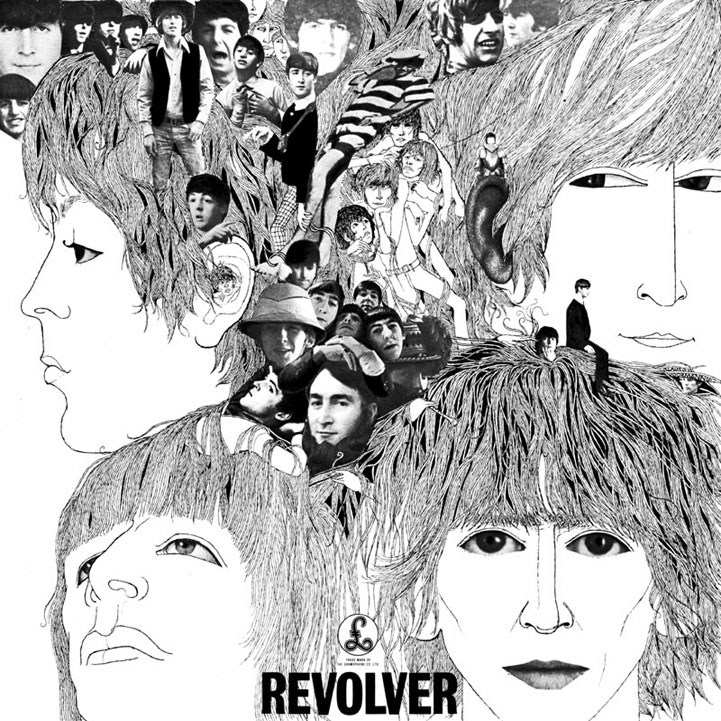
Multiple mixes case #1: The Beatles - Revolver


While I could have used any Beatles record up through the Beatles (and I may even refer to them), I chose Revolver because it shows the starkest contrast of all their records.  Why are there multiple mixes of the Beatles?  You'd sort of assume some band as big as the Beatles would have all their business together and just have one set.  But that's hardly the case.  It's a rather ludicrous reason to go and release another set of mixes, but it happened.  And there's one reason why:

Stereo.  Stereo was a newfangled thing back in 1968-1969.  It was never really around before that, and it took the Beatles Abbey Road to utilize stereo even one bit.  So what was before?  Mono.  And all of the prior records were mixed for mono.  Everything from Please Please Me through the Beatles was mixed in mono.  The Beatles themselves took care of the mixing in this format, and they had every control over the process to make the records what they were back in the day, staggering monoliths in rock music.  But when the stereo craze hit, something was realized: re-release all the previous records in stereo!  More money!  Alas, none of the Beatles were involved in this.  While I'm pretty certain George Martin was helping with these new stereo mixes, many things happened:

1. Straight up different takes were used.  So between mono and stereo, a totally different vocal take was used, or a different version of a guitar solo.  While it doesn't sound like a big deal at a first glance, it matters a great deal because a different vocal or instrument line can change the way a song feels to a listener.
2. Sometimes with going back and forth, songs ended up in different keys.  For example, "She's Leaving Home" off of Sgt. Pepper's Lonely Hearts Club Band is in different keys on stereo and mono versions.
3. Spreading some of the tracks over two ears (i.e. vocals in one ear, instruments in another) makes the entire mix of the song really thin and not as full as it should.
4. A lot of the songs just didn't come off as well in their stereo mixes.  Revolver is my case in point.

I'm going to be honest.  So even in its stereo mix, it's still a truly perfect record...that's undeniable.  But listening to the stereo mix and comparing it to the mono mix, there's no choice involved.  The mono mix is simply the best.  It's how the Beatles wanted the record heard, and they used up all the best takes in creating Revolver, leading to the re-mixers appropriating the unused takes for the stereo mixes (they were probably unused for a reason...).  The way the backwards guitar creeps in on you when you're drifting to "I'm Only Sleeping" is positively supernatural.  Revolver just sounds more alive when it's in mono.

Multiple mixes case #2: The Velvet Underground - The Velvet Underground


This record does, in fact, exist in two mixes.  The first was done by Lou himself, and was only released on the initial pressings of the US vinyl.  It's famously known as the "Closet Mix"...because it sounds like everything's in a closet when you listen to it.  Everything is bracing and immediate, with vocals brought straight to the foreground.  The other was done by Val Valentin, and so it's known as, well, the "Valentin Mix"; it's a little more even-handed with all the material, as the vocals aren't as overpowering as they are in the "Closet Mix," in addition to some takes being entirely different: "Some Kinda Love" on the "Closet Mix" is a much slower version of the tune in comparison to the "Valentin Mix."

On the whole, though?  The picture is a bit fuzzier.  Nowadays, if you went out and got this record (and if you haven't, DO IT, it's a command), you'd get the "Valentin Mix," not the "Closet Mix."  But if you went and sought out the Velvets box set, Peel Slowly and See, you'd end up with the "Closet Mix."  Is there a right answer?  Largely, no.  Outside of "Some Kinda Love," which still fits perfectly in each of the records regardless of the mix, there are no glaring differences between the two mixes that firmly place one mix worse than the other (unlike the Beatles stereo mixes).  Some people may prefer one mix over the other.  Personally?  I prefer the "Closet Mix."  Perhaps it's because I (perhaps too) highly value artist intent: if there's any case where I can choose the artist mixing it themselves versus an outside source, I will choose the artist's mix.  It's really just a case of preference more than anything in this instance.  The record is far too perfect for a minor mix issue to come into the way of enjoying it.

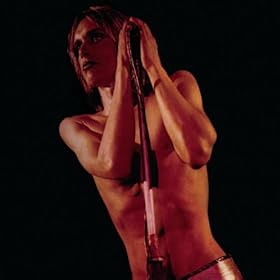
Multiple mix cases #3: The Stooges - Raw Power


This is another very famous case of "multiple mixes."  I very briefly referred to it in my Punk Primer entry, but perhaps it's time to address this record's mixing woes more in full.  First, Iggy wanted to mix it.  He produced a rough mix, but the label hated it.  So they brought Iggy compatriot David Bowie in to mix it, and outside of "Search and Destroy," Bowie's mix is largely what pervades the first edition of the record.  But no one liked it.  Haters be hating, but no one liked his mix.

Then in 1997, when everyone realized that the Stooges were actually brilliant and deserve whatever kudos they want (their recent induction into the Rock & Roll Hall of Fame was long overdue, damnit), Columbia told Iggy he could come in and remix the record.  And then, suddenly, when his mix came out, many (including former Stooges) cried foul over this new mix of the record (thus referred to as the "Iggy Mix").  Some of it is perhaps a legitimate claim.  This record is mixed very, very, loud.  It's obnoxiously loud.  In probably an attempt to mix the loudest record ever, Iggy pushed all the levels up as far as they would go.  It turns out that Iggy's Raw Power mix is likely one of the loudest records, ever.  And for that reason, the record suffers some.  The rumor is that the original producer failed to get enough volume off of the instruments, so pushing the instruments to the levels on the Iggy Mix introduced the distortion heard.  And so, some elements of the record became uncomfortably distorted.  Of course, I hardly think that this record was meant to be "comforting" in any way, shape or form.

So really, since everyone is hating on every version of this record, there still, to this day, is no real good mix of Raw Power, and it's really unlikely that we will ever hear the "real" version of Raw Power.  Which is rather unfortunate.  However, I'm inclined to think that the lack of a legitimate mix of Raw Power means very little.  Just look at the name of the record.  Raw Power.  This record is supposed to be raw.  Maybe that's the way the record is supposed to be, forevermore: raw, rough, with no "glossy" or "perfect" mix for it.  As the adage goes, "some stones are better left unturned" and a good part of me believes that applies to Raw Power, no matter how much "the perfect mix" of it may tickle the audiophile in me.

----------

So there it is, three different records with three different mixing crises, some more than others, some making big differences to what you hear and some making very little difference.  Largely, the mix matters, but in some cases, if the differences are minor enough, it really doesn't matter what mix you choose because they're all good.  Sometimes, these problems occur because the studio can be considered as a precise instrument that can add or detract so much to a recording.  Sometimes, it's there to capture the moment, whether done well or, um, rather poorly.

Sunday, April 25, 2010

Spiritual Successors #1: The Clash

The purpose of the "Spiritual Successors" entries is to figure out one thing about an artist/group: will another similar artist ever come along after that achieves similarly to the original group.

This requires a few things:

1.  Spiritually similar.  Are they both trying to achieve the same thing?  This could be from being highly political to highly introspective/spiritual.  As long as they are the same or similar, then we can consider the later the successor of the former.
2.  Following from 1., but also of import: being a spiritual successor does not mean they have to be stylistically similar...not at all.  For one, being overly restrictive limits options, and two, the nature of music has been dynamic, with different things "in" and different things "out," which means that what's good one era is not good in another (ahem, punk).  To apply an analogy, if you expect yourself to be reincarnated, you wouldn't be reincarnated as "yourself," no?  You would be reborn in a different vessel and do things in a unique way.
3.  Similar music "methodologies."  This mostly concerns the approaches that both the predecessor and the follower take to the music.  Are they both generally eclectic and incorporate all sorts of elements into their music?  Or do they both prefer to ply the trade they have perfected?  The general consensus is here that the sorts of spiritual successor strains will be of the "eclectic" variety; most artists tire of continually "plowing their own field" (to use the vernacular of a bygone era) and choose to try something new, or to at least incorporate something new.

That being said, this does not imply that there will always be a spiritual successor for a group before.  The Beatles are a good example of such.  While perhaps I can discuss this at a later date and prove that no group has been able to recreate the Beatles with any degree of success, the point to make is that the Beatles were so good, so unique, so diverse in what they achieved that no artist has ever come close to the creative burst that powered their years.  It really was a perfect storm for them.

Now that I've outlined the guidelines for the "Spiritual Successors" series, let's begin...

---------


The Clash were regarded as "the only band that matters," as said by pretty much everyone.  Roaring along in the 1970s, they were the distinctly political side of punk.  With anthems such as "White Riot" which promoted action (i.e. violence) and even the dirges such as "Straight to Hell" (hint...this song will come into play later), they lamented their lot in life much like the rest of the punk movement, but what separated them from the rest of the chaff was their willingness to try to change it.

And they were simply good.  When you put on the Clash and hear "Clash City Rockers" explode out of your speakers for the very first time, the riff is quite simply embedded in your head for the rest of your life.  In typing that last sentence, the riff just came bubbling out of the blue, a sort of semi-conscious recall that implies a sort of timelessness to their work (no matter how dated the punk movement became).  And yes, before purists cry out, when I refer to "Clash City Rockers" playing from the Clash, I am, in fact, referring to the U.S. version of the record that came out post-Give 'em Enough Rope, as the U.K. version was never available in the United States...and, well, I'm from the United States.

Then there was their seminal record: London Calling.  There is no need to defend the record.  But it's important to point out how eclectic the record is in comparison to their previous ones (and to basically most records in existence).  They started incorporating reggae, they dabbled in parlor jazz, noisy blues-rock, and the like.  Nothing was off limits, because punk was about "no limits," not the power chord.  The pop of "Train In Vain." The sinister crawl of "The Guns of Brixton."  The apocalyptic march of the title track.  Need I go on?

While perhaps Sandinista! was a strange choice, it pushed the boundaries of what "eclectic" meant.  If you want an explanation (and don't want to trudge through 3 LPs, which at times is hard to manage), then look no further than the children's chorus version of one of their more famous "old school punk" songs, "Career Opportunities."  It was already a highly political message in its first form, and given the new dressing, gained an especially vicious edge to its commentary.

As I said earlier, it was their political stance that separated them from the rest, the men from the children (so to speak).  No one dared to get explicitly political, because there was always a sense of fear given that if you were outside the box, you would never get anywhere.  Of course, given the Clash, getting anywhere was not really the issue, because they started nowhere, so somewhere was better than there.  But most of all, they were simply bold enough to insert themselves into the political issues of the time (see the title of their fourth record: Sandinista! and you see).

So we see two trends from the Clash: while at first content to stew their own pot, they later became quite eclectic in their approach.  They were also highly political (and generally great people to boot, but that's a separate entry), unafraid to confront their lot in life, and to make a stand and send a message.  Is there anyone who, perhaps, can be viewed as their spiritual successor?  I say yes.  It is, in fact, this artist/person:


M.I.A., as she's known, is essentially a rapper from London, I believe, who traces her roots back to Sri Lanka.  Her two records, Arular and Kala, are dizzyingly eclectic, with noises and sounds, thick and dirty beats flying in and out, all tied together by her verses.  Stylistically, the two are far apart.  Rap vs. punk, and you see a stark contrast, an uncrossable rift between the two.  But neither artist treated their respective genres as a chafing categorization, but moreover a springboard to something new.  The Clash incorporated reggae primarily, alongside almost every other genre into their songs, while M.I.A. has been fearless in her sampling of tracks that make her songs unmissable (in fact, "Straight to Hell" was sampled in M.I.A.'s "Paper Planes," which was her mainstream hit...it all makes sense now, no?).  While the methods of each artist's eclecticism are different, that seems to be a product of the dynamic state of music, rather than an inherently different approach to their music.

While she does not dedicate herself to political material (not even the Clash did that), the amount of it is staggering and is likely comparable to that of the Clash.  Of course, M.I.A. has probably been better off than the Clash have ever been in a financial sense, but M.I.A., like the Clash, took one issue to heart (the Clash's was essentially the poor standard of living in London, though usually more general than just London).  Her core issue relates to her ancestry in Sri Lanka, specifically concerning the Tamil uprising and the conflict that enveloped the region (and, I would hazard to guess that it's probably not as over as some people like to think).

The comparison seems fairly apt.  Both highly political, both highly eclectic.  While perhaps I have not treated the "issue" (though I don't consider a faux-academic examination of an aspect of rock music to be much of a pressing "issue," much less an actual "issue") with as much depth as it may deserve, I think in general, the point has been made and brought up for discussion.

Also, M.I.A.'s new track, "Born Free," is ridiculously awesome, which partially inspired me to write the first entry to this series (I had the idea for the series already, just hadn't gotten around to it yet).

Monday, April 12, 2010

Lost Albums

Since it's been a long time, this entry is like a "lost entry" and so I feel like it's fair to discuss "lost albums":

Lost albums in rock lore are pretty much legendary.  Sometimes they surface soon.  Sometimes they surface much later.  Sometimes they don't.  Sometimes it's just a bunch of tapes that are compiled later, or sometimes they are completely re-imagined from the ground up.  Here's a look at the more famous ones (and some personal favorites)

Cases in point:


1. The Beach Boys - Smile

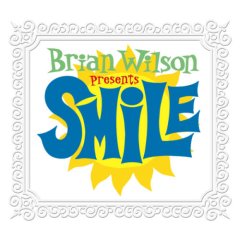
This is probably the most fabled one of the "lost albums" bunch.  This was supposed to be Brian Wilson's "teenage symphony to God."  It was supposed to eclipse, yes, eclipse Pet Sounds.  How the hell is that supposed to happen?  Make another record more perfect than one of the most perfect pop records ever?  But for one reason or another, this album became lost.  Brian Wilson went a bit bananas, battling various sorts of not-very-good mental states, group conflict, and the ilk, all causing the project to fall to the wayside.  This record was bootlegged heavily, with fights all over, trying to compile the definitive statement regarding Smile.  But all that was, for most intents and purposes, settled in 2004 when Brian Wilson, finally returning to peak form, completed the record (now with strange capitalization schemes) we all know and love as SMiLE:

 Who knows if this is as good as the original was supposed to be?  I prefer to not think about that and just rejoice in the perfect pop that the record is.  In some sense, with age changing Brian Wilson's voice, the songs take on a new meaning, one of wizened (and therefore sly) reflection rather than the youth and innocence that so starkly characterized Pet Sounds...but it gives the record a second meaning.  And as I said, it's neither here nor there, as the album is as good as it gets (and I consider it one of the best entries of the previous decade).

2. Bob Dylan & the Band - The Basement Tapes

Another ubiquitous "lost album" that found its way to shelves when its commercial power was realized.  And what a powerful set of songs this is.  Down home folk, rolling blues, and the like, all casually tossed off as if recorded over breakfast or during a brief period of downtime in the middle of the day.  The songs ooze cool, nonchalance, a folksy wisdom that only Bob Dylan and the Band have been able to replicate (the Band moreso than Bobby D, but I think Bob Dylan made the conscious choice to avoid the same path).

Dylan was recovering from a motorcycle accident that had nearly ended him, and just recording by himself and the Band.  No one knows the particulars and the details, and various forms of the set of tapes exist.  In some ways, this album is still lost because there is no definitive statement on this time period outside of either going whole-hog with the entire complete set of the Basement Tapes (something like a five-disc set with at least three takes of most tracks) to the very short two-disc version missing some tracks.  The debate will always continue, and I honestly think Bob Dylan prefers it that way.


3. The Velvet Underground - VU

So perhaps this not necessarily a straight up "lost album" like Smile or just a smattering of tapes all thrown together like the Basement Tapes (despite similar origins), but the record has been compiled from rough mixes and demos into a finely tuned, muscular beast.  Mostly from the end of their career at MGM records, these tracks were supposed to be the last record on their deal there, but for reasons no man can fathom, they were unceremoniously booted from the label.  These demos and rough mixes were recorded for MGM before they left and recorded Loaded, but these tracks were left undiscovered until the 1980s when the Velvet Underground underwent a bit of a renaissance in terms of sales and opinion.

The record may seem to be a sort of outtakes and demos compilation that seems pre-solo Lou Reed more than anything else, but the (obvious) secret is that Lou Reed's best outfit for performing his songs had been and will always forever be with the Velvet Underground (i.e. John or Doug, Moe, and Sterling).  So yes, "Andy's Chest" shows up on Transformer, but the lazy beat on his solo work is replaced by a bouncing giddy-ness here that is superior.  "Stephanie Says" became "Caroline Says II" on Berlin, but to be frank, "Caroline Says II" is not great whereas "Stephanie Says" is perfect...a slightly cruel, very melancholy ballad that was likely directed at their manager at the time.

The record was prepared with as much care and consideration as, to a great extent, any other Velvet Underground record.  I consider it more or less canon, placing it in its recorded-chronological place rather than its release-chronological place (i.e. between the Velvet Underground and Loaded rather than post-Loaded).  The urge to wax more eloquent on this record is tempting, but I will prevent myself on doing so because it's quite contrary to the point of this entry.

There are other examples, both great and not so great, but given these case studies (Smile being the famous one, the Basement Tapes being the pretty famous one, and VU being the personal favorite), it is clear that at some point, a lost album will always be found.  As the myth indicates, "all that wander are not lost," and perhaps the idiom applies to a great extent for records in rock music.

Wednesday, March 17, 2010

Rest in Peace, Alex Chilton


December 28, 1950 - March 17, 2010


But guns they wait to be stuck by, and at my side is God
And there ain't no one goin' to turn me 'round
Ain't no one goin' to turn me 'round

At this point, I would like to forward you all to this blog entry here for my entry on Big Star, which is what Alex Chilton was best known for.  And then this is the part where you go put on some Big Star, and quite frankly, it really doesn't matter which record you put on because they're all fucking masterpieces, and Alex Chilton was (and will forever be) the fucking man.  Everyone knew Big Star was the real deal, one of the few consummate bands of the entire history of rock and roll.  It is virtually impossible to compete with what Big Star achieved.

I'm going to let other people say these words:

Big Star's "impact on subsequent generations of indie bands on both sides of the Atlantic is surpassed only by that of the Velvet Underground."
-Jason Ankeny, allmusic

"We've sort of flirted with greatness, but we've yet to make a record as good as Revolver or Highway 61 Revisited or Exile on Main Street or Big Star's Third. I don't know what it'll take to push us on to that level, but I think we've got it in us."
-Peter Buck, R.E.M.

---

"I'm constantly surprised that people fall for Big Star the way they do... People say Big Star made some of the best rock 'n roll albums ever. And I say they're wrong."
-Alex Chilton

Let's be frank...Alex Chilton was way off the mark.  Big Star made some of the best rock and roll albums ever.  He's either way too modest to admit it or way too much of a genius to see it.  I choose both.

But the Replacements, I think, said everything about Alex Chilton and the work he'd done with Big Star (and, truthfully, in general) the best:

"I never travel far without a little Big Star."

Rest in peace, Alex Chilton.

Tuesday, March 9, 2010

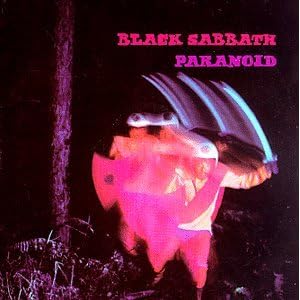
Record of the Moment: Black Sabbath - Paranoid


You may say, "WOAH THERE, what happened to this guy?  He now listens to heavy metal?"  The answer is "This record," and this record only.  Let's be honest, this record isn't heavy metal in the modern sense.  It's like Led Zeppelin but jammier and heavier.  But at the time, that was way heavy metal.  No one really dared to go that heavy before.

But that's not the point.  This is a one-of-a-kind record.  I'm no expert on metal, but sources I've gathered say that it simply is one of the finest, ever.  I don't listen to metal at all, but the songs on this record are pretty sick.  "War Pigs" is, according to a friend of mine who's more metal-inclined than I am (though he is of the Grateful Dead vein more than anything else), the best heavy metal song of all time, and one of those flawless rock songs.  The second I can definitely agree with.  "War Pigs" is both a flaming indictment of warmongers in power and a maelstrom of sheer muscle and power.  Iommi's guitar charges along, while the rest of the band acts like they are, perhaps, dogged on by the hounds of hell.

I know that heavy metal and Black Sabbath in particular gets a rap as Satanist, but look at these lyrics, from "War Pigs":

"Now in darkness world stops turning
As the war machine keeps burning
No more war pigs have the power
Hand of God has struck the hour
Day of judgment God is calling
On their knees, the war pigs crawling
Begging mercy for their sins
Satan laughing spreads his wings"

What is Satanist about that?  There really isn't a whole lot of Satanism going on there.  It really is a whole bunch of talk about the end of the times, which is not very Satanist to me.  Especially when the song calls on the Hand of God to render judgment unto the war pigs.  Of course, I'm not really familiar with later Black Sabbath, and we all know Ozzy Ozbourne is a loony, so I could be wrong.  But back then it doesn't seem like that.

Other dudes like Christgau make fun of the hokey lyrical themes that Black Sabbath use, such as all the sci-fi, horror-film talk, but in the end, it's the same application just of a different theme.  In the sense that, for example, David Bowie plumbed the Ziggy imagery.  It's a little different, but you get the gist.  If all the faux-horror and sci-fi imagery was not artfully applied to the music they had, I'm sure Black Sabbath would deserve that rap.  But once, again, look at the above lyrics.  They're not too shabby, are they?  Look to basically the first side of the record and prepare to have your face blown off.

But yet, it is heavy metal.  I'm not going to put this on a whole lot.  But it is a great record.  It shows a definite Zeppelin influence in the same sense that both adapted blues styles and played it as heavily as possible.  The guitar work on the record is killer, the bass and drums are tight, and Ozzy sounds a bit like Iggy Pop, but in a much different mindset.  Invariably, from what I can tell, the Black Sabbath strain of heavy metal is dead.

This is my discussion on the genre itself.  Black Sabbath, while still trying to sound demented in only the way heavy metal can, always seemed to base itself a bit off of the Zeppelin model, relying on old blues forms, a stiff pair of balls, and a bunch of gusto to make the songs heavy metal.  While certainly Iommi shows his chops a whole lot, it's not exactly slavish in the way metal sounds now.  He doesn't take a whole lot of solos on the record, mostly just chilling and creating a mean rhythm track for Ozzy.

But look at metal now.  It has sort of degenerated into a bunch of people trying to outplay one another, becoming a showcase of technical skill rather than an art form related to the spirit of rock music.  Which is why I consider modern metal disowned from the rock tradition.  Metallica was the rare band, from what I can tell (another friend of mine is much more Metallica-inclined than I am), that straddled the line between embracing the tradition while still sort of being as "technically excelling" as possible.

But all these phonies running around trying to outplay one another miss the point of rock music.  I would make the claim that they actually are moreover descendants of the classical music tradition, where technical displays are actually encouraged and written into the music.  Because, to be honest, classical music is dying out.  Hardcore.  It pains me to admit it (having been an orchestra dork in high school), but it's true.  It's dying.  And somehow, a bunch of metalheads are the ones concerned enough with the extremely technical sides of music to save it.

Sorry for the divergence.  Seriously, this is a wicked record.  And I mean "wicked" in the sense that it's good, not in the Satanist sense, mind you.